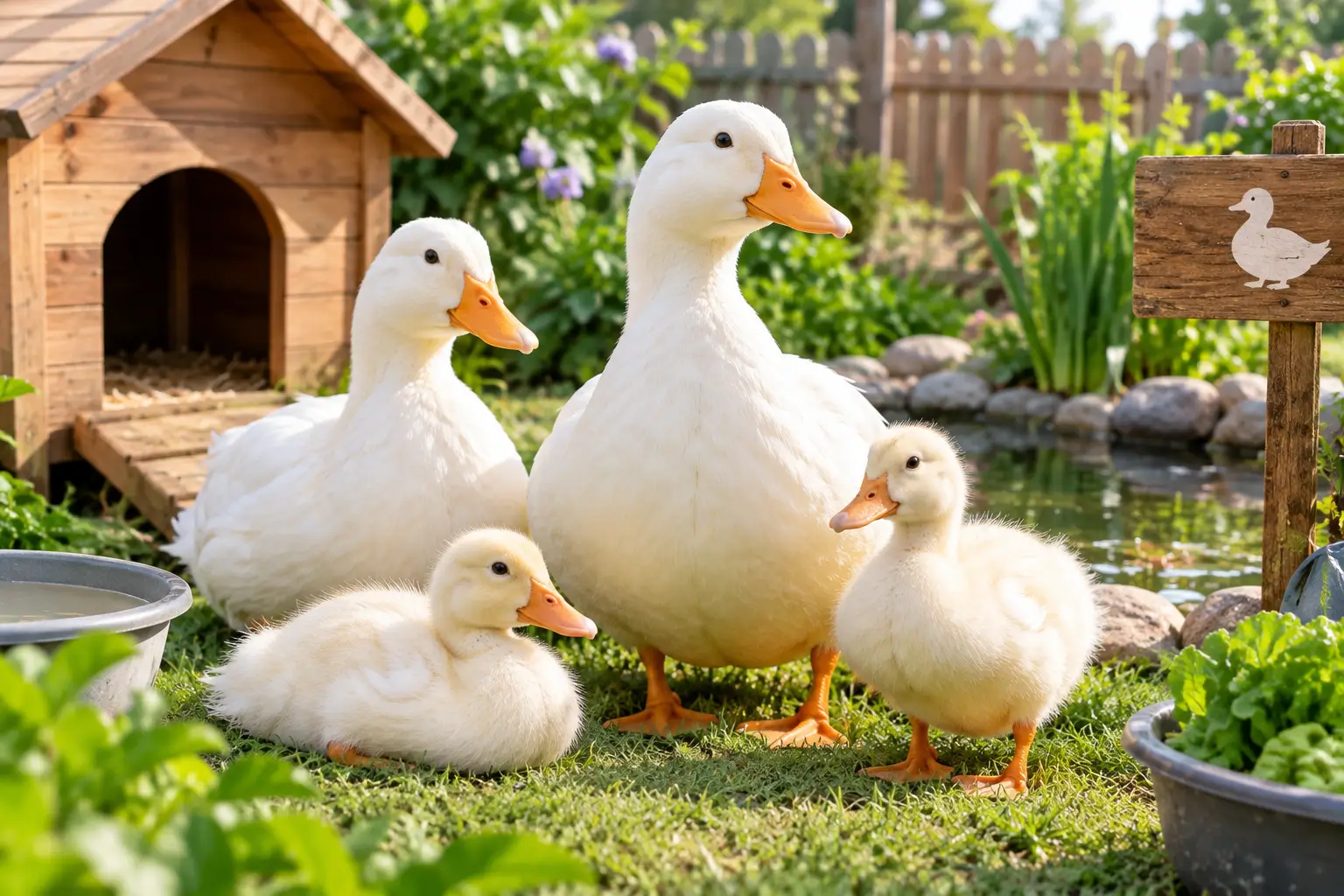
Pekin ducks as pets means keeping this large white duck breed as a calm, friendly backyard companion, not just a farm bird. Pekin ducks are known for being docile and social. They often bond with their owners. They need outdoor space, water, and daily care, but many families find them easy to love.
Key Takeaways
- Pekin ducks need outdoor space, not an indoor apartment
- They are known for a calm, friendly temperament
- Standard Pekin ducks typically live 8 to 12 years with good care; the faster-growing “Jumbo” meat strain is usually raised for only a few months to a few years and is not bred for a long pet lifespan
- Setup costs are moderate, but daily care takes real time
- Always talk to an avian vet for health concerns
- They do best with at least one duck friend, not alone
What Is a Pekin Duck?
A Pekin duck is a large white duck breed. It has an orange bill and orange feet. People often see this breed as friendly and easygoing.
Pekin ducks come from selective breeding. Breeders picked ducks for calm behaviour. They also picked ducks for fast growth and white feathers.
Many people know Pekin ducks from farms. But more owners now keep them just as pets. They enjoy the duck’s personality, not just its eggs.
How Pekin Ducks Look
Pekin ducks have round, plump bodies. Males often weigh more than females — typically 8 to 10 pounds for males and 7 to 9 pounds for females as adults.
Their feathers stay bright white. Their bills and feet stay orange. Males have one small curled tail feather. Females do not have this feature.
Quick Facts Box
| Fact | Details |
|---|---|
| Size | 7 to 10 pounds as adults |
| Color | Bright white feathers, orange bill and feet |
| Temperament | Calm, friendly, social |
| Lifespan | Roughly 8 to 12 years (standard strain) |
| Living space | Outdoor yard with water access; at least 4–6 sq ft of coop space and 10–15 sq ft of run space per duck |
| Flight ability | Cannot fly due to body weight |
| Egg laying | Large white eggs, 150–300 per year in their first couple of laying years |
Where Do Pekin Ducks Come From?
Pekin ducks trace back to ancient China. Breeders selected them from mallard ancestors for size, calm temperament, and meat quality.
They did not start in America. A trader brought them here later. In 1873, a small flock was carried from China to New York, and from that small group the American Pekin breed grew. Farms across the country began raising them, and over time, some owners started keeping them just as pets.
History and Evolution
Pekin ducks began as farm birds. Farmers valued them for meat and eggs. Their calm nature made them easy to manage.
Over the past few decades, that image shifted. More people wanted backyard pets with personality, and Pekin ducks fit that need well. Today, many owners raise Pekin ducks purely as companions, and social media has helped spread this trend, with cute duck videos drawing curious new owners.
Key Characteristics and Care Needs
Pekin ducks need space, water, and companionship. They also need protection from predators. Good housing keeps them safe and healthy.
Temperament
Pekin ducks are known for calm behavior. Many backyard keepers choose this breed for its calm behavior and manageable care. Some ducks bond closely with their owners and follow them around the yard.
Every duck has its own personality, though. Some stay more independent. Getting to know your own duck takes patience.
Space and Shelter
Ducks need a secure coop at night to protect them from predators like raccoons and foxes. They also need daytime access to a yard.
As a rule of thumb, plan for at least 4 to 6 square feet of coop space per duck and 10 to 15 square feet of outdoor run space per duck. More space is always better, especially if ducks are confined during bad weather.
A small kiddie pool works for water access. Ducks use water to clean their eyes and bills, so fresh, clean water matters every single day.
Diet
A Pekin duck’s diet changes as it grows:
- Ducklings (0–2 weeks): Unmedicated duckling starter feed (18–20% protein), since medicated chick feed made for chickens can harm ducklings.
- Growing ducklings (2–20 weeks): Grower feed with slightly lower protein (15–16%), plus access to niacin-rich foods like peas or a niacin supplement, since ducks need more niacin than chickens.
- Adults: Waterfowl or all-flock maintenance feed (14–16% protein), supplemented with leafy greens, chopped vegetables, and bugs they forage outside.
Avoid bread and other empty-calorie treats, which fill ducks up without giving them proper nutrition. Always keep water next to food, since ducks need water to swallow safely. This can vary depending on the individual duck, so it’s best to confirm feeding amounts with a vet or poultry expert.
Egg Laying
Pekin ducks are strong layers. Hens typically start laying around 5 to 7 months old and can lay 150 to 300 large white eggs per year, often most heavily in their first two laying seasons before tapering off.
Pekin hens are known for being poor sitters — they rarely incubate their own eggs reliably, so owners who want ducklings usually rely on an incubator or a broody hen of another breed.
Quick Comparison Snapshot
Several duck breeds work well as pets. Here is how Pekin ducks compare to three other popular choices.
| Breed | Best For | Key Difference |
|---|---|---|
| Pekin Duck | Beginners who want a calm, easy bird | Large size, cannot fly |
| Call Duck | Small spaces and playful energy | Tiny size, very vocal |
| Cayuga Duck | Owners who want a quiet, elegant duck | Shiny black-green feathers, gentle nature |
| Khaki Campbell | Owners who want frequent egg layers | Strong egg production, active personality |
Ducks as Pets — What to Expect
Ducks as pets bring a different lifestyle than cats or dogs. They live outside, not on your couch. They need daily outdoor care, not just a food bowl.
Ducks are social birds and do best with at least one other duck — a lone duck often feels stressed and lonely.
They also make a mess. Ducks splash water everywhere, so owners should expect wet, muddy spots near their water source.
Noise Levels
Ducks are not silent pets. Females quack more than males, while males have a quieter, raspier call. Some neighbors may notice the sound, so check local rules first.
How Long Do Ducks Live as Pets?
Standard Pekin ducks kept as pets usually live 8 to 12 years with good care. This is different from “Jumbo” Pekins, a strain bred specifically for fast meat production — these are typically raised only from a few months up to a few years old and are not the strain most pet owners keep long-term. If you want a pet with a long lifespan, look for a standard (non-Jumbo) Pekin from a hatchery or breeder that raises for temperament rather than meat speed.
Diet, housing, and vet care all affect lifespan. Clean water and safe shelter matter a lot, and predator protection also plays a big role in how long a duck lives. This can vary depending on the individual bird — some ducks live shorter lives due to health issues, while others live longer with steady, attentive care.
Can You Have a Duck as a Pet?
Yes, many people can have a duck as a pet, but rules vary by city and neighborhood. Some areas ban poultry, including ducks, inside city limits.
Check your local zoning laws first. Some places allow a small number of ducks, while others require a minimum yard size or distance from neighbors. HOA rules can also restrict duck ownership. Always check with your local government before buying ducklings — this step saves you from a hard situation later.
Call Ducks as Pets vs Pekin Ducks
Call ducks are another popular pet duck breed, but they are much smaller than Pekin ducks and rarely weigh more than two and a half pounds as adults.
Call ducks are known for big personalities — they are chatty and bold, and enjoy snuggling with their favorite person when hand-raised. But they are also louder than most other breeds.
Pekin ducks tend to be quieter and calmer overall, and they grow much larger than Call ducks. Your choice depends on space, noise tolerance, and personal preference.
Daily Care Routine and Getting Started
Starting duck ownership takes some planning. You need housing ready before your ducklings arrive, and a safe brooder setup helps young ducklings thrive.
Brooder Setup for Ducklings
Newly hatched ducklings cannot regulate their own body temperature and need a heat source:
- Week 1: Keep the brooder around 90°F (32°C).
- Weeks 2–4: Lower the temperature by about 5°F (2–3°C) each week.
- Week 6–7 and beyond: Once fully feathered and the temperature is close to ambient outdoor conditions, ducklings can move outside full-time, weather permitting.
Use a heat lamp or brooder plate, a draft-free container with bedding (avoid slippery surfaces, which can cause leg injuries), and a shallow water dish they can’t fall into and drown in.
Daily Duck Care Checklist
- Refill fresh water at least once a day
- Check food supply and refill as needed
- Clean the pool or water tub regularly
- Check for injuries or unusual behavior
- Lock ducks in a secure coop at night
- Give ducks time outside to forage and swim
Getting Started Steps
- Check local laws about keeping ducks
- Build or buy a secure coop with enough space per bird
- Set up a small pool for water access
- Buy ducklings from a trusted hatchery or breeder
- Set up a brooder with proper heat and feed a duckling starter diet
- Slowly introduce them to outdoor time as they grow and feathers come in
Cost Breakdown
Duck ownership costs less than some pets but still adds up. Setup costs come first, then daily care costs follow.
| Item | Estimated Cost |
|---|---|
| Ducklings (each) | $5–$20 |
| Brooder setup (heat lamp, plate, bedding) | $30–$80 |
| Coop and fencing | $150–$500 |
| Kiddie pool or pond setup | $20–$100 |
| Monthly feed | $15–$30 per duck |
| Vet visits (as needed) | $50–$150 per visit |
Common Mistakes Pet Owners Make
- Getting just one duck. Ducks need company. A single duck often feels lonely and anxious.
- Skipping predator-proofing. Raccoons and foxes target unprotected coops at night.
- Forgetting local laws. Some cities ban ducks or limit how many you can keep.
- Underestimating mess. Ducks splash water and create mud, especially near their pool.
- Assuming they are low-care. Ducks need daily attention, not just occasional check-ins.
- Using chicken starter feed for ducklings. Medicated chick feed can be harmful to ducklings; use an unmedicated duckling starter instead.
Pros and Cons
| Pros | Cons |
|---|---|
| Calm, friendly temperament | Cannot live indoors full-time |
| Long lifespan with good care | Needs daily water and cleaning |
| Fun, social personality | Makes noise, especially females |
| Good for families with yard space | Not ideal for small city lots |
| Hardy in most climates | Needs predator-proof housing |
Similar Breeds and Alternatives
If a Pekin duck does not feel like the right fit, other breeds offer different traits.
| Option | Best For |
|---|---|
| Call Duck | Small yards and playful personalities |
| Cayuga Duck | Quiet owners who want a calm, elegant bird |
| Khaki Campbell | Owners who want frequent egg production |
| Indian Runner Duck | Owners who enjoy an active, upright duck |
| Muscovy Duck | Owners in quieter neighborhoods, since they are less vocal |
When to Consult a Vet or Professional
Talk to an avian or poultry vet if your duck stops eating or seems weak. Sudden changes in behaviour often signal a health problem, and fast action helps your duck recover.
Also reach out to a vet before bringing ducklings home for the first time. A vet or poultry expert can guide you on proper diet and housing, which helps prevent common health issues early.
If your duck limps, breathes strangely, or stops swimming, don’t wait. These signs need quick attention, and a licensed vet can check for injury or illness safely.
Fun Facts About Pekin Ducks
- Pekin ducks cannot fly because their bodies grew too heavy for their wings.
- Male Pekin ducks have a raspy quack, while females have a louder call.
- Pekin duck hens are known for being poor sitters on their own eggs.
- Strong swimmers despite their weight, Pekins take to water easily.
- Their bright white feathers make them easy to spot from far away.
- Even with their large, heavy bodies, Pekin ducks are active foragers.
Frequently Asked Questions
Is a Pekin duck a good pet?
Pekin ducks make good pets for many families. They are known for a calm, friendly temperament and handle a range of climates well. That said, they need outdoor space and daily care, not a quiet apartment life. Before you decide, think about your yard size and local laws. If you can offer space, water, and companionship, a Pekin duck can be a wonderful, long-term pet.
Will Pekin ducks fly away?
No, Pekin ducks cannot fly. Their bodies grew too large and heavy for their wings to lift them off the ground. This makes them different from smaller breeds like Call ducks, which can sometimes fly over fences. Secure fencing still matters, though, since it keeps predators out and keeps your duck safe from wandering into unsafe areas near your home.
Do Pekin ducks bond with humans?
Many Pekin ducks form real bonds with their owners. Some follow their favorite person around the yard, and this bond grows stronger with regular, gentle handling from a young age. Not every duck acts the same way, though — some stay more independent, even with daily interaction. Patience and consistency help build trust between you and your duck over time.
What is the friendliest duck for a pet?
Owners often point to Call ducks and Pekin ducks as some of the friendliest breeds. Cayuga and Khaki Campbell ducks also rank high for friendly behavior. Friendliness often depends on how a duck was raised, since ducks raised by hand from a young age tend to bond more closely with people. This can vary depending on the individual duck, so meeting a duck before bringing it home can help.
Do Pekin ducks need a pond?
A full pond isn’t necessary for a Pekin duck. A kiddie pool or shallow water tub works well instead. What matters most is daily access to clean water for drinking, swimming, and cleaning their eyes and bills.
How many eggs do Pekin ducks lay?
A healthy Pekin hen can lay 150 to 300 large white eggs per year, mostly in her first couple of laying seasons, tapering off gradually after that.
Final Thoughts
Pekin ducks as pets offer a fun, rewarding experience for the right household. They bring calm energy, friendly personalities, and years of companionship. But they are not a low-effort pet.
Ducks need outdoor space, fresh water, and daily attention. They also need protection from predators and a safe place to sleep at night. Planning ahead makes a big difference.
If you have the space and time, a Pekin duck can become a beloved part of your family. Take time to research local laws and prepare your setup first — a little planning now leads to a much smoother start.

Olivia Bennett is a pet care writer and animal wellness researcher who has spent more than 8 years creating practical content for pet owners. Her work focuses on dog and cat care, pet nutrition, training, grooming, behavior, and preventive health.
At Pet Wise Worlds (https://petwiseworlds.com/), Olivia researches trusted sources and transforms expert knowledge into easy-to-follow guides that help pet owners give their companions healthier and happier lives.