Small house pets are animals that live comfortably indoors and need little space. They fit small homes, apartments, and busy schedules. Common examples include hamsters, guinea pigs, rabbits, fish, and small birds. They cost less to keep than large pets and suit first-time owners well.
Key Takeaways
- Small house pets fit apartments, dorms, and busy households
- Many need only a small cage, tank, or enclosure
- Most cost less to feed and care for than dogs or cats
- Some breeds stay quiet, which helps in shared living spaces
- Many small house pets suit beginners and kids with supervision
- Regular vet checkups still matter, even for tiny pets
Introduction
Many pet owners live in small spaces today. Apartments, condos and shared homes are common. That makes small house pets a popular search.
People want a pet that fits their space. They also want a pet that fits their budget and schedule. Small house pets often solve all three problems at once.
This trend keeps growing. More renters cannot keep large dogs. More families want an easy first pet for their kids. Small pets fill that gap well.
This guide covers everything you need to know. You will learn about the best small house pets for families, about care needs, costs and common mistakes.
You will also learn which small pets stay quiet. This helps if you live in an apartment with thin walls. By the end, you will know exactly which small pet fits your home best.
What Are Small House Pets?
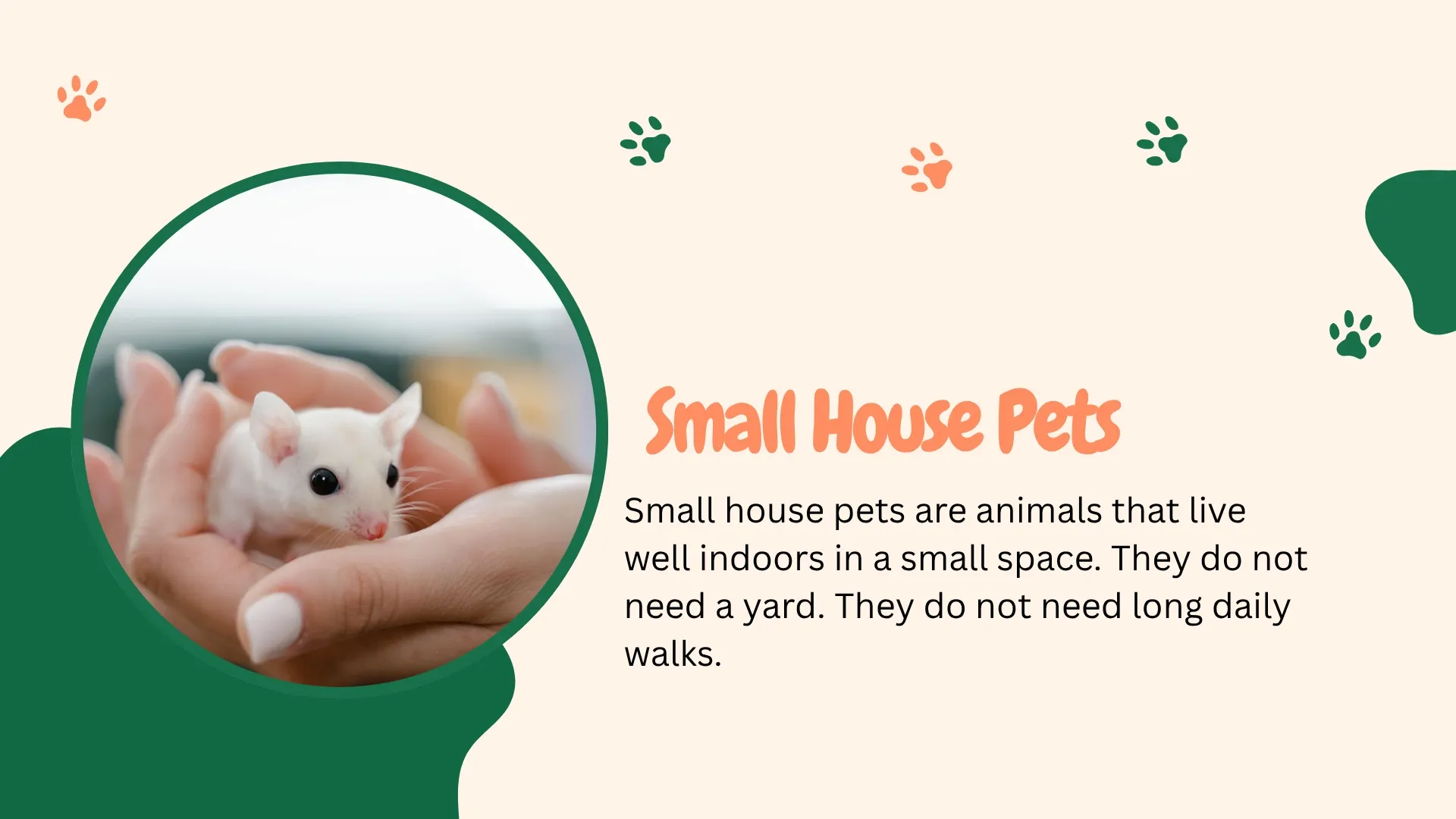
Small house pets are animals that live well indoors in a small space. They do not need a yard. They do not need long daily walks.
This group includes hamsters, guinea pigs, gerbils, and mice. It also includes rabbits, small birds and fish. Some reptiles, like leopard geckos, fit this group too.
Most small house pets live in a cage, tank or enclosure. This keeps them safe. It also keeps your home tidy.
Small does not always mean low-effort. Some small pets need daily attention. Others need very specific temperature or humidity levels. Care needs still matter, even in a small body.
Quick Facts Box
| Fact | Details |
| Common examples | Hamsters, guinea pigs, rabbits, fish, small birds |
| Typical living space | Cage, tank, hutch, or enclosure |
| Average lifespan range | 2–10+ years, depending on species |
| Daily care time | 15–60 minutes, depending on species |
| Good for beginners | Yes, in most cases |
| Good for apartments | Yes, many species fit well |
| Noise level | Low to moderate, depending on species |
Key Characteristics and Care Needs
Small house pets share a few common traits. They need less space than a dog or cat. Many also need less daily exercise time outside their enclosure.
Care needs still vary a lot between species. A hamster needs a very different setup than a fish. A rabbit needs more space than a mouse.
Housing Needs
Most small house pets need a secure enclosure. This keeps them safe from other pets and household hazards. Cage size still matters, even for tiny animals.
Social Needs
Some small pets, like guinea pigs, do best with a same-species friend. Others, like hamsters, often prefer to live alone. This can vary depending on the individual pet, so it’s best to confirm with a vet or exotic pet specialist before pairing animals.
Handling Needs
Some small pets enjoy gentle handling. Others prefer to be watched, not held. Learn your pet’s comfort level before you pick them up often.
Quick Comparison Snapshot
| Option | Best For | Key Difference |
| Guinea pig | Families with kids | Social, needs a same-species friend |
| Hamster | Solo owners, small spaces | Often solitary, mostly active at night |
| Betta fish | Quiet apartments | No cage needed, low noise |
| Rabbit | Owners with more space and time | Needs daily exercise time outside the cage |
Best Small House Pets for Families
The best small house pets for families combine an easy care routine with a gentle temperament. Guinea pigs often top this list.
Guinea pigs tend to enjoy company. They also tend to handle gentle petting well. This makes them a common pick for kids, with adult supervision.
Rabbits can also work well for families. They need more space than a hamster. They also need daily time outside their enclosure to move around.
Fish suit families that want a pet with very low handling needs. Kids can help feed fish and watch them swim. This teaches responsibility without any handling risk.
Small House Pets That Are Easy to Care For
Small house pets that are easy to care for usually need a simple daily routine. Fish and hamsters often fit this description well.
A fish tank needs regular water changes and daily feeding. A hamster cage needs daily food, water, and a weekly clean. Neither needs a daily walk outside.
Low-Maintenance Options
Betta fish need a clean tank, steady water temperature, and daily food. Hamsters need a wheel, bedding, and a quiet daytime rest space.
Options That Need a Bit More Time
Guinea pigs need daily fresh vegetables and cage cleaning. Rabbits need daily exercise time and a larger living space. Both still stay far easier than a dog.
Small Pets That Do Not Need Much Space
Small pets that do not need much space fit well in apartments and small bedrooms. Hamsters, mice, and fish top this group.
A hamster cage can fit on a dresser or desk. A fish tank can sit on a shelf or stand. Neither needs floor space like a dog crate would.
Guinea pigs need a bit more room than a hamster. Rabbits need the most space in this group. Always check the minimum enclosure size for your chosen pet before you bring it home.
Small Indoor Pets That Are Easy to Handle
Small indoor pets that are easy to handle include guinea pigs and rats. Both species often grow used to gentle daily contact.
Guinea pigs tend to stay calm once they trust their owner. Rats are often social and curious. Many rat owners find them easy to tame with patient, regular handling.
Hamsters can be easy to handle too. They startle more easily than guinea pigs or rats. Move slowly and stay calm during handling time.
Fish and reptiles are not truly “handled” pets in the same way. They still make wonderful pets. They simply suit a hands-off style of pet ownership.
Small House Pets That Do Not Make Much Noise
Small house pets that do not make much noise work well for apartments and shared walls. Fish stay silent, since they live fully underwater.
Hamsters stay fairly quiet during the day, since they sleep then. They may run on their wheel at night. A quiet wheel design can help reduce this noise.
Guinea pigs can make soft chirping or squeaking sounds. This usually happens around feeding time. It rarely reaches a level that disturbs neighbors.
Rabbits stay mostly silent too. They may thump a back foot if startled. This is a normal rabbit behavior, not a cause for concern.
Daily Care Routine and How to Get Started
Getting started with a small house pet follows a clear pattern. This routine works for most small pets, with small changes based on species.
- Choose a pet that fits your space, budget, and schedule
- Set up the enclosure before bringing the pet home
- Add food, water, bedding, and hiding spots
- Feed and check water daily, at the same time each day
- Clean the enclosure on a weekly schedule
- Schedule a checkup with a vet who treats small or exotic pets
Once your pet settles in, keep a steady routine. Small pets often feel calmer with predictable feeding times. Avoid sudden changes to their enclosure or environment.
Cost Breakdown
Small house pets usually cost far less than dogs or cats. Startup costs cover the enclosure and supplies. Ongoing costs cover food and bedding.
| Item | Typical Cost Range |
| Starter enclosure (cage, tank, or hutch) | $30–$150 |
| Bedding or substrate | $10–$25 per month |
| Food (monthly) | $10–$40 |
| Vet checkup | $40–$100 |
| Toys and enrichment | $10–$30 |
This can vary depending on the species and your local prices, so it’s best to confirm exact costs with a nearby pet store or vet clinic.
Common Mistakes Pet Owners Make
Many new owners make the same few mistakes with small house pets. These mistakes are easy to avoid with a little planning.
Choosing Too Small an Enclosure
A tiny cage may look cute in a store. Most small pets need more space than store displays suggest. Always check the minimum size guidelines for your specific pet.
Skipping Vet Visits
Some owners assume small pets do not need a vet. This is not true. Small pets can hide illness well, so regular checkups matter.
Housing Incompatible Pets Together
Not every small pet gets along with every other small pet. Some species need to live alone. Research your pet’s social needs before adding a companion.
Ignoring Enrichment Needs
Small pets still need mental stimulation. A bare cage can lead to boredom and stress. Add tunnels, chew toys, or hiding spots to their space.
Pros and Cons
| Pros | Cons |
| Fit small living spaces well | Some species need very specific care |
| Lower cost than dogs or cats | Shorter lifespan for some species |
| Easier daily care routine | Limited vet options in some areas |
| Good option for beginners | Not all species enjoy handling |
| Many stay quiet for apartments | Cage cleaning still takes weekly time |
Similar Options and Alternatives
Beyond the most common small house pets, a few other options fit small homes well. These alternatives offer different care styles and personalities.
| Option | Best For |
| Leopard gecko | Owners wanting a low-noise reptile pet |
| Parakeet | Owners wanting an interactive, vocal bird |
| Hermit crab | Owners wanting a very low-maintenance pet |
| Rat | Owners wanting a social, trainable small pet |
| Chinchilla | Owners wanting a longer-lived small mammal |
When to Consult a Vet or Professional
Always find a vet who treats small or exotic pets before an emergency happens. Not every vet clinic treats hamsters, guinea pigs or reptiles.
Watch for signs like poor appetite, unusual hiding, or weight loss. These can signal illness in small pets. Small animals often hide symptoms until an issue becomes serious.
Schedule a checkup soon after bringing home a new pet. This helps confirm good health early. It also gives you a vet contact ready for future questions.
If you plan to house two small pets together, ask a vet or exotic pet specialist first. This helps confirm the pairing is safe for both animals.
Fun Facts About Small House Pets
- Guinea pigs often “popcorn,” a happy jump some owners describe as a sign of excitement
- Hamsters store food in their cheek pouches to carry it back to their nest
- Betta fish can recognize their owner’s face over time, according to some behavior studies
- Rabbits show contentment through a relaxed, flopped-over resting position
- Rats are known for their strong sense of smell and quick learning ability
- Many small pets are most active at dawn and dusk, not midday
- Guinea pigs cannot make their own vitamin C, so their diet needs a steady source
- Leopard geckos can drop their tail as a natural defense, then slowly regrow it
Frequently Asked Questions
What are the best small house pets for beginners?
Guinea pigs, hamsters, and betta fish work well for beginners. Guinea pigs offer a gentle, social pet with a simple diet. Hamsters need a small setup and less daily interaction. Betta fish need no handling at all, just a clean tank and steady feeding. All three come with lower daily care demands than a dog or cat. This makes them a strong starting point for someone new to pet ownership.
What small pets can live comfortably indoors?
Most small house pets live fully indoors, since they come from climate-controlled origins as domesticated species. Hamsters, guinea pigs, rabbits, and fish all thrive inside a home. Reptiles like leopard geckos also live well indoors, as long as their enclosure has proper heating and lighting. None of these pets need outdoor time to stay healthy. Indoor living actually keeps many small pets safer from predators, weather, and temperature swings.
Which small pets are affordable to keep?
Fish and hamsters tend to cost the least on a monthly basis. Their food and bedding costs stay low compared to larger pets. Guinea pigs cost a bit more, since they eat fresh vegetables daily and need more bedding. Rabbits often cost the most in this group, due to their larger space and diet needs. Startup costs for any small pet stay far lower than the cost of bringing home a dog.
What small pets can live in a cage or enclosure?
Hamsters, guinea pigs, gerbils, mice, and rabbits all live in some form of cage or hutch. Birds live in a cage designed for their wingspan and activity level. Reptiles, like leopard geckos, live in a tank called a terrarium. Cage size should always match the specific needs of the species inside it. A cage that feels spacious for one pet may feel cramped for another.
Which small house pets have the longest lifespan?
Lifespan varies a lot between species. Guinea pigs often live around 5 to 7 years with good care. Rabbits can live even longer, sometimes reaching 8 to 12 years. Hamsters have a much shorter lifespan, often around 2 to 3 years. This can vary depending on the individual pet’s genetics and care, so it’s best to ask a vet about realistic expectations for your specific pet before you commit.
Final Thoughts
Small house pets offer a great fit for many types of homes. They work well in apartments, dorms, and busy family houses.
Each species brings its own personality and care needs. Take time to match the right pet to your space and schedule. This sets both you and your new pet up for success.
Small does not mean low-effort. Every pet on this list deserves real care and attention. A little research now leads to a much happier pet later.
Whatever small house pet you choose, enjoy the process. These little companions bring a lot of joy into a small space.

Ethan Brooks is an animal behavior writer and pet education specialist with over 9 years of experience producing informative content for pet owners. He enjoys writing about pet behavior, nutrition, training techniques, and responsible pet ownership for dogs, cats, birds, rabbits, reptiles, and other companion animals.
Through Pet Wise Worlds (https://petwiseworlds.com/), Ethan shares well-researched articles designed to help families better understand and care for their pets using reliable, practical information.