Last updated: September 2026
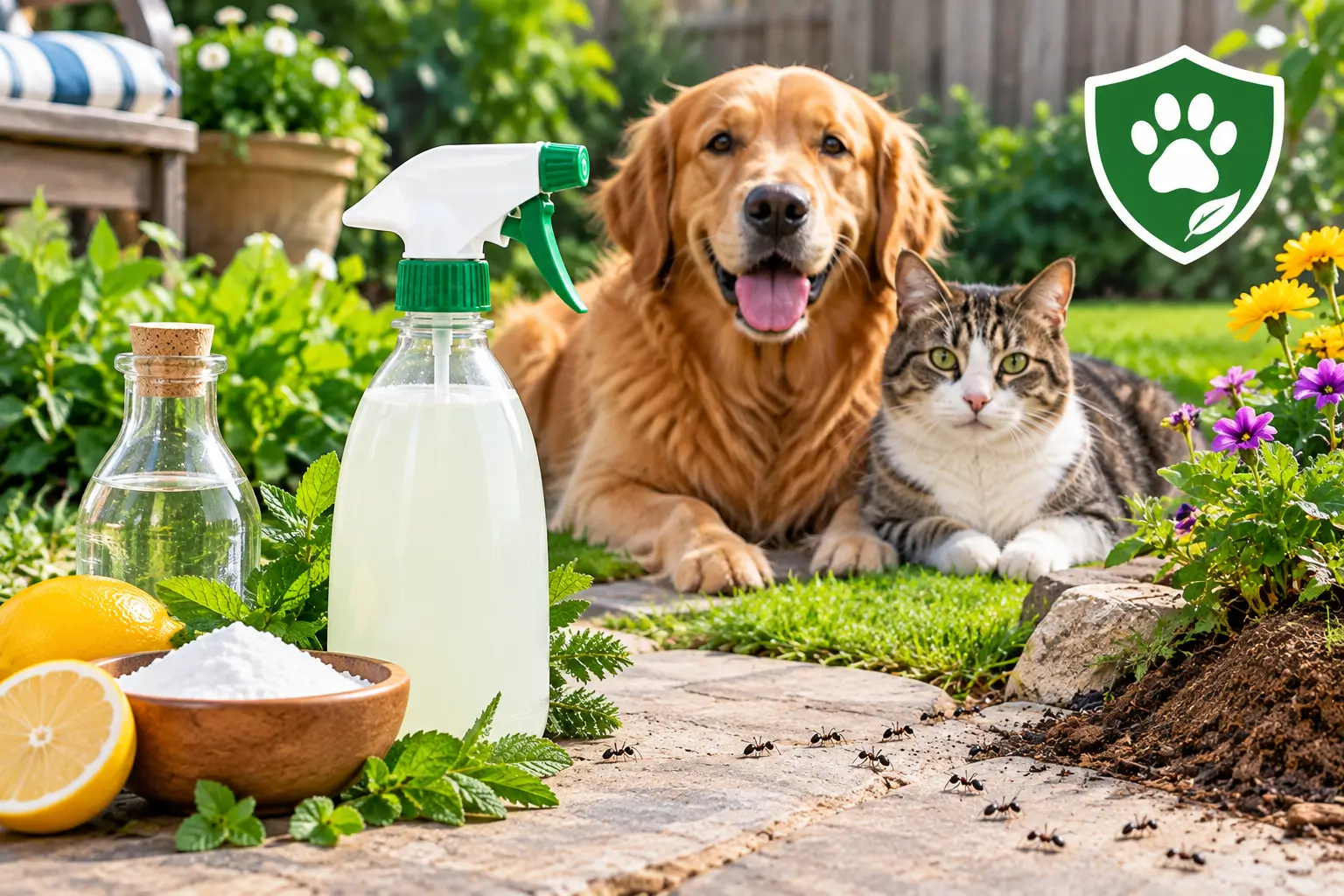
A best outdoor ant killer safe for pets is a bait or spray that clears ant trails and nests without putting dogs, cats, or other pets at risk. These products use low-toxicity ingredients like borax, diatomaceous earth, or spinosad, and many come in pet-resistant bait stations. But placement, product choice, and supervision still matter — even with a “pet safe” label on the box.
Key Takeaways
🐾 Pet-safe ant killers use ingredients like borax, diatomaceous earth, or spinosad instead of harsh contact sprays. 🏡 Bait stations hide the product inside a sealed case, lowering the chance a pet licks or eats it. 🐈 Cats are generally more sensitive to pesticide residues than dogs, since they groom themselves constantly and ingest whatever sticks to their fur or paws. 💰 Most pet-safe options cost $6–$20; larger yard treatments or professional visits cost more. ⚠️ “Pet safe” means “lower risk with correct use” — no ant product is 100% risk-free if a pet eats a large amount. 🐝 Some ant products can also harm bees and other pollinators if applied on flowering plants. 🧴 Homemade options exist too, but they tend to work slower than store-bought bait.
Introduction
Ants show up fast in warm weather. One day your yard looks fine — the next, trails of ants cross your patio.
Many pet owners want to fight back but worry about their dog’s paws or their cat’s curious nose. That’s why so many people search for the best outdoor ant killer safe for pets.
The good news: safer options exist. Some use natural minerals, others use bait stations pets can’t open, and a few rely on ingredients derived from natural sources rather than synthetic pesticides.
This guide covers what makes a product genuinely pet-safe, how different ant species change your approach, how cats and dogs react differently to these products, and how to apply everything correctly — indoors and out.
What Is the Best Outdoor Ant Killer Safe for Pets?
The best outdoor ant killer safe for pets is any product that kills ant colonies using low-risk ingredients and pet-resistant packaging. It targets ants, not mammals.
These products generally fall into a few groups:
- Bait stations hide liquid or gel bait inside a small plastic case that ants can enter but pets cannot.
- Granular baits scatter across the lawn and are carried back to the nest by worker ants.
- Diatomaceous earth (DE), a powder made from fossilized algae, is often labeled “food-grade” when it meets a purity standard suitable for use around animals.
- Spinosad-based baits use a substance derived from a natural soil bacterium and are considered a lower-risk option by many gardeners.
- Essential-oil repellents, such as peppermint or cedar oil sprays, repel ants rather than killing the colony, and are popular with pet owners who want to avoid pesticides entirely.
Quick Facts Box 📋
| Fact | Details |
|---|---|
| Common pet-safe active ingredients | Borax (in contained bait), diatomaceous earth, spinosad, peppermint/cedar oil |
| Typical price range | $6–$30 per product |
| Where to place bait | Along ant trails, near nests, away from pet play areas and ponds |
| Wait time after spraying | Until fully dry, per label instructions |
| Best for | Yards, patios, gardens with dogs, cats, or both |
| More sensitive pet | Cats generally react more strongly to pesticide residue than dogs |
| Vet concern level | Low with proper placement; still keep out of reach |
Not All Ants Are the Same
The right product can depend on which ant you’re dealing with:
- Sugar ants / odorous house ants respond well to sweet liquid baits like borax-based stations, since they’re drawn to sugary trails.
- Carpenter ants nest in wood and often need protein-based bait plus attention to moisture problems around the house, since they’re drawn to damp or rotting wood.
- Fire ants build visible mounds and typically need a mound-specific bait or drench; standard household bait stations are usually too slow for an active fire ant mound near a pet’s play area.
If you’re not sure which species you have, a quick photo comparison online or a call to a local pest control service can save you from using the wrong bait type.
Key Characteristics of a Pet-Safe Ant Killer
Ingredient Safety
Borax and boric acid have low toxicity to pets in small amounts, though large amounts can still cause stomach upset — which is why bait stations matter so much.
Diatomaceous earth works by drying out an ant’s outer shell. It’s generally considered low-risk if a pet licks a small amount, though breathing in dust over time isn’t ideal for any household member, pet or human.
Spinosad is derived from a naturally occurring soil bacterium and is commonly used in products marketed as garden- and pet-friendly, though it should still be applied per label directions rather than assumed to be harmless in any quantity.
Cats vs. Dogs: Why the Difference Matters
Cats groom themselves far more often than dogs, which means anything on their paws or fur is more likely to end up ingested. Cats are also generally considered more sensitive to certain pesticide compounds than dogs. If you have both a cat and a dog, it’s worth erring toward the most contained option (a sealed bait station) rather than granules or sprays, and keeping cats indoors until any treated area is fully dry or set.
Physical Design
Pet-resistant bait stations matter as much as the ingredient inside. A station with small entry holes lets ants in while keeping a dog’s nose or paw out. Stakes pushed into the ground work well for yards, sitting low and staying less visible to curious pets.
Quick Comparison Snapshot
| Option | Best For | Key Difference |
|---|---|---|
| Liquid bait stakes (borax-based) | Yards with ant trails near the house | Slow-acting bait carried back to the colony |
| Diatomaceous earth (food-grade) | Chemical-free spot treatment | Physical action, not a poison bait |
| Spinosad granule bait | Garden beds and lawns | Derived from a natural soil organism |
| Boric acid bait station | Patios and porches | Fully enclosed housing blocks pet access |
| Peppermint/cedar oil spray | Doorways, mild ant sightings | Repels rather than kills the colony |
Best Outdoor Ant Killer Safe for Pets: Homemade Options 🌿
Homemade ant killers can help with mild ant problems, though they tend to work slower than store-bought bait made for full colony control.
- Diatomaceous earth: sprinkle a thin layer along ant trails; reapply after rain, since water washes it away.
- Dish soap and water: kills ants on contact when sprayed directly, but won’t reach the nest, so ants often return.
- Cinnamon or vinegar near doorways may repel ants for a short time but rarely stop a full colony.
- Peppermint oil spray (a few drops in water) is another mild repellent some pet owners prefer over synthetic sprays.
Homemade methods work best for small, early ant sightings. Larger infestations usually need a stronger, targeted bait or a professional visit.
Is Terro Ant Killer Safe for Pets?
Terro products can be used safely around pets when you follow the label and keep pets away from wet or open bait. Safety depends on the specific Terro product and how you place it.
Terro’s liquid ant bait products use borax (sodium tetraborate decahydrate) as the active ingredient — a naturally occurring mineral also found in some household products, which is part of why it’s positioned as a lower-risk alternative to harsher pesticides. That said, “lower risk” isn’t “risk-free.” Keep bait stations out of paw’s reach and never leave one where a pet can chew through the plastic housing.
Terro’s spray products use different active ingredients made for direct application on visible pests rather than as an open bait, and pets should be kept off any treated surface until it’s fully dry.
If your pet ever eats a bait station or licks fresh spray, call your vet right away and bring the product label so they can see the exact ingredients involved.
Best Ant Killer Safe for Pets, Overall
A general pet-safe pick balances three things: how well it kills the colony, how contained the bait is, and how easy it is to place away from pets.
- Bait stakes and stations top most pet owners’ lists since the bait sits inside a case ants can enter but pets can’t.
- Diatomaceous earth ranks high for pet owners who want a non-bait option with no scent to draw pets toward tasting it.
- Spinosad-based granules work well in garden beds, using an active ingredient many pet owners prefer for coming from a natural source.
Whichever option you pick, placement matters just as much as the product itself. A great product used in the wrong spot still creates risk.
Child and Pet-Friendly Ant Killer Options
Child- and pet-friendly ant killers share one core feature: they keep the active ingredient locked away from small hands and curious mouths.
- Look for bait stations or bait stakes first — physical containment matters more than the ingredient list alone.
- Avoid loose granules or powders where kids play or pets nap, since even low-toxicity powders can irritate skin, eyes, or paws if tracked around.
- Place products along house edges, fence lines, or garden borders — away from sandboxes, pet beds, and grassy play areas.
- Store extra product in its original container, in a locked shed or high shelf.
Best Ant Killer for Indoors and Indoor Pet-Safe Ant Killer
Indoor pet-safe ant killers use the same idea as outdoor ones: contained bait beats open sprays when pets share the space.
- Indoor bait stations sit flush against baseboards or under sinks, where pets rarely notice them.
- Diatomaceous earth also works indoors, applied in thin lines behind appliances or along baseboards, away from pet food and water bowls.
- Skip fogger-style indoor sprays if you have pets, since these spread fine particles through the air that pets can inhale far more than they would from a bait station.
Ant Products and Backyard Ponds or Water Features
If your yard has a pond, fountain, or fish tank area, check the label before using any spinosad or DE product nearby — runoff into standing water isn’t the intended use case for most of these products, and some can affect aquatic life. Keep bait stations and DE applications a safe distance from any water feature, and avoid spraying near it altogether.
A Note on Bees and Other Pollinators
Ant baits placed on the ground are generally low-risk to bees, since bees don’t feed at ground level. Sprays, however, can drift onto flowering plants. If you have a pollinator garden, apply sprays in the early morning or evening when bees are least active, and avoid spraying directly on blooming flowers.
Pet-Safe Outdoor Ant Killer: What to Look For at the Store
When shopping — whether at a hardware store, garden center, or online — look for labels that call out “pet-resistant” housing or list borax, boric acid, or spinosad as the active ingredient.
- Outdoor liquid bait stakes typically use a slow-acting borax formula, letting worker ants carry it back to the colony, including the queen.
- Ask store staff for stake or station products specifically, rather than sprays, if pets use your yard often.
- Compare labels before buying — the words “bait station” or “stake” in the product name usually indicate the design that reduces direct pet contact the most.
- Well-known pet-safe-marketed lines include Terro’s stake and station products, along with various spinosad-based garden granules and food-grade DE brands — compare active ingredients rather than relying on the words “natural” or “pet safe” alone, since these aren’t strictly regulated marketing terms.
How Bait Works: The Slow-Kill Principle
Ant bait uses a sweet liquid or gel that draws worker ants in. The ants carry it back to the nest and share it with the colony, including the queen.
This slow-acting design is the whole point — a fast-acting poison would kill ants before they carry it home, while a slow one lets the colony share it first, wiping out far more of the population over time.
The active ingredient sits inside small, enclosed bait stations in most quality products. To use bait safely around pets, place stations where pets cannot reach them — behind furniture indoors, or on high, closed-off ledges outdoors — and check stations often for leaks or tipping.
If a station gets knocked over, clean the area right away and wipe down any surface the bait touched before pets walk through that spot again.
Daily Care Routine: Using Pet-Safe Ant Killer the Right Way
Before you apply: Read the full label first. Note the wait time before pets can return to the area, and check whether the product needs reapplication after rain.
During application: Place bait stations along known ant trails, not open lawn areas where pets roam freely. Keep pets indoors or on a leash while applying spray-type products.
After application: Wait for the label’s stated drying or setting time. Check the treated area daily for the first week, and remove or replace any bait station that looks damaged.
Watch your pet for any signs of illness after treatment — vomiting, drooling, or unusual tiredness are reasons to call your vet.
Cost Breakdown
- Single bait stakes or stations: $6–$15 for a multi-pack
- Diatomaceous earth (food-grade), bulk bag: $10–$20
- Spinosad granule bags for lawns: $15–$30
- Peppermint or cedar oil sprays: $8–$18
- Professional pest control visit: $100–$300, depending on yard size and region
Most home ant problems don’t need a professional visit — but a large or repeatedly returning colony may call for expert help.
Common Mistakes Pet Owners Make
- Spraying liquid pesticide right before letting pets outside
- Leaving loose granules in open grass instead of using stations
- Placing bait near a pet’s food or water bowl outdoors
- Skipping the label’s wait time because ants seem gone already
- Assuming “natural” always means “zero risk” for every pet
- Using a sugar-ant bait on a fire ant mound and expecting the same results
Pros and Cons of Pet-Safe Outdoor Ant Killers
| Pros | Cons |
|---|---|
| Lower risk to pets than open pesticide sprays | Slower results than harsh chemical sprays |
| Bait stations block direct pet contact | Still needs proper placement to stay safe |
| Many options are budget-friendly | May need reapplication after rain |
| Works on the whole colony, not just visible ants | Large or repeat infestations may need a pro |
| Several ingredient types (borax, DE, spinosad, oils) to choose from | Species-specific ants (like fire ants) may need a different product |
Similar Options and Alternatives
| Option | Best For |
|---|---|
| Boric acid bait stations | Enclosed patios and porches with light foot traffic |
| Food-grade diatomaceous earth | Chemical-free spot treatment along trails |
| Spinosad granules | Garden beds and lawn perimeters |
| Peppermint/cedar oil sprays | Doorways, very mild or early ant sightings |
| Professional pest control service | Large yards, fire ant mounds, or colonies that keep coming back |
When to Consult a Vet or Pest Professional
Call your vet right away if your pet eats an ant bait station, licks wet spray, or shows sudden vomiting, drooling, or shaking — bring the product label with you. How serious this is can vary by pet, so it’s best to get a vet’s read on the specific product and amount rather than guessing; small pets and pets with existing health conditions may react differently than larger, healthy ones.
Call a licensed pest control professional if ant trails keep returning after a few weeks of bait use, if you’re dealing with an active fire ant mound near where pets play, or if the colony is large or spread out. A professional can also treat hard-to-reach areas, like deep in a foundation or under a deck, keeping your pet away from direct application entirely.
Fun Facts About Outdoor Ants and Ant Control
- Worker ants that find bait often share it with the whole colony, including the queen.
- Diatomaceous earth works through physical action on an insect’s shell, not through poison.
- Ant colonies can include thousands of workers built around a single queen.
- Rain can wash away granular bait, which is why reapplication matters after storms.
- Some ant species build new colonies through “budding,” where a group splits off to start fresh.
- Bait stations were designed specifically to reduce contact between pesticide and pets or kids.
Frequently Asked Questions
What is the best outdoor ant killer safe for animals? Bait stations and stakes rank as the top pick for most pet owners, since they hide the active ingredient inside a closed case while still letting ants carry it back to the colony. Diatomaceous earth is another strong option since it’s a mineral powder rather than a chemical poison. Place whichever product you choose away from pet play areas and check it often.
How do I get rid of ants outside without harming pets? Start with contained bait stations placed directly on ant trails, away from grass where your pet rolls or naps. Skip open sprays in areas your pet visits often, and if you do spray, keep pets inside until the area fully dries. Reapply bait after heavy rain. If ants keep coming back, a professional pest service can target the nest directly.
Is there an ant killer that is safe for pets? Yes, though “safe” always means “lower risk with proper use,” not zero risk. Bait stations with borax or boric acid are enclosed so pets can’t easily reach the bait inside. Diatomaceous earth and spinosad granules are two other options many pet owners trust. Always place these products out of reach and watch your pet for the first few days after treatment.
How do I permanently get rid of ants in my yard? Full removal usually takes more than one treatment, since bait works over days or weeks as ants carry it back to the queen. Seal cracks in your foundation or patio, since ants often nest near these openings, and keep food scraps cleaned up outside. If ants return again and again, a licensed pest control company can locate and treat the nest directly.
Can diatomaceous earth hurt my dog or cat? Food-grade diatomaceous earth carries low risk if your pet licks a small amount off the ground. Breathing in a large cloud of dust isn’t good for any pet’s lungs, so apply it in a thin layer rather than a thick pile and keep pets away while it settles. If your pet has asthma or another breathing condition, talk to your vet before using DE anywhere in your yard.
Are pet-safe ant killers also safe for bees? Ground-level bait stations are generally low-risk to bees since bees don’t feed at ground level. Sprays are riskier if they drift onto flowering plants — apply them when pollinators are least active and avoid spraying blooms directly.
Final Thoughts
Ants and pets don’t have to be a stressful mix. The right product, placed the right way, keeps your yard ant-free without putting your dog or cat at risk.
Bait stations, diatomaceous earth, spinosad granules, and even essential-oil repellents all offer a lower-risk path forward — the right pick depends on which ants you’re dealing with and which pets share your yard. Borax-based baits fit this same category when used as directed and kept away from curious paws.
The real key is placement and patience: set bait where pets can’t reach it, give the product time to work, and check on it often. If you ever have doubts about a product or a reaction in your pet, your vet is always the right call — a quick check-in beats a guessing game every time.
This article is for general informational purposes and isn’t a substitute for advice from a veterinarian or licensed pest control professional about your specific pet or situation.

Olivia Bennett is a pet care writer and animal wellness researcher who has spent more than 8 years creating practical content for pet owners. Her work focuses on dog and cat care, pet nutrition, training, grooming, behavior, and preventive health.
At Pet Wise Worlds (https://petwiseworlds.com/), Olivia researches trusted sources and transforms expert knowledge into easy-to-follow guides that help pet owners give their companions healthier and happier lives.