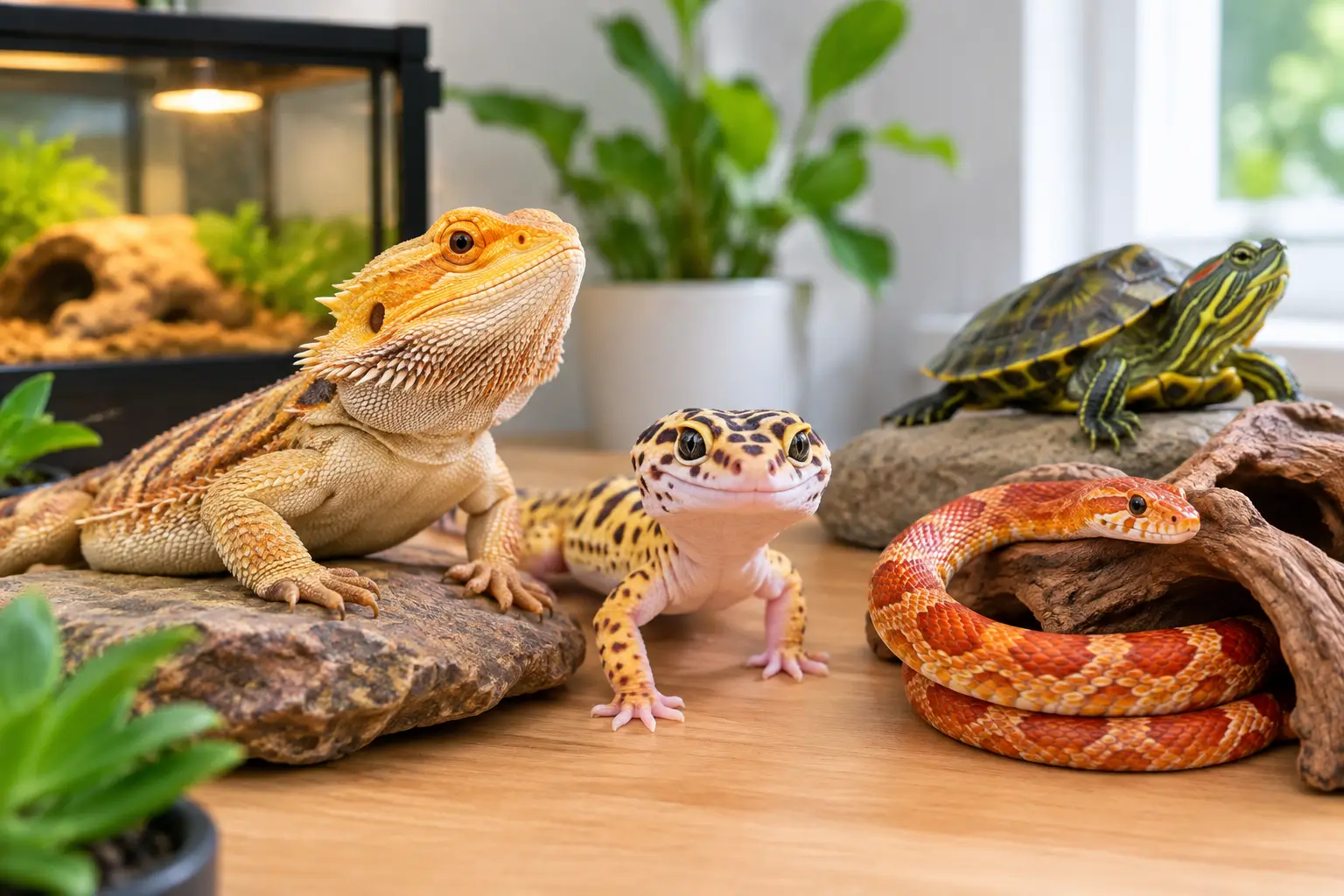
Choosing your first reptile doesn’t have to be overwhelming. Leopard geckos, corn snakes, crested geckos, and bearded dragons remain the top picks for new owners because they forgive small mistakes, eat manageable diets, and don’t demand hours of daily attention. This guide goes beyond the basics to give you the real numbers, health warnings, and setup details you need before bringing one home.
Key Takeaways
- Leopard geckos are the easiest reptile for most first-time owners
- Corn snakes are calm, docile, and simple to feed
- Beginner reptiles are quiet, low-noise pets — ideal for apartments
- Total first-year cost (including vet visits) can reach $400–$900, not just the setup price
- Always consult an exotic vet before bringing one home
- Reptiles can live 10–20+ years, so this is a long-term commitment, not an impulse buy
- Captive-bred animals are healthier and more ethical than wild-caught ones
What Makes a Reptile “Beginner-Friendly”?
Beginner-friendly reptiles share three traits: they tolerate minor husbandry errors, eat simple and predictable diets, and stay calm during regular handling. Leopard geckos and corn snakes lead this category because they need relatively simple setups and settle in without much fuss. Crested geckos and bearded dragons round out the list, each suited to a slightly different lifestyle.
Quick Facts
| Fact | Details |
|---|---|
| Common beginner picks | Leopard gecko, corn snake, crested gecko, bearded dragon |
| Typical lifespan | 10–20+ years, depending on species |
| Enclosure size | 20–75 gallons depending on species and life stage |
| Diet | Insects, greens, or a commercial mix, depending on species |
| Noise level | Silent to nearly silent |
| Handling | Most tolerate gentle handling once settled (2–3 weeks) |
| First-year cost | Roughly $400–$900 including vet care |
Where This Trend Comes From
Reptile keeping isn’t new, but beginner interest has grown sharply as more people live in apartments and want pets that don’t bark, shed heavily, or need daily walks. Social media has also played a role — short videos of geckos and bearded dragons reacting to food or handling have pulled in a wave of first-time owners who might never have considered a reptile before.
Reptile care itself has gotten easier over the decades. Early hobbyists worked mostly by trial and error, without much published guidance. Improvements in heating equipment, UVB lighting, and vet knowledge of exotic species have made it far safer for newcomers to succeed on their first attempt.
Species-by-Species Care Breakdown
Leopard Gecko
Leopard geckos are nocturnal, so they’re most active at night and don’t require UVB lighting, though many keepers now provide low-level UVB for long-term bone health. They need a warm side around 88–92°F and a cooler side around 75°F, with a digital thermostat to keep temperatures stable. A 20-gallon tank suits an adult. Their diet is mainly gut-loaded crickets and mealworms dusted with calcium powder 2–3 times a week, plus a multivitamin dusting once weekly.
Corn Snake
Corn snakes are calm, rarely bite, and are known for being skilled escape artists — a secure, clip-locked lid is non-negotiable. Adults eat one appropriately sized frozen-thawed mouse every 7–10 days. They need a warm side near 85°F and a cool side near 75°F, and no UVB is strictly required, though some keepers offer low UVB as a supplement. A 40-gallon tank works well for an adult.
Crested Gecko
Crested geckos do best in a tall, vertical enclosure since they’re arboreal and prefer climbing to floor space. They need moderate-to-high humidity (60–80%), which means daily misting or a fogger. Most keepers feed a commercial powdered crested gecko diet mixed with water 3–4 times a week, alongside occasional live insects as a treat. They don’t have eyelids and clean their eyes with their tongues, and they can drop their tail under stress — it won’t grow back, but the gecko adapts fine.
Bearded Dragon
Bearded dragons need daily UVB lighting (replaced every 6–12 months even if the bulb still lights up, since UVB output fades before visible light does) and a basking spot of 95–110°F for adults, with a cool side around 75–85°F. Juveniles eat mostly insects (80% insects, 20% greens); adults flip that ratio to mostly leafy greens and vegetables with insects as a supplement. Adults need a 75–120 gallon enclosure. They flare the skin under their chin, called a “beard,” when threatened or displaying dominance.
Comparison Table
| Reptile | Best For | Adult Enclosure | Diet | Special Requirement |
|---|---|---|---|---|
| Leopard Gecko | First-time owners wanting low effort | 20 gal | Gut-loaded insects, calcium dust | No UVB required, nocturnal |
| Corn Snake | Owners wanting a calm, handleable snake | 40 gal | One mouse every 7–10 days | Secure, locking lid |
| Crested Gecko | Owners with limited floor space | 18x18x24 in (vertical) | Powdered diet + occasional insects | High humidity, no dropped tail regrowth |
| Bearded Dragon | Owners wanting an interactive pet | 75–120 gal | Insects + greens (ratio shifts with age) | Daily UVB, replaced every 6–12 months |
Health Warning Signs to Watch For
New owners often miss early symptoms because reptiles hide illness well. Contact an exotic vet immediately if you notice:
- Stuck or incomplete shedding — retained shed around toes or the tail tip can cut off circulation
- Metabolic bone disease (MBD) signs — soft jaw, swollen limbs, or difficulty moving, usually from inadequate calcium or UVB
- Respiratory infection signs — open-mouth breathing, wheezing, or mucus around the nose or mouth
- Impaction — loss of appetite combined with straining or no bowel movement for an extended period, often from loose substrate ingestion
- Sudden color change, lethargy, or refusal to eat for more than a few days (note that some species, like snakes before shedding, naturally refuse food temporarily)
Fast action on any of these usually leads to a much better outcome than waiting to see if it resolves on its own.
Real Cost Breakdown

| Item | Estimated Cost |
|---|---|
| Reptile itself (captive-bred) | $20–$150 depending on species |
| Enclosure and setup | $150–$500 |
| Heating equipment (under-tank heater or ceramic heat emitter + digital thermostat) | $50–$150 |
| UVB lighting (bearded dragons, and optional for others) | $30–$60, replaced every 6–12 months |
| Monthly food and supplies | $10–$30 |
| Vet visits (initial checkup + as-needed) | $50–$150 per visit |
| Estimated first-year total | $400–$900 |
| Estimated 10-year lifetime cost | $1,500–$4,000+, mostly food, bulbs, and vet care |
The lifetime number matters more than the sticker price of the animal itself — a $20 leopard gecko can still cost several thousand dollars in food, equipment replacement, and vet care over a 15–20 year lifespan.
Sourcing Your Reptile Responsibly
Always buy from a reputable breeder or established pet store rather than collecting from the wild. Captive-bred reptiles are generally healthier, better acclimated to handling, and free of the parasites often found in wild-caught animals. In some regions, certain species — particularly tortoises and some turtles — require permits or have import restrictions, so check local regulations before purchasing, especially for anything beyond the four species covered here.
Common Mistakes New Owners Make
- Skipping a digital thermostat — inconsistent heating is one of the fastest ways to cause serious illness
- Choosing too large a species too soon — bearded dragons and larger snakes need much more space and handling time than geckos
- Guessing at diet ratios — each species has a different insect-to-vegetable balance, and getting it wrong long-term causes health problems
- Handling too soon — give a new reptile 1–2 weeks to settle before regular handling
- Using loose substrate with species prone to impaction without supervision during feeding
- Forgetting to replace UVB bulbs on schedule, since visible light output outlasts UVB output
Pros and Cons
| Pros | Cons |
|---|---|
| Quiet, low-noise pets | Requires precise heating and lighting setup |
| Simple, predictable daily routine | Upfront cost can reach $400+ |
| Long lifespan for many species | Not a cuddly, affectionate pet for everyone |
| Good for small apartments | Needs regular tank cleaning and spot-checks |
| Many species tolerate gentle handling | Some species require live insect feeding |
Alternatives If a Reptile Isn’t Right for You
| Option | Best For |
|---|---|
| Betta fish | Owners wanting a quiet, low-cost pet |
| Hamster | Owners wanting a small, handleable mammal |
| Guinea pig | Owners wanting more social interaction |
| Parakeet | Owners who enjoy sound and movement |
| Freshwater aquarium | Owners who enjoy watching rather than handling a pet |
When to Consult a Vet
Talk to an exotic-animal vet before bringing a reptile home — not just when something goes wrong. A pre-purchase consultation helps you choose the right species for your space and confirms your heating and lighting setup before the animal arrives. Afterward, schedule a wellness check within the first few weeks, and return immediately if you see any of the warning signs listed above.
Frequently Asked Questions

What are the best reptile pets for beginners? Leopard geckos, corn snakes, crested geckos, and bearded dragons are the most commonly recommended starting points. Ball pythons and Russian tortoises are sometimes added to this list, though both require more specialized setups — ball pythons need consistent humidity and can be selective eaters, while Russian tortoises need a large outdoor or indoor tortoise table and, in some regions, specific permits.
What is the best pet for a person over 70 who lives alone? This depends heavily on mobility and daily routine. A calm reptile like a leopard gecko needs little daily handling and stays quiet, which can suit an independent lifestyle. That said, reptiles need steady room temperatures and occasional live food, which may not suit every household — a cat or small dog might be a better fit for someone who wants more social interaction. It’s worth discussing with family or a vet before deciding.
What are some good pet lizards for beginners? Leopard geckos and crested geckos are the most beginner-friendly lizards. Bearded dragons work well for owners who want more interaction and don’t mind the larger enclosure and daily UVB requirement. Blue-tongue skinks are another calm, docile option for owners ready for a larger omnivorous lizard with a diet of insects, fruit, and vegetables.
How much does it cost to start with a beginner reptile? Most setups run $150–$500 upfront, with total first-year costs (including a starter vet visit) closer to $400–$900. Monthly costs after that typically stay in the $10–$30 range, aside from occasional UVB bulb replacements.
Do beginner reptiles need UVB lighting? It depends on the species. Bearded dragons need daily UVB without exception. Leopard geckos and corn snakes don’t strictly require it, though low-level UVB is increasingly recommended for long-term bone health. Crested geckos benefit from low UVB as well, alongside their humidity requirements.
Final Thoughts
The right beginner reptile comes down to matching a species to your space, budget, and comfort level with handling and feeding. Leopard geckos suit owners who want the lowest overall effort; corn snakes suit those who want a calm, handleable pet without daily lighting demands; crested geckos fit small apartments with vertical space; and bearded dragons reward owners willing to invest in a larger, more interactive setup.
Whatever you choose, budget for the full first-year cost rather than just the price of the animal, buy from a reputable captive-bred source, and get a vet consultation before and shortly after bringing your reptile home. A little upfront research prevents most of the health problems beginners run into in the first year — and sets you up for a decade or more of low-maintenance companionship.

Ethan Brooks is an animal behavior writer and pet education specialist with over 9 years of experience producing informative content for pet owners. He enjoys writing about pet behavior, nutrition, training techniques, and responsible pet ownership for dogs, cats, birds, rabbits, reptiles, and other companion animals.
Through Pet Wise Worlds (https://petwiseworlds.com/), Ethan shares well-researched articles designed to help families better understand and care for their pets using reliable, practical information.