Types of tortoise pets are the different tortoise species people keep at home, such as Russian tortoises, Greek tortoises, and Hermann’s tortoises. Each type has its own size, temperament, and care needs. Picking the right type of tortoise pet depends on your space, budget and experience level.
Key Takeaways
- Many types of tortoise pets exist, from small breeds to giant species.
- Small tortoise breeds fit better in most homes than giant ones.
- All tortoises need a plant-based diet and UVB light.
- Tortoises live a long time. Some can outlive their owners.
- Setup costs are often higher than the tortoise itself.
- A reptile vet should check your tortoise every year.
Introduction
People search for types of tortoise pets for a lot of reasons. Some want a calm, quiet pet. Others want something different from a dog or cat.
Tortoises have grown more popular as pets in recent years. Their slow pace and long lifespan appeal to many owners. Some tortoise owners even pass their pet down through the family.
But not every tortoise fits every home. Some species stay small. Others grow to a huge size. This guide covers the main types of tortoise pets. You will learn which types suit beginners, families, and small living spaces.
What Are Types of Tortoise Pets?
Types of tortoise pets are tortoise species that people keep and care for at home. Popular types include the Russian tortoise, Greek tortoise, and Hermann’s tortoise. Some owners also keep larger species, like the sulcata tortoise.
Each type differs in size, diet, and temperament. Small types often suit apartments and beginners. Large types need more space and years of planning.
All pet tortoises need the same basic things. They need heat, UVB light, and a plant-based diet. The details of care change based on the specific type you choose.
Quick Facts Box
| Fact | Details |
| Common pet types | Russian, Greek, Hermann’s, Sulcata, Leopard |
| Typical lifespan | 40–80+ years, depending on species |
| Diet | Mostly leafy greens, weeds, and some vegetables |
| Housing | Outdoor pen (warm climates) or indoor tortoise table |
| Adult size range | 6 inches (small breeds) to over 24 inches (giant breeds) |
| Legal status | Varies by state; some species need permits |
Where Do Pet Tortoises Come From?
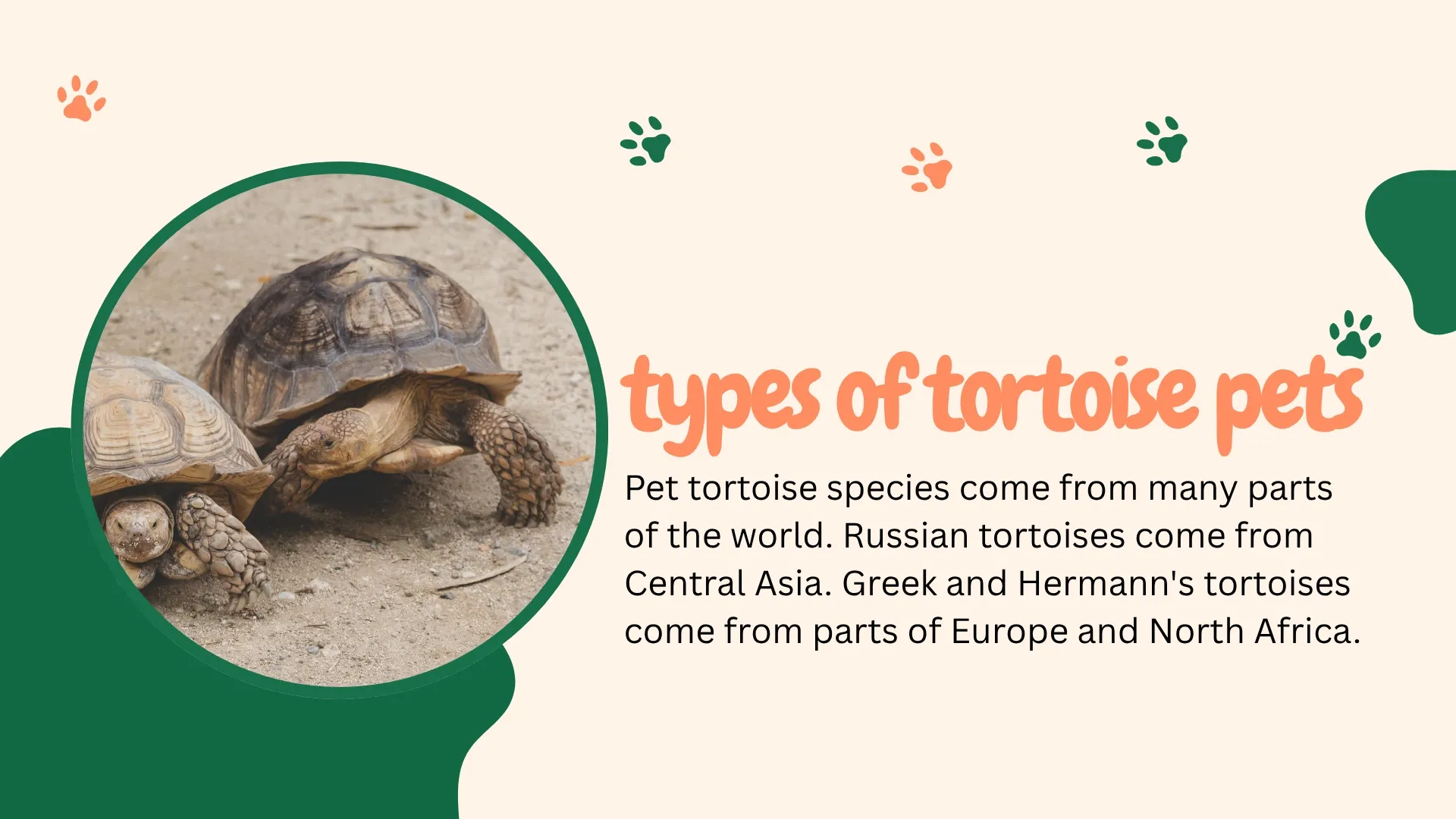
Pet tortoise species come from many parts of the world. Russian tortoises come from Central Asia. Greek and Hermann’s tortoises come from parts of Europe and North Africa.
Sulcata tortoises come from the edge of the Sahara Desert in Africa. Leopard tortoises come from grasslands in East and Southern Africa. Each region shaped how that species handles heat, food, and water.
Most pet tortoises sold today come from captive breeding programs. This protects wild tortoise populations. Always ask a breeder or store about the tortoise’s origin before you buy.
Key Characteristics and Care Needs
Tortoise care needs change by species, but some basics stay the same. All tortoises need warmth, UVB light, and a high-fiber, plant-based diet. Most also need a mix of sun and shade.
Temperament
Most pet tortoises are calm and slow-moving. They rarely bite or act aggressive. Some species, like the Russian tortoise, show more energy and curiosity than others.
Habitat Needs
Tortoises need room to walk, dig, and bask. Outdoor space works well in warm climates. Indoor owners often use a large tortoise table instead of a small tank.
Diet
Most tortoises eat weeds, leafy greens, and some vegetables. Fruit should stay rare, since too much sugar can cause health problems. Your vet can help you build a safe, balanced diet plan for your species.
Quick Comparison Snapshot
| Option | Best For | Key Difference |
| Russian Tortoise | Beginners | Small, hardy, and tolerates minor care mistakes |
| Greek Tortoise | Families | Calm temperament, moderate adult size |
| Hermann’s Tortoise | Long-term owners | Slightly larger, needs consistent outdoor access |
| Sulcata Tortoise | Experienced owners with space | Grows very large, needs a big yard |
Best Types of Tortoise Pets for Beginners
The best types of tortoise pets for beginners are hardy, small, and forgiving. The Russian tortoise tops this list for many owners. It handles small care mistakes better than more sensitive species.
The Greek tortoise also works well for beginners. It stays a manageable size and eats a simple, plant-based diet. Both species do well with a proper tortoise table setup indoors.
Beginners should avoid giant species like the sulcata tortoise. These tortoises look small as babies. They grow into large, space-hungry adults within a few years.
Small Tortoise Species for Pets
Small tortoise species are a popular pick for pet owners with limited space. The Russian tortoise usually stays under 8 inches long. The Egyptian tortoise stays even smaller, often under 5 inches.
These small species still need proper UVB lighting and heat. Size does not lower their care needs by much. A small tortoise still needs a full, well-set-up habitat.
Small tortoise species also tend to have shorter, easier-to-manage lifespans compared to giant breeds, though many still live several decades. This can vary depending on the individual tortoise, so it’s best to confirm expected lifespan with a reptile-savvy vet or breeder.
Low Maintenance Tortoise Breeds
Low maintenance tortoise breeds are species that tolerate a simpler care routine without getting sick easily. The Russian tortoise again stands out here. It handles small swings in temperature and humidity better than many other species.
The Greek tortoise also counts as fairly low maintenance. It eats a wide range of common weeds and greens. This makes feeding simpler for new owners.
No tortoise is truly “no maintenance.” Every tortoise needs daily food, clean water, and a properly heated habitat. “Low maintenance” means more forgiving, not hands-off.
Best Pet Tortoise for Families
The best pet tortoise for families is calm, hardy, and easy for kids to observe safely. The Greek tortoise often fits this role well. It moves slowly and rarely gets stressed by gentle household activity.
Families should still remind kids that tortoises are not toys. Tortoises can get hurt if dropped or handled too roughly. An adult should always supervise young kids around the habitat.
A family tortoise also needs a long-term care plan. Many pet tortoises live 40 years or more. Families should think about who will care for the tortoise years down the road.
Tortoise Breeds That Are Easy to Handle
Tortoise breeds that are easy to handle tend to be calm and slow to startle. The Russian tortoise and Greek tortoise both fit this description well. They rarely act defensive during gentle, brief handling.
Even easy-to-handle tortoises need careful support. Always hold a tortoise close to the ground. A short fall can crack or injure its shell.
Limit handling time overall. Tortoises feel less stress when they stay in their habitat most of the day. Short, calm handling sessions work best for both the tortoise and the owner.
Daily Care Routine and How to Get Started
A solid tortoise care routine starts each morning with a habitat check. Look at the temperature and UVB light first. Offer fresh food and clean water right after.
Daily Steps
- Check basking and ambient temperatures.
- Offer fresh greens and remove old food.
- Refill the water dish.
- Watch for signs of illness or stress.
Weekly Steps
- Clean the habitat substrate or soil.
- Check the UVB bulb’s output or replacement date.
- Trim outdoor grazing areas if your tortoise lives outside.
Getting started is easier with a plan. Research your chosen species before you buy. Set up the full habitat first, then bring your tortoise home once everything works.
Cost Breakdown
Tortoise costs vary a lot by species and setup size. A basic indoor setup often runs $200 to $600. This covers the tortoise table, UVB light, heat lamp, and substrate.
The tortoise itself can cost $50 to $300 or more, depending on species and age. Ongoing costs include food, electricity, and yearly vet visits. Budget around $20 to $30 a month for food and supplies.
Larger species cost more over time. A sulcata tortoise may need an outdoor enclosure that costs thousands of dollars to build. Always research full adult costs before you buy a tortoise, not just the starting price.
Common Mistakes Pet Owners Make
Many new owners pick a species based on looks alone. They do not research the tortoise’s adult size first. This leads to a habitat that becomes too small within a few years.
Another common mistake is skipping UVB lighting. Tortoises need this light to process calcium properly. Without it, tortoises can develop serious shell and bone problems over time.
Some owners also overfeed fruit. Too much sugar can upset a tortoise’s digestion. Stick to a mostly leafy green diet, with fruit as a rare treat only.
Pros and Cons
| Pros | Cons |
| Long lifespan means years of companionship | Long lifespan also means a long-term commitment |
| Calm, quiet temperament | Some species grow very large |
| Simple, plant-based diet | UVB lighting and heat setup can cost more upfront |
| Low noise, good for many living situations | Not ideal for owners who want a cuddly pet |
Similar Options and Alternatives
| Option | Best For |
| Box turtles | Owners who want a smaller shelled pet with a similar diet style |
| Bearded dragons | Owners who want a more active, interactive reptile |
| Leopard geckos | Owners with less indoor space for a habitat |
| Small house pets (guinea pigs, hamsters) | Owners who want a soft, cuddly companion instead |
When to Consult a Vet or Professional
Always find a reptile vet before you bring home a tortoise. Not every vet treats tortoises or other reptiles. A reptile-experienced vet can check your tortoise yearly for early signs of illness.
Contact your vet right away if your tortoise stops eating. Also call if you notice shell changes, swelling, or runny stool. These signs can point to a health issue that needs quick attention.
Never guess on supplements or medication amounts. Your vet should always guide dosing for calcium powder or any treatment. This keeps your tortoise safe as it grows.
Fun Facts About Tortoise Pets
- Some tortoise species can live over 80 years with good care.
- A tortoise’s shell contains nerve endings and can feel touch.
- Sulcata tortoises are the third-largest tortoise species in the world.
- Tortoises cannot swim like turtles and will sink if placed in deep water.
- A tortoise’s growth rings can hint at its age, though they are not always exact.
- Female tortoises can store sperm and lay fertile eggs long after mating.
- Many tortoise species can regrow small parts of a damaged shell over time.
Frequently Asked Questions
What are the best types of tortoise pets?
The best types of tortoise pets for most owners include the Russian tortoise, Greek tortoise, and Hermann’s tortoise. These species stay a manageable size and handle basic home care well. Each still needs proper UVB light, heat, and a plant-based diet.
Larger types, like the sulcata tortoise, suit owners with a lot of outdoor space. Before you pick a type, think about your home size and how much space you can offer for the next several decades.
What is the friendliest tortoise species?
Many owners describe the Russian tortoise as one of the friendliest pet species. It often shows curiosity and moves toward its owner during feeding time. Temperament can still vary a lot between individual tortoises, even within the same species.
Greek tortoises also tend to show a calm, approachable nature. No tortoise acts truly “affectionate” like a dog or cat. Their friendliness mostly shows through calm behavior and comfort around people.
Which tortoise requires the least maintenance?
The Russian tortoise often needs the least maintenance among common pet tortoise species. It tolerates small swings in temperature and humidity better than more sensitive types. It also eats a wide range of common weeds and greens.
Low maintenance does not mean no maintenance. Every tortoise still needs daily food, clean water, and proper lighting. Skipping these basics can lead to serious health problems, even with a hardy species.
Which tortoise species are easiest to care for?
The Russian tortoise and Greek tortoise both rank as easy-to-care-for species for most new owners. Both stay a manageable adult size. Both also eat a simple, plant-based diet that is easy to find.
Species like the sulcata tortoise are harder to care for long-term. Their giant adult size makes housing more complex and costly. Choosing an easier species as a first tortoise helps new owners build confidence.
How long do pet tortoises live?
Pet tortoises often live 40 to 80 years or more, depending on the species. This is much longer than most other common pets. Because of this, a tortoise is a true lifelong commitment for most owners.
This lifespan can vary depending on the individual tortoise and the quality of its care, so it’s best to confirm expected lifespan for your specific species with a vet or reputable breeder.
Final Thoughts
Types of tortoise pets range from small, easygoing breeds to giant, space-hungry species. Picking the right type starts with honest thinking about your home, budget, and long-term plans. A small breed often suits most first-time owners best.
Good tortoise care always comes back to the basics. Proper heat, UVB light, and a plant-based diet keep most tortoises healthy for decades. Skipping these basics causes most of the health problems tortoise owners see.
Take your time picking a species. Talk to a reptile vet before you buy. With the right setup, a pet tortoise can become a calm, long-lasting companion for your whole family.

Olivia Bennett is a pet care writer and animal wellness researcher who has spent more than 8 years creating practical content for pet owners. Her work focuses on dog and cat care, pet nutrition, training, grooming, behavior, and preventive health.
At Pet Wise Worlds (https://petwiseworlds.com/), Olivia researches trusted sources and transforms expert knowledge into easy-to-follow guides that help pet owners give their companions healthier and happier lives.