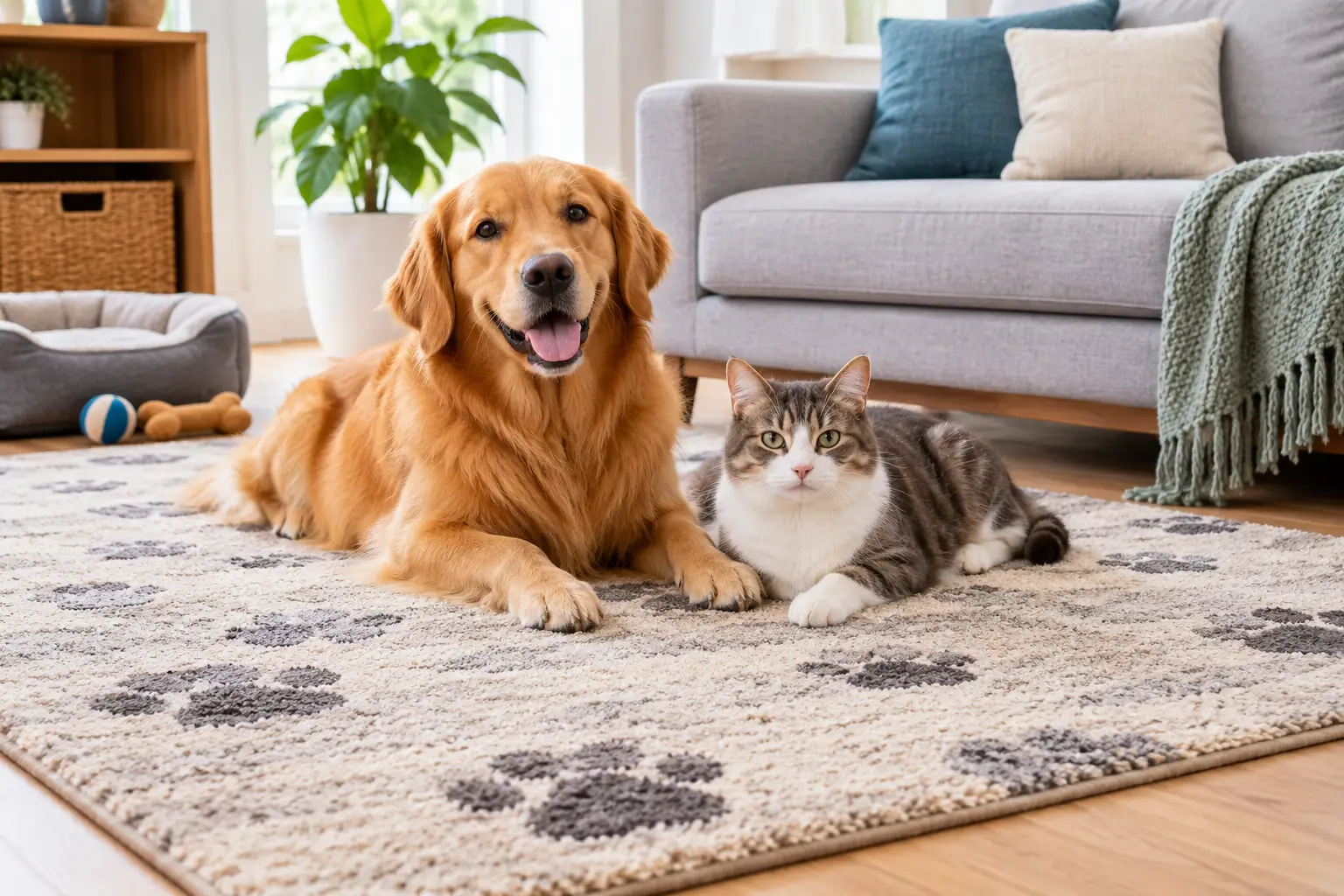
The best rugs for pets are low-pile, stain-resistant, and made from washable materials like wool blends, polypropylene, or indoor-outdoor fibers. These rugs hide fur, resist odors, and hold up to claws, spills, and daily paw traffic without trapping allergens or bacteria.
Key Takeaways
- Low-pile and flatweave rugs work best for homes with dogs, cats, or multiple pets.
- Synthetic fibers like polypropylene and nylon clean easily and resist stains.
- Natural fibers like wool cost more but last longer and hide fur well.
- Rug pads protect floors and keep rugs from sliding under active pets.
- Avoid loop-pile or shag rugs if your pet has long nails or sheds heavily.
- Cats and dogs have different rug needs — scratching risk differs from claw-snag risk.
- Regular vacuuming and spot cleaning keep pet rugs fresh and safe for allergies.
- Sunlight, humidity, and eco-conscious buying now shape rug choices as much as durability.
Introduction
Pet owners know the struggle. You pick a beautiful rug, and within a week it’s covered in fur, muddy paw prints, or a mystery stain. Finding the best rugs for pets means balancing style with real-life durability.
This search has grown fast. More households now include dogs or cats than ever — pet ownership across the U.S. now sits above 66% of homes — and open-concept layouts with hard floors have made rugs a bigger part of daily life. People want warmth and comfort without sacrificing cleanliness.
The right rug does more than look good. It protects your floors, gives pets a comfortable place to rest, and cuts down on the time you spend cleaning. This guide walks through materials, real brand options, sizing, cat vs. dog needs, allergy considerations, sustainability, and buying logistics, so you can pick a rug that fits your home and your pet’s habits.
What Is a Pet-Friendly Rug?
A pet-friendly rug is any rug built to handle fur, claws, moisture, and odor without falling apart or trapping allergens. It usually has a short pile, tight weave, and a stain-resistant finish.
These rugs differ from standard decorative rugs in a few key ways. Manufacturers often treat pet rugs with soil-repellent coatings. Many use synthetic fibers that don’t absorb liquid the way wool or cotton does.
Common Types of Pet-Friendly Rugs
- Flatweave rugs — thin, tightly woven, easy to shake out and clean
- Indoor-outdoor rugs — made for moisture and heavy foot traffic
- Washable rugs — designed to go in a washing machine, often as a two-piece cover-and-pad system
- Low-pile synthetic rugs — resist snags from claws and shed less lint
Quick Facts Box
| Fact | Details |
|---|---|
| Best pile height | Low pile, under 0.5 inches |
| Best materials | Polypropylene, nylon, wool blends |
| Materials to avoid | Shag, high-pile wool, silk, loop-pile with long-nailed pets |
| Average lifespan | 3–7 years with proper care |
| Cleaning frequency | Vacuum 2–3 times weekly, deep clean monthly |
| Standard sizes | 5×7 ft (small rooms), 8×10 ft (living rooms), 9×12 ft (large open spaces) |
| Price range | $30–$400+ depending on size, material, and brand |
Key Characteristics of a Good Pet Rug
A good pet rug balances durability, comfort, and easy cleanup. The right choice depends on your pet’s size, shedding level, and how much time they spend on the rug.
Fiber and Weave
Tight weaves trap less fur than loose or looped weaves. Loops can also snag on claws, which stresses both the rug and your pet’s nails.
Stain and Moisture Resistance
Rugs treated with stain-resistant coatings handle accidents better. This matters most for puppies, kittens, senior pets, or homes with multiple animals.
Texture and Comfort
Pets like soft surfaces, but very plush rugs trap fur deep in the fibers. A slightly firmer, low-pile texture still feels comfortable while staying easier to clean.
Hypoallergenic and Low-Allergen Options
If anyone in the household has pet allergies, look for rugs specifically labeled low-pile and synthetic, since dense natural fibers like wool can hold dander and dust mites longer than tightly woven polypropylene or nylon. Washable rugs have an added advantage here: regular machine washing removes dander and dust buildup far more thoroughly than vacuuming alone. There’s no single “hypoallergenic certified” standard for rugs, so the practical fix is choosing washable, low-pile synthetics and washing on a consistent schedule rather than relying on a label.
Fade and UV Resistance
Rooms with large windows or south-facing light put constant stress on rug color. Synthetic fibers like polypropylene and solution-dyed nylon resist UV fading far better than natural wool or cotton, which can visibly lighten within a year or two of direct sun exposure. If a rug sits in a sunny spot, look specifically for “fade-resistant” or “UV-stable” in the product description, and consider rotating the rug every few months so wear and fading stay even across the surface.
Best Rug Cleaner for Pets
The best rug cleaners for pets are enzyme-based cleaners that break down pet odor and stains without harsh chemicals. These formulas target the source of odor instead of just masking it.
Enzyme cleaners work well because they break down organic matter like urine, drool, or vomit. Regular carpet cleaners often just cover the smell instead of removing it.
What to Look For in a Cleaner
- Enzyme or bio-active formula
- Pet-safe, non-toxic ingredients
- No strong fragrance, since strong scents can bother pets
- Fabric compatibility with your rug’s material
Popular enzyme cleaner brands that pet owners commonly reach for include Rocco & Roxie, Nature’s Miracle, and Angry Orange — all widely available and formulated specifically for pet stains rather than general household spills. Always test a cleaner on a small hidden area first. This helps you check for discoloration before treating the whole rug.
Step-by-Step Stain Removal
- Blot, don’t rub. Press a clean, absorbent cloth onto the stain to lift as much liquid as possible. Rubbing pushes the stain deeper into the fibers.
- Apply the enzyme cleaner. Spray or pour enough to fully saturate the stained area, not just the surface.
- Let it sit. Enzyme cleaners need time to break down the organic matter — most labels recommend 10–15 minutes, but stubborn or set-in stains may need longer.
- Blot again. Once the cleaner has worked, blot the area dry with a fresh cloth.
- Rinse if needed. For rugs sensitive to residue, lightly dab with a damp cloth to remove any leftover cleaner.
- Air dry fully. Let the spot dry completely before letting pets back on the rug — a damp rug re-attracts dirt and can trap moisture underneath.
Best Area Rugs for Pets: Real Brand Options
Beyond material and weave, it helps to know which brands actually build for pet households. A few names come up consistently among pet owners and rug retailers in 2026:
- Ruggable — known for two-piece washable rug systems (a fabric top layer plus a grippy pad), popular specifically because the whole thing can go in a washing machine.
- Lorena Canals — handmade cotton and wool washable rugs with a premium, natural look; pricier than mass-market synthetics but durable and non-toxic.
- Rugs USA, nuLOOM, and Lahome — budget-friendly machine-washable lines with frequent sales, a good starting point if price is the main concern.
- Tumble — cushioned, spill-resistant washable rugs, a solid pick for kitchens, dining areas, or feeding stations.
- SAFAVIEH and OLANLY — stain-resistant polypropylene options with non-shedding, non-slip construction at accessible price points.
- Loloi and Momeni — carried by several designer rug retailers for households that want pet durability without a purely utilitarian look.
Area rugs get heavy foot and paw traffic, so durability matters more than in low-traffic rooms. Synthetic fibers like polypropylene handle this kind of wear well, while the washable brands above solve the deep-clean problem directly.
Where to Buy for the Best Price
Prices for the same rug can vary noticeably depending on where you shop. Brand websites often run seasonal sales (especially around major holidays) and give access to the newest colorways first. Marketplaces like Amazon frequently discount the same SKUs and offer faster shipping, but selection can lag behind the brand’s own site. Physical retail stores let you feel the material and check pile height in person before buying, which matters for pet households, but rarely beat online sale pricing. A simple rule: check the brand’s own site for current promotions first, then compare against Amazon before purchasing, especially for higher-cost brands like Lorena Canals or larger Ruggable sizes.
Size and Placement Tips
Choose an area rug slightly larger than your pet’s favorite resting spot. As a general guide: 5×7 ft rugs suit a single pet bed corner or small room, 8×10 ft works for a standard living room where pets roam and lounge, and 9×12 ft or larger fits open-plan spaces with multiple pets. Sizing up keeps claws off hard floors nearby and reduces slipping on smooth surfaces.
Delivery and Unrolling Tips
Large rugs typically arrive tightly rolled and compressed for shipping. Once unrolled, lay the rug flat in its intended spot and give it 24–48 hours to relax and flatten out — walking on it immediately or trying to force it flat can leave stubborn creases. If edges still curl after a couple of days, placing books or other flat weights on the corners overnight usually resolves it. For rugs over 8×10 ft, it also helps to have a second person on hand when unrolling and positioning, since wet or humid weather can make packaging materials slippery.
Best Area Rugs for Dogs
The best area rugs for dogs are non-slip, low-pile rugs with a rubber or felt backing. A grippy backing helps dogs move confidently without sliding, especially older dogs or those with joint issues.
Dogs tend to dig, scratch, or circle before lying down. A tightly woven rug holds up better to this behavior than a loose-weave design.
Rugs for Large vs. Small Dogs
Larger dogs need thicker, more durable rugs that resist matting under heavier weight. Smaller dogs can use lighter rugs, but non-slip backing still matters for safety, especially for breeds prone to joint issues on slick floors.
Rugs for Senior and Arthritic Pets
Older or arthritic pets need more than just a non-slip backing — traction across the entire rug surface matters for confidence and safety. Low-pile rugs with a dense, grippy weave give paws better purchase than smooth or high-pile options, which can feel unstable underfoot. Placing rugs as “traction pathways” between a pet’s bed, water bowl, and favorite window spot can meaningfully reduce slipping injuries on hardwood or tile. A quality rug pad underneath adds another layer of grip and also cushions joints during longer rest periods.
Best Area Rugs for Cats
Cats bring a different set of rug risks than dogs. Scratching, rather than claw-snagging while walking, is the main concern, so a tightly woven, low-pile rug resists visible fraying better than a loose weave that cats can pick apart thread by thread. Sisal-look synthetic rugs are popular in cat households because the texture satisfies scratching instincts without sacrificing a scratching post’s job — though a dedicated scratching post is still worth keeping nearby so the rug doesn’t take all the wear.
Litter tracking is another cat-specific issue. Placing a low-pile, easy-to-shake mat or rug near the litter box catches stray litter before it spreads, and flatweave designs make it easy to shake tracked litter outside. Cats are also more sensitive to strong-smelling cleaning products than dogs, so unscented, enzyme-based cleaners matter even more in cat households.
Best Rugs for Pets and Kids
The best rugs for pets and kids are washable, non-toxic rugs with tight, low-pile weaves that resist both crayon marks and pet stains. Households with both kids and pets deal with more mess overall, so easy-clean materials matter even more.
Look for rugs certified free of harsh chemical treatments, since kids and pets both spend time close to the floor. Rounded rug corners or bound edges also help prevent trip hazards during active play.
Balancing Style and Practicality
Busy patterns hide daily messes better than solid colors in high-traffic family rooms. This lets the rug stay presentable between deep cleanings.
Special Considerations for Multi-Pet Households
Homes with more than one pet see faster wear and more overlapping traffic patterns, so a few extra rules apply:
- Go up a size and pile durability tier. Multiple pets means more claws, more shedding, and more accident risk in the same footprint, so a mid-to-high durability synthetic tends to outlast budget options faster than in single-pet homes.
- Watch for territorial marking. In multi-cat or mixed dog-cat homes, stronger enzyme cleaners and more frequent spot treatment help prevent one pet’s marking from encouraging repeat behavior in the same spot.
- Stagger rug placement. Putting rugs at each pet’s preferred resting spot, rather than one large shared rug, can reduce competition and concentrated wear in a single area.
Puppy, Kitten, and Chewing Safety
Young pets explore with their mouths, and rug fibers are a common target. Loose-weave or shedding fibers pose a higher risk of being chewed and swallowed than tightly bound, low-pile synthetic weaves. If you have a teething puppy or a kitten still in its chewing phase, avoid rugs with fringe, tassels, or loose loop-pile edges, and supervise rug time until the chewing phase passes.
Climate and Environment Considerations
Humid climates increase the risk of mold or mildew forming under rugs, especially natural fibers like wool or jute that hold moisture longer. In humid or high-moisture homes, synthetic, quick-drying materials like polypropylene are the safer choice, paired with a breathable rug pad that allows airflow underneath. In dry climates, static buildup can be more noticeable on synthetic rugs; a rug pad with anti-static properties or occasional light misting can help.
Eco-Friendly and Sustainable Options
More rug brands now offer pet-friendly options made from recycled materials — recycled PET (plastic bottle) fibers, in particular, have become common in indoor-outdoor and washable rug lines because they hold up to moisture and cleaning just as well as virgin polypropylene. Natural options like jute or organic cotton blends are more biodegradable but generally less pet-durable, so they suit lighter-traffic areas better than a dog’s main resting spot. If sustainability is a priority, look for rugs labeled with recycled fiber content percentages or third-party certifications, and weigh that against the durability trade-offs covered earlier in this guide — a rug that wears out in a year isn’t more sustainable than a durable one that lasts five.
Rug Grip and Anti-Slip Solutions
A rug pad is the first line of defense against slipping, but a few other tools help in specific situations:
- Corner grippers — small adhesive or clip-on pads that anchor rug corners to the floor, useful for smaller rugs or runners that curl at the edges.
- Double-sided rug tape — runs along the rug’s perimeter for a more permanent hold, best for rugs that stay in one place long-term.
- Non-slip rug pads with high-traction rubber — worth the upgrade over basic felt pads in homes with large or heavy dogs, since standard pads can compress and lose grip faster under constant weight.
Combining a full-size rug pad with corner grippers on high-traffic edges (like the side a dog jumps off of) usually solves persistent sliding better than either solution alone.
Daily Care Routine for Pet Rugs
A simple daily routine keeps pet rugs looking and smelling fresh. Consistency matters more than intensity here.
- Vacuum daily or every other day to lift loose fur before it embeds.
- Spot clean accidents immediately with an enzyme cleaner.
- Shake out flatweave rugs outside once a week if possible.
- Rotate the rug every few months for even wear.
- Deep clean monthly with a carpet cleaner, washing machine (for washable rugs), or professional service.
Brushing your pet regularly also cuts down on loose fur landing on rugs in the first place.
Cost Breakdown
Rug costs vary widely based on size, material, and brand. Budget synthetic rugs start around $30–$60 for smaller sizes.
Mid-range washable or indoor-outdoor rugs typically run $80–$200 — this covers most of the Rugs USA, nuLOOM, SAFAVIEH, and OLANLY range. Higher-end wool blends, Ruggable’s larger sizes, or Lorena Canals’ handmade designs can reach $300–$400 or more for larger sizes.
Ongoing costs include cleaning supplies, occasional professional cleaning, and rug pads, which usually add $20–$50 per year depending on rug size and household mess level.
Common Mistakes Pet Owners Make
Many rug problems come from avoidable choices rather than bad luck. Knowing these mistakes helps you plan better from the start.
- Choosing light-colored rugs in homes with heavy shedding
- Skipping a rug pad, which leads to slipping and faster wear
- Using strong-scented cleaners that bother sensitive pets
- Picking high-pile or shag rugs for homes with active dogs or cats
- Ignoring litter tracking near cat rugs and mats
- Waiting too long to treat stains, which sets them permanently
- Buying one large rug for a multi-pet home instead of spreading out smaller rugs
- Placing an untreated rug in direct sunlight without checking for fade resistance
Pros and Cons
| Pros | Cons |
|---|---|
| Adds comfort and warmth for pets | Requires regular cleaning |
| Hides minor fur and dirt with the right color | Higher-quality options cost more upfront |
| Protects hard floors from scratches | Some materials trap odor if not cleaned properly |
| Improves home comfort and style | Long-pile styles can snag on claws |
| Washable brands simplify deep cleaning | Two-piece washable systems can shift if the pad wears out |
Similar Alternatives to Consider
| Option | Best For |
|---|---|
| Washable pet mats | Small spaces or feeding areas |
| Rubber-backed runners | Hallways and high-traffic zones |
| Interlocking foam tiles | Play areas or senior pet joint support |
| Outdoor-grade rugs indoors | Extremely heavy shedding or moisture-prone homes |
| Sisal-look scratch mats | Cat households needing scratch-friendly texture |
When to Consult a Professional
Talk to a professional carpet cleaner if stains, odors, or mold keep coming back despite regular cleaning. Some pet stains soak deep into rug padding or subflooring, which needs specialized equipment to fully remove.
If your pet shows signs of skin irritation, sneezing, or allergies that seem linked to a rug’s material or cleaning products, check with your veterinarian. This can vary depending on the individual pet, so it’s best to confirm with your vet before switching cleaning products or rug materials.
Fun Facts
- Flatweave rugs originated as a durable alternative to knotted rugs and naturally shed less fur than plush styles.
- Enzyme cleaners work through a biological process, not just scent-masking chemicals.
- Darker, patterned rugs are a common recommendation among pet owners for hiding daily messes.
- Rug pads reduce slipping, which also lowers joint strain for older or arthritic pets.
- Polypropylene rugs resist moisture better than most natural fiber options.
- Regular grooming for pets can noticeably reduce the amount of fur that ends up embedded in rugs.
Frequently Asked Questions
What is the best material for a rug for a pet? Polypropylene and nylon are among the most pet-friendly rug materials. They resist stains, dry quickly, and hold up well to claws and heavy foot traffic. Wool blends also work well if budget allows, since wool naturally resists dirt and doesn’t hold odor as easily as some synthetics. Avoid silk or delicate natural fibers, since they stain easily and can trap moisture, which may lead to lingering odor over time.
What type of carpet is best for pets? Low-pile, tightly looped or flatweave carpet styles work best for pets. Longer, plush carpet fibers trap fur, dirt, and odor deep in the pile, making regular cleaning harder. Stain-resistant treated carpets also help contain accidents before they set into the fibers. Many pet owners choose carpet tiles in high-traffic pet areas, since damaged sections can be replaced individually instead of replacing the whole floor.
What fabric is most pet friendly? Synthetic fabrics like polyester and polypropylene tend to be the most pet-friendly overall. They resist moisture, dry fast, and don’t absorb odor the way natural fibers can. Microfiber blends are another solid option, since they’re soft for pets to lie on while still holding up to regular washing.
What rugs don’t trap pet hair? Flatweave and low-pile rugs trap the least pet hair, since there’s less fiber depth for fur to sink into. Rugs with a smooth, tight weave let fur sit on the surface, making it easy to vacuum or shake out. Looped or high-pile rugs work in the opposite direction, pulling fur deep into the fibers where it’s harder to remove.
How often should you replace a pet rug? Most pet rugs last three to seven years depending on material quality and how much wear they get daily. Signs it’s time to replace a rug include persistent odor that survives deep cleaning, visible fraying, or matting that no longer responds to brushing or vacuuming.
Are washable rugs actually durable enough for pets long-term? Yes, when cared for as instructed. Two-piece systems like Ruggable are built around a washable top layer and a separate grippy pad, so the pad can be replaced separately if it wears out before the rug itself does.
Is wool safe for cats to scratch? Wool holds up to light scratching but frays faster than sisal-look synthetics under repeated cat claws. A dedicated scratching post next to the rug reduces wear either way.
Do eco-friendly rugs hold up as well as regular synthetic rugs? Recycled-fiber rugs (like recycled PET) generally perform on par with standard synthetic rugs for durability and moisture resistance. Natural, biodegradable options like jute are less durable under heavy pet traffic, so they work better in low-traffic spots than as a dog’s primary resting rug.
Final Thoughts
Choosing the best rugs for pets doesn’t mean giving up on style. With the right material, weave, and color — and a brand built for pet households, like Ruggable, SAFAVIEH, or Lorena Canals depending on your budget — you can find a rug that handles fur, mud, and daily wear while still looking good in your home.
Focus on low-pile, stain-resistant options first, then build a simple cleaning routine around vacuuming and spot treatment. A rug pad and the right cleaner go a long way toward keeping things fresh between deep cleans.
Every home and every pet is a little different. Pay attention to what works for your space, and don’t be afraid to adjust materials or care routines as your pet’s habits change over time.

Ethan Brooks is an animal behavior writer and pet education specialist with over 9 years of experience producing informative content for pet owners. He enjoys writing about pet behavior, nutrition, training techniques, and responsible pet ownership for dogs, cats, birds, rabbits, reptiles, and other companion animals.
Through Pet Wise Worlds (https://petwiseworlds.com/), Ethan shares well-researched articles designed to help families better understand and care for their pets using reliable, practical information.