Rainforest pets are animals that come from tropical rainforest habitats but can also live safely in captivity. This group includes certain frogs, reptiles, birds and insects. Good rainforest pets are captive-bred, legal to own, and suited to indoor enclosures that mimic warm, humid rainforest conditions.
Key Takeaways
- Rainforest pets include frogs, reptiles, birds, and insects from tropical habitats.
- Many rainforest pets do well in small indoor enclosures, not big yards.
- Costs vary a lot. Some rainforest pets are cheap. Others need pricey setups.
- Always buy captive-bred animals. Never take pets from the wild.
- Talk to an exotic pet vet before you bring a rainforest pet home.
- Some rainforest pets suit kids. Others need an adult’s full care.
Introduction
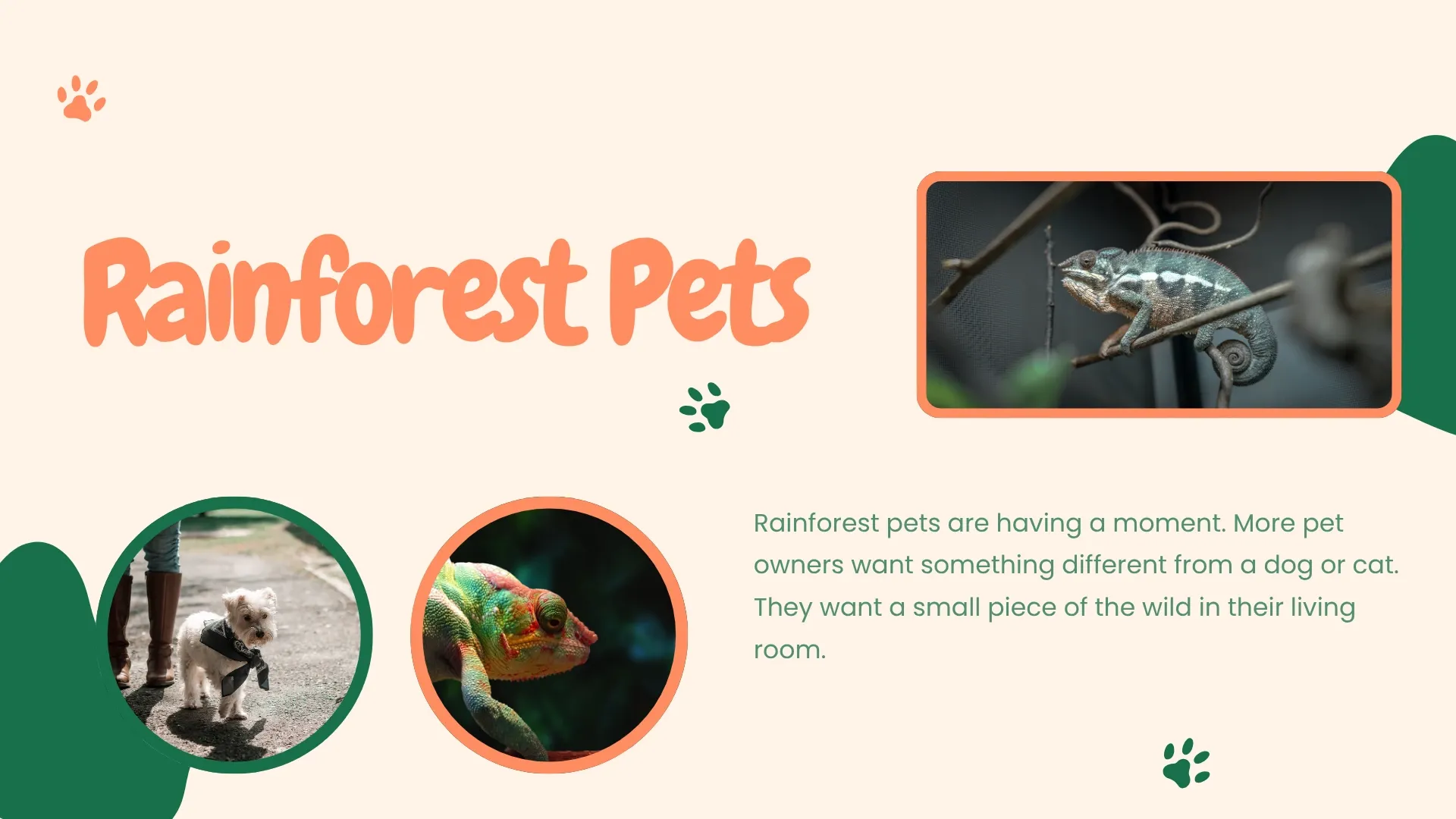
Rainforest pets are having a moment. More pet owners want something different from a dog or cat. They want a small piece of the wild in their living room.
Tropical frogs, colorful reptiles, and quiet insects are popping up in more homes. Social media plays a part in this. Short videos of poison dart frogs and gentle geckos get millions of views.
But rainforest pets are not like regular pets. They need specific heat, humidity, and light. This guide walks you through real, safe choices for rainforest pets. You will learn what to buy, what to skip, and how to keep your new pet healthy and happy.
What Is a Rainforest Pet?
A rainforest pet is any animal from a tropical rainforest that people keep at home. This includes frogs, geckos, chameleons, small birds, and some insects. The animal must be bred in captivity, not caught in the wild.
Rainforest habitats are warm and wet all year. Pets from this environment need that same warmth and moisture indoors. This is why most rainforest pets live in a terrarium or vivarium instead of a cage.
Popular rainforest pets include poison dart frogs, crested geckos, and certain tarantulas. Some people also count small parrots and finches, since many parrot species come from tropical forests in South America, Africa, and Australia. Each animal has its own care needs. This guide covers the safest and most common choices.
Quick Facts Box
| Fact | Details |
| Common types | Frogs, geckos, chameleons, tarantulas, some birds |
| Typical habitat | Warm, humid enclosure (terrarium or vivarium) |
| Best for | Owners who enjoy quiet, low-shedding, visually striking pets |
| Space needed | Often small; many fit on a shelf or desk |
| Lifespan range | Varies widely, from 2–3 years to 15+ years |
| Legal status | Varies by state and species; always check local laws |
Where Do Rainforest Pets Come From?
Rainforest pets originally lived in wild tropical forests in places like the Amazon, Central America, and Southeast Asia. Breeders now raise most pet rainforest species in captivity. This protects wild populations and keeps pets healthier.
Wild-caught animals often carry parasites. They also struggle to adjust to home life. Reputable breeders and pet stores sell captive-bred animals instead. Always ask the seller where the animal came from before you buy.
Some species still get taken from the wild illegally. Groups like the International Union for Conservation of Nature track species at risk from this trade. A responsible rainforest pet owner always chooses captive-bred animals first.
Key Characteristics and Care Needs
Rainforest pets share a few key needs. They need warmth, humidity and the right light. Most also need a varied diet, not just one food type.
Temperature and Humidity
Most rainforest pets need temperatures between 72°F and 85°F. Humidity often needs to stay between 60% and 80%. A good enclosure uses a heat lamp, a thermometer, and a hygrometer to track these numbers.
Enclosure Setup
Rainforest pets need live or fake plants. They also need places to hide and climb. A bare tank causes stress for most rainforest species.
Diet
Diet depends on the species. Frogs and geckos often eat live insects. Birds eat seeds, fruit, and pellets made for their species. Your vet or breeder can help you build the right diet plan.
Quick Comparison Snapshot
| Option | Best For | Key Difference |
| Crested Gecko | Beginners | Easy diet, calm temperament, no live food required |
| Poison Dart Frog (captive-bred) | Experienced owners | Needs precise humidity and a live-insect diet |
| Green Tree Python | Advanced owners | Needs a larger enclosure and careful handling |
| Small Parrot (e.g., budgie) | Families and kids | Social, interactive, needs daily attention |
Best Rainforest Pets for Beginners
The best rainforest pets for beginners are calm, hardy and easy to feed. A crested gecko is a top pick. It eats a simple powdered diet and does not need live food.
Beginners should also look at isopods and springtails. These tiny creatures live in a small tank. They mostly take care of themselves once the enclosure is set up.
Avoid poison dart frogs as a first pet. They look easy but need very precise humidity. One mistake can hurt the frog. Start with something more forgiving, then move up as you gain skill.
Best Rainforest Pets for Kids
Kids do best with rainforest pets that are safe to view and simple to feed. A small parrot, like a budgie, can bond with kids through gentle daily interaction. Adults should still handle feeding and cage cleaning.
Hermit crabs also work well for kids, though not all species are true rainforest natives. Check the species before you buy. A parent should always supervise handling time.
Skip venomous or fragile pets for young kids. Frogs and small reptiles can get hurt easily by rough handling. A calm gecko or a bird in a secure cage is a safer starting point for a child’s first rainforest pet.
Rainforest Pets That Can Live in Small Enclosures
Many rainforest pets thrive in a small, well-set-up enclosure. A 12x12x18 inch terrarium works well for a single crested gecko or a small group of dart frogs. The key is vertical space, not floor space, since many rainforest species climb.
Tarantulas also do well in compact enclosures. Most species need a tank only slightly bigger than their leg span. This makes them a smart pick for owners with limited room.
Small enclosures still need the right gear. You need a heat source, a humidity source, and hiding spots. A tiny tank with no setup will not keep a rainforest pet healthy, no matter how small the animal is.
Rainforest Pets That Do Not Need Much Space in Your Home
Beyond the enclosure size itself, some rainforest pets fit easily into small living spaces like apartments or dorm rooms. Insects and small frogs take up very little floor space. Their tank can sit on a desk, shelf, or dresser.
This differs from needing a small enclosure. Here, the focus is on your home’s overall footprint. A single glass tank uses far less room than a dog crate or a cat tree.
Renters should still check their lease. Some rental agreements limit exotic pets, even small ones. Always confirm pet rules before you bring a rainforest pet into an apartment.
Rainforest Insects That Can Be Kept as Pets
Several rainforest insects make interesting, low-maintenance pets. Stick insects are a popular choice. They eat plant leaves and rarely need handling.
Isopods and millipedes also work well. These creatures help clean the enclosure by eating waste and dead plant matter. Many owners keep them alongside frogs or geckos for this reason.
Tarantulas count as rainforest pets too, though they need more careful handling than smaller insects. Some tarantula species can deliver a mild, irritating bite or release urticating hairs. Always research a species fully, and check local laws, before buying one.
Daily Care Routine and How to Get Started
A good rainforest pet routine starts with checking the enclosure each day. Look at the temperature and humidity readings first thing in the morning. Mist the tank if the humidity has dropped too low.
Daily Steps
- Check temperature and humidity levels.
- Offer fresh food based on your pet’s diet.
- Remove uneaten food or waste.
- Watch your pet for signs of stress or illness.
Weekly Steps
- Do a deeper clean of the water dish or misting system.
- Check plants for mold or dead leaves.
- Confirm your heat lamp and humidity tools still work.
Getting started is simple if you plan ahead. Research your chosen species first. Then build the enclosure before you bring the animal home. This gives you time to fix any setup problems early.
Cost Breakdown
Rainforest pet costs vary a lot by species. A basic setup for a gecko or frog often runs $150 to $400. This covers the tank, heat lamp, hygrometer, and decor.
The animal itself can cost $20 for common insects up to $200 or more for rarer frog morphs. Ongoing costs include food, electricity for heat lamps, and vet visits. Budget at least $20 to $40 a month for food and supplies.
Vet care for exotic pets often costs more than care for a dog or cat. Not all vets treat reptiles, amphibians, or insects. Look for an exotic pet vet in your area before you buy your rainforest pet.
Common Mistakes Pet Owners Make
Many new owners set up the enclosure wrong. They guess at temperature and humidity instead of measuring it. This stresses the animal and can cause illness.
Another common mistake is buying a wild-caught animal. These animals often carry parasites. They also struggle more to adjust to captive life than captive-bred pets.
Some owners also skip research on diet. Rainforest pets often need very specific foods. Feeding the wrong diet can cause serious health problems over time.
Pros and Cons
| Pros | Cons |
| Many species need little floor space | Setup costs can be high upfront |
| Quiet, low-noise pets overall | Exotic vet care can be hard to find |
| Visually striking and unique | Strict care needs, little room for error |
| Some species live many years | Not all species suit kids or beginners |
Similar Options and Alternatives
| Option | Best For |
| Freshwater aquarium fish | Owners who want a calm, low-handling pet |
| Small house pets (hamsters, guinea pigs) | Owners who want a soft, cuddly companion |
| Pet snails | Very low-maintenance, great for young kids under supervision |
| Domestic parrots and cockatiels | Owners who want an interactive, social bird |
When to Consult a Vet or Professional
Always talk to an exotic pet vet before you buy a rainforest pet. Not every vet treats frogs, reptiles, or insects. Find one with exotic pet experience first.
Contact your vet right away if your pet stops eating. Also call if you notice skin changes, swelling, or unusual behavior. These signs can point to a health problem that needs quick care.
A vet can also help you plan diet and habitat setup. This is very helpful before you bring home a species you have not kept before. Never guess on medication or dosing. Your vet should always make that call.
Fun Facts About Rainforest Pets
- Poison dart frogs lose their toxicity in captivity because their diet changes.
- Some tarantula species can live over 20 years, especially females.
- Crested geckos were once thought extinct until they were rediscovered in the 1990s.
- Chameleons can move each eye in a different direction at the same time.
- Many rainforest frogs breathe partly through their skin, which is why humidity matters so much.
- Stick insects use camouflage as their main form of defense.
- Some rainforest parrot species can live 40 years or longer with proper care.
Frequently Asked Questions
What are the best rainforest pets for beginners?
Crested geckos are one of the best rainforest pets for beginners. They eat a simple powdered diet and do not need live insects. Isopods and springtails also work well for first-time owners.
These species forgive small mistakes better than frogs or advanced reptiles do. Start with a hardy species. Learn the basics of humidity and temperature control. Then consider a more advanced rainforest pet once you feel confident in your setup and daily routine.
What rainforest reptiles make good pets?
Crested geckos and certain chameleon species are popular rainforest reptile pets. Crested geckos are calm and easy to feed. Chameleons need more advanced care, including precise humidity and UVB lighting.
Green tree pythons also come from rainforest habitats, but they suit experienced reptile owners only. Always research a reptile’s full adult size and care needs before you buy. Some rainforest reptiles grow much larger than they appear as babies.
How much does it cost to keep a rainforest pet?
Startup costs usually range from $150 to $400 for a basic enclosure setup. This covers the tank, heat source, and humidity tools. The animal itself can cost anywhere from $20 to $200 or more, depending on species.
Ongoing monthly costs often land between $20 and $40 for food and supplies. Electricity for heat lamps adds a bit more. Exotic vet visits can cost more than routine dog or cat visits, so budget for that too.
What are some unusual rainforest pets?
Some unusual rainforest pets include stick insects, isopods, and certain tarantula species. These animals look striking but need very little daily handling. They mostly need a stable, humid enclosure to thrive.
Poison dart frogs also count as unusual pets. In captivity, they lose the toxins they carry in the wild. This makes captive-bred dart frogs safe to keep, though they still need expert-level humidity control.
Are rainforest pets legal to own everywhere?
Rainforest pet laws vary a lot by state and country. Some reptiles, amphibians, and insects need a permit. Others are banned outright in certain areas. This can vary depending on the individual pet, so it’s best to confirm with your local wildlife agency before you buy.
Final Thoughts
Rainforest pets bring a unique piece of the tropics into your home. From calm geckos to quiet stick insects, there is a rainforest pet for many different lifestyles. The key is matching the right species to your space, budget and experience level.
Start small if you are new to rainforest pets. Choose a hardy species first. Build good habits around humidity, temperature, and diet before moving to a more advanced animal.
Always buy captive-bred animals from a trusted source. Check your local laws before you bring a rainforest pet home. With the right setup and a little research, a rainforest pet can be a rewarding, long-term companion.

Ethan Brooks is an animal behavior writer and pet education specialist with over 9 years of experience producing informative content for pet owners. He enjoys writing about pet behavior, nutrition, training techniques, and responsible pet ownership for dogs, cats, birds, rabbits, reptiles, and other companion animals.
Through Pet Wise Worlds (https://petwiseworlds.com/), Ethan shares well-researched articles designed to help families better understand and care for their pets using reliable, practical information.