Best bird pets are companion bird species known for being friendly, easy to care for, and well suited to home life. Popular choices include budgies, cockatiels, and lovebirds. These birds are calm, social, and manageable for most pet owners, including beginners and people with smaller living spaces.
Key Takeaways
- Budgies and cockatiels are top picks for beginner bird owners.
- Many best bird pets do well in apartments and small homes.
- Bird costs include a cage, food, toys, and vet checkups.
- Some birds bond closely with people and love being held.
- Always talk to an avian vet before you bring a bird home.
- Birds need daily attention, even easygoing species.
Introduction
Many people search for the best bird pets before they bring one home. Birds can sing. They can talk. Some even learn tricks.
But not every bird fits every home. Some birds need lots of space and Some want constant company.
This guide breaks down the best bird pets for different lifestyles. You will learn which birds fit beginners and which birds fit small homes. You will also learn daily care, costs, and common mistakes.
Pet birds have grown more popular in recent years. More people work from home now. A pet bird can offer company during the day. It can also bring color and sound into a quiet house.
By the end of this guide, you will know which bird fits your life best. You will also know how to keep that bird happy and healthy.
What Is Best Bird Pets?
Best bird pets are bird species that adapt well to home life. They tend to be friendly and easy to handle. They also tend to stay calm around people.
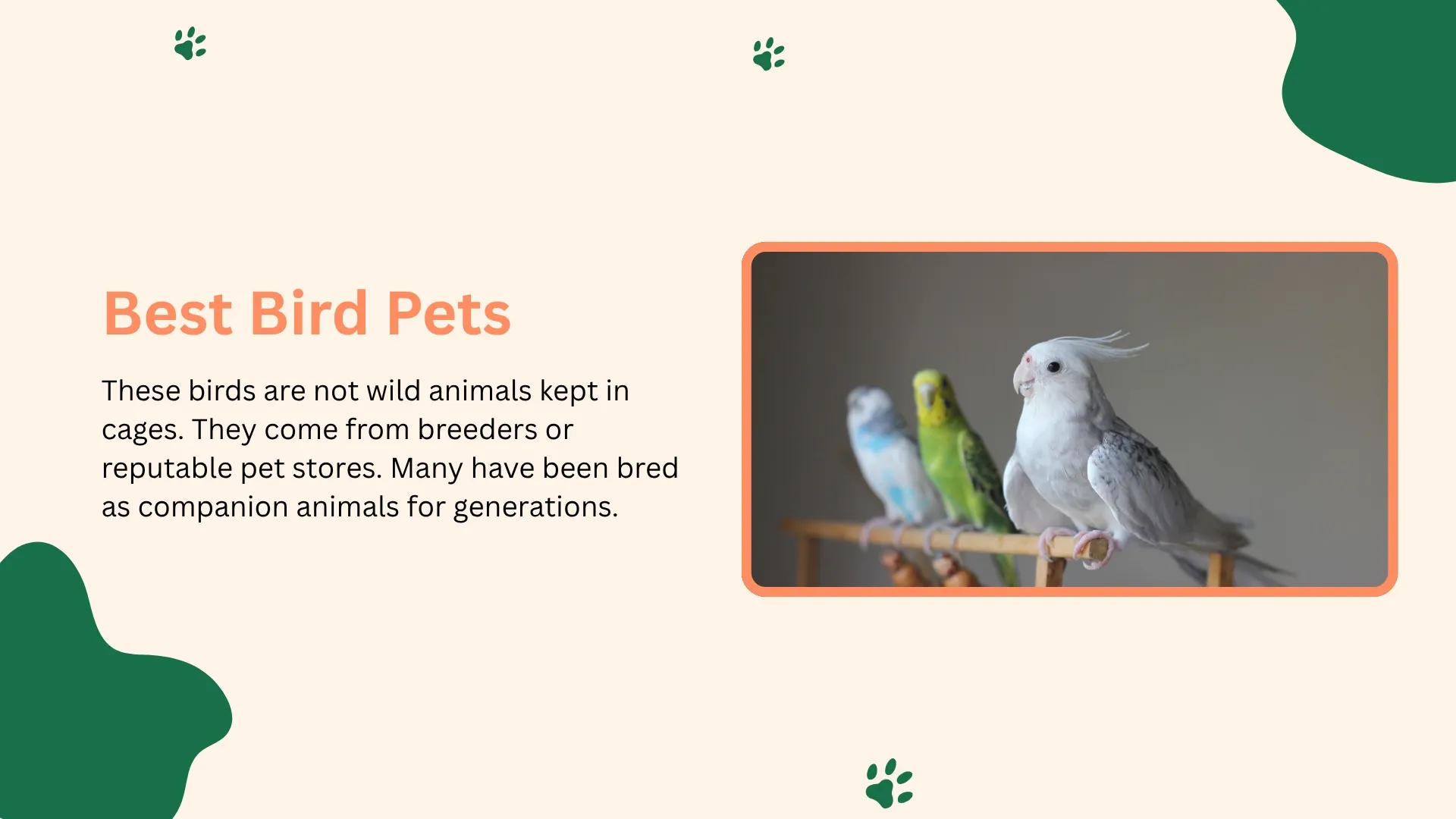
These birds are not wild animals kept in cages. They come from breeders or reputable pet stores. Many have been bred as companion animals for generations.
Common examples include the budgerigar, often called the budgie. Cockatiels are another top pick. Lovebirds and canaries also make the list.
Each bird species has its own personality. Some birds love to cuddle. Some birds prefer to watch from a perch. This is why picking the right species matters so much.
Quick Facts Box
| Fact | Details |
| Common beginner birds | Budgie, cockatiel, canary |
| Typical lifespan | 5 to 20+ years, depending on species |
| Average cage size | Bigger is better; horizontal space matters most |
| Daily care time | 30 minutes to 2+ hours, depending on species |
| Diet type | Pellets, fresh veggies, limited seeds |
| Noise level | Varies widely by species |
| Best for beginners | Budgies and cockatiels |
Key Characteristics and Care Needs
Pet birds share a few common needs. They all need a safe cage. They all need fresh food and water daily.
Most pet birds also need social time. Birds are flock animals in the wild. A lonely bird can become stressed or bored.
Temperament Varies by Species
Some birds are quiet and shy. Others are loud and bold. Cockatiels tend to be gentle. Lovebirds can be more feisty, especially if kept in pairs.
Size and Space Needs
Small birds like budgies need less space than larger parrots. But every bird still needs room to stretch its wings. A cramped cage can hurt a bird’s health and mood.
Mental Stimulation Matters
Birds are smart. They get bored fast without toys or interaction. Rotating toys each week can help keep a bird’s mind active.
Quick Comparison Snapshot
| Option | Best For | Key Difference |
| Budgie | First-time owners | Small, quiet, easy to handle |
| Cockatiel | Owners who want a gentle bond | Larger, affectionate, mild noise |
| Lovebird | Owners who want a colorful, active bird | Bonds strongly, can be nippy |
| Canary | Owners who enjoy song over touch | Not a hands-on bird |
Best Bird Pets for Beginners
The best bird pets for beginners are calm, hardy, and simple to feed. Budgies and cockatiels top this list for most new owners.
These birds forgive small care mistakes better than more sensitive species. They also cost less to start with than larger parrots.
A beginner should still learn the basics first. This includes cage setup, diet, and daily handling. A little research goes a long way before adoption day.
Best Birds for First-Time Bird Owners
First-time bird owners often do best with small, social species. Budgies lead this group. Cockatiels come in close behind.
These birds are used in many beginner guides for a reason. They are affordable. They are widely available from breeders and pet stores.
First-time owners should also plan for the bird’s full lifespan. A budgie can live 5 to 10 years. A cockatiel can live even longer with good care.
Best Pet Birds That Are Easy to Care For
Easy-care pet birds need simple daily routines. Feeding, fresh water, and a clean cage cover most of the basic needs.
Budgies fall into this group. So do canaries, though canaries prefer less handling. These birds don’t need constant training or complex diets.
Still, “easy” does not mean “no effort.” Every pet bird needs daily attention. This includes fresh food, cage cleaning, and time out of the cage when safe.
Best Pet Birds That Like to Be Held
Some birds truly enjoy human touch. Cockatiels are famous for this. Many will lean into head scratches and sit calmly on a shoulder.
Lovebirds can also bond closely with their owner. This is especially true when raised alone, rather than in a pair.
Not every bird enjoys handling, though. Canaries and finches usually prefer to be left alone. This can vary depending on the individual bird, so it’s best to go slow and watch how your bird reacts.
Best Birds for People Who Work From Home
People who work from home often want a bird that offers company without constant demands. Budgies and cockatiels fit this well.
These birds can sit near a desk in a safe cage. They often enjoy watching daily activity. Some will chirp along with music or calls.
Loud species like larger parrots may not suit a home office. Video calls and loud bird noise rarely mix well.
Daily Care Routine and How to Get Started
A good bird care routine starts each morning. Owners should check food and water first. Fresh food should be added daily.
Morning Routine
Refill the water dish with clean water. Add a small amount of fresh pellets. Offer a few fresh vegetables if the species allows it.
Daytime Care
Let the bird out of the cage if it’s tame and the room is safe. Close windows and doors first. Watch for ceiling fans, open pots, and other pets.
Evening Routine
Wipe down perches and remove leftover food. Cover the cage at night if your bird needs darkness to sleep well. Most birds do best with 10 to 12 hours of quiet, dark rest.
Getting Started Checklist
- A cage sized for the species
- Perches of different widths
- Food and water dishes
- Pellet-based diet, plus safe fresh foods
- A few safe toys
- A vet visit with an avian vet soon after adoption
Cost Breakdown
Bird ownership costs vary by species and setup. A budgie usually costs less upfront than a cockatiel or lovebird.
| Item | Estimated Cost Range |
| Bird (budgie to cockatiel) | $20–$250 |
| Cage | $50–$300 |
| Food and supplies (monthly) | $15–$40 |
| Toys and enrichment | $10–$30 |
| Vet checkup | Varies by clinic and location |
This can vary a lot depending on where you live and which species you choose. Always check with local breeders, shelters, or vets for current pricing.
Common Mistakes Pet Owners Make
New bird owners often make a few common errors. Knowing them early can save a lot of stress later.
- Buying a cage that’s too small
- Feeding only seeds instead of a balanced diet
- Skipping social time with the bird
- Placing the cage in a drafty or noisy spot
- Ignoring signs of illness until they get serious
- Not researching the species’ full adult size and lifespan
Pros and Cons
| Pros | Cons |
| Many species are low-cost to start | Some species live 15–20+ years |
| Birds can be affectionate and playful | Noise levels vary and can be loud |
| Great for small living spaces | Daily cleaning is required |
| Some birds can learn to talk | Not every bird enjoys being held |
| Good option for allergy-prone owners in some cases | Vet care needs an avian specialist |
Similar Bird Species and Alternatives
Beyond the top beginner picks, other bird species may suit specific lifestyles. Each comes with its own care level and personality type.
| Option | Best For |
| Parrotlet | Owners who want a tiny bird with big personality |
| Green cheek conure | Owners who want more interaction and playfulness |
| African grey parrot | Experienced owners ready for a long-term, high-care bird |
| Finch | Owners who enjoy watching birds more than handling them |
When to Consult a Vet or Professional
Always find an avian vet before or soon after adopting a bird. Not all vets treat birds, so this step matters.
Contact a vet right away if your bird stops eating. Also call if you notice fluffed feathers for more than a day. Sudden quietness, limping, or discharge from the eyes or beak are also warning signs.
Never try to diagnose or treat a sick bird on your own. Birds can hide illness well. By the time symptoms show, a bird may already be quite sick. A licensed vet can guide you safely through any health concern.
Fun Facts
- Budgies are actually a type of small parrot.
- Some cockatiels can learn to whistle full tunes.
- Wild budgies often live in large flocks in Australia.
- A bird’s beak never stops growing during its life.
- Many parrot species can live longer than dogs or cats.
- Birds use body language, like feather position, to show mood.
- Canaries were once used to help detect gas in mines.
Frequently Asked Questions
What are the best bird pets for beginners?
Budgies and cockatiels are the top picks for beginners. Both are calm, social, and easy to feed. They also cost less than many larger parrot species. Beginners should still learn basic care before adopting. This includes proper cage size, diet, and daily handling. A little planning helps the bird settle in faster and stay healthier long term.
Which pet birds are easiest to care for?
Budgies and canaries are among the easiest to care for daily. They need a clean cage, fresh food, and regular water changes. Canaries need less hands-on time than budgies or cockatiels. This can vary depending on the individual bird’s personality and health. Owners should still watch for signs of illness and schedule regular vet checkups with an avian specialist.
Which birds are good for apartment living?
Budgies and cockatiels often do well in apartments. They take up little space and don’t need outdoor access. Noise levels still matter in shared buildings, though. Cockatiels can whistle loudly at times. Canaries are also a good apartment option since they are quieter and don’t need to be let out often. Always check apartment pet rules before adopting any bird.
Which bird is easiest to train?
Budgies are often seen as easy to train for basic tricks and talking. Cockatiels also train well, especially for step-up commands and whistling. Training works best with short, daily sessions and positive rewards like small treats. Consistency matters more than speed. Every bird learns at its own pace, so patience makes a big difference in training success.
Do pet birds need a cage cover at night?
Many pet birds sleep better with a cage cover. It blocks light and reduces nighttime startling. Not every bird needs one, though. This can vary depending on your home’s lighting and noise levels, so watch your bird’s sleep habits and adjust as needed.
Final Thoughts
Choosing from the best bird pets comes down to your lifestyle and home. Beginners often do best with a budgie or cockatiel. Busy home workers may enjoy a calm, quiet companion nearby.
No matter which species you choose, daily care matters most. Fresh food, a clean cage, and social time keep birds healthy and happy. A good relationship with an avian vet also makes a big difference over the years.
Pet birds bring color, sound, and personality into a home. With the right match and steady care, a pet bird can become a true companion for many years to come.

Ethan Brooks is an animal behavior writer and pet education specialist with over 9 years of experience producing informative content for pet owners. He enjoys writing about pet behavior, nutrition, training techniques, and responsible pet ownership for dogs, cats, birds, rabbits, reptiles, and other companion animals.
Through Pet Wise Worlds (https://petwiseworlds.com/), Ethan shares well-researched articles designed to help families better understand and care for their pets using reliable, practical information.