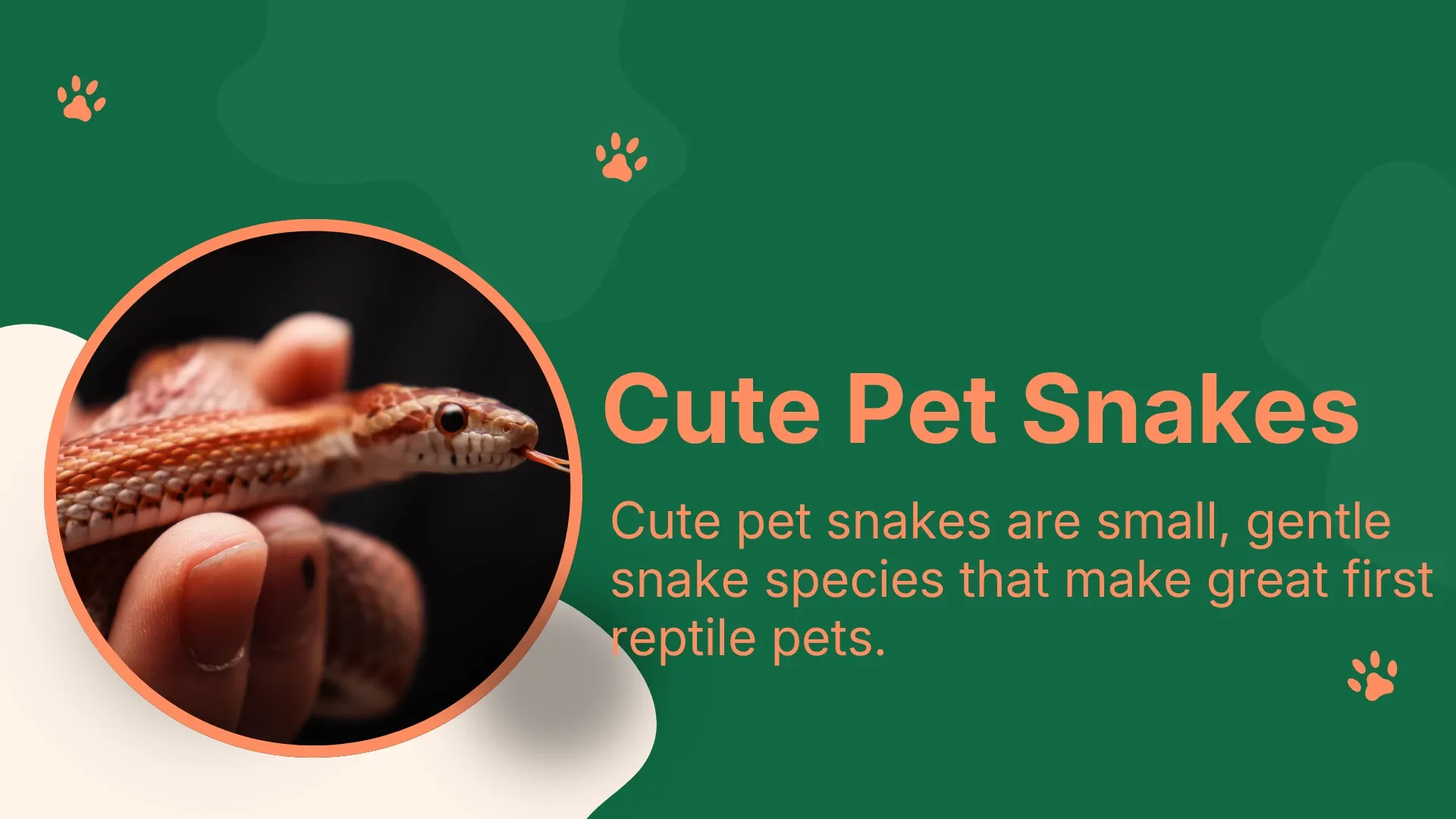
Cute pet snakes are small, gentle snake species that make great first reptile pets. They include corn snakes, ball pythons, and garter snakes. These snakes have calm personalities, easy care needs, and manageable sizes. Many pet owners find them low-mess, quiet, and fun to watch grow.
Key Takeaways
- Cute pet snakes are usually small, calm, and easy to handle.
- Most need a warm tank, a hide spot, and clean water.
- They eat pre-killed mice or rats, not live prey, in most cases.
- Starter setups often cost more than the snake itself.
- A reptile vet check is smart within the first few weeks.
- Not every snake is safe for young kids to handle alone.
Introduction
A lot of pet owners search for cute pet snakes because they want a pet that is quiet and different. Snakes don’t bark. They don’t need daily walks. They also don’t shed everywhere like dogs and cats do.
Many people also picture snakes as scary. But small pet snakes often have gentle, easygoing personalities. This surprises a lot of first-time owners.
Reptile pets have grown more popular over the past several years. Pet snakes fit well in apartments and small homes. They also make a great option for owners who want a low-noise, low-mess pet.
This guide covers everything a new owner needs. You’ll learn what makes a snake “cute” and beginner-friendly. You’ll also learn daily care steps, real costs, and common mistakes to avoid.
By the end, you’ll know if a small pet snake fits your home and your lifestyle.
What Is a Cute Pet Snake?
A cute pet snake is a small, calm snake species that is easy to care for and safe to handle. These snakes are popular with beginners because of their size and gentle nature.
Most “cute” pet snakes share a few traits. They stay small as adults and rarely bite. They also tolerate gentle handling well.
Common examples include corn snakes, ball pythons, garter snakes, and rosy boas. Each species has its own colors, patterns, and personality. Some snakes even come in bright color patterns called morphs.
Why People Call Certain Snakes “Cute”
Pet owners often use the word “cute” to describe small size and calm behavior. A snake with round eyes, a small head, and slow movements often feels less intimidating.
Bright colors also play a big role. Corn snakes come in orange, red, and yellow patterns. These colors make them look friendly and fun to watch.
Quick Facts Box
| Fact | Details |
| Common beginner species | Corn snake, ball python, garter snake, rosy boa |
| Average adult size | 2 to 5 feet, depending on species |
| Average lifespan | 10 to 20+ years, depending on species and care |
| Diet | Pre-killed mice or rats, feeder size based on snake size |
| Housing | Secure tank or enclosure with a heat source |
| Handling temperament | Usually calm, varies by individual snake |
| Legal status | Some species need permits in certain states or countries |
This can vary depending on the individual snake, so it’s best to confirm species-specific details with a reptile vet or breeder.
Key Characteristics and Care Needs
Small pet snakes need a warm, secure home. They also need a steady feeding schedule and clean water at all times.
Temperament varies by snake and by species. Corn snakes and ball pythons are often described as calm. Garter snakes tend to be a bit more active and quick.
Size and Growth
Most beginner snake species stay under five feet long as adults. Ball pythons often stay closer to three to five feet. Corn snakes can reach similar lengths.
Growth speed depends on feeding and genetics. This can vary a lot between individual snakes.
Temperament and Handling
Many small pet snakes tolerate gentle handling once they settle in. New snakes often need a few weeks to adjust to a new home first.
Handling should always stay slow and calm. Sudden movements can stress a snake out.
Quick Comparison Snapshot
| Option | Best For | Key Difference |
| Corn Snake | First-time owners | Very calm, easy feeder, many color morphs |
| Ball Python | Owners who want a docile pet | Slow-moving, curls into a ball when nervous |
| Garter Snake | Owners who like active pets | More active, smaller feeder needs |
| Rosy Boa | Owners in small spaces | Small size, slow movement, low activity level |
Cute Pet Snake Breeds Owners Love Most
A cute pet snake usually means a small, colorful, and gentle species. Corn snakes and ball pythons top most beginner lists for this reason.
Corn snakes come in dozens of color patterns. This makes them a favorite for owners who want a snake with visual appeal.
Ball pythons also earn the “cute” label. Their round head shape and slow, calm movements make them feel less intimidating to new owners.
Color Morphs and Patterns
Breeders have created many corn snake and ball python color morphs. These include albino, snow, and pattern-less variations.
Morphs don’t change care needs. This can vary slightly by breeder claims, so it’s smart to confirm care details rather than assume based on color alone.
Small Pet Snakes for Limited Space
Small pet snakes work well in apartments, dorm rooms, and small houses. Most beginner species only need a 20 to 40-gallon tank as adults.
This makes them a strong option for owners who don’t have room for a large enclosure. A snake tank also takes up far less floor space than a dog crate or cat tree.
Enclosure Size by Species
Enclosure size should match the snake’s adult length, not just its current size. A snake that feels cramped may show stress signs like constant hiding.
- Corn snake: 20 to 40-gallon tank as an adult
- Ball python: 30 to 40-gallon tank as an adult
- Garter snake: 10 to 20-gallon tank as an adult
- Rosy boa: 10 to 20-gallon tank as an adult
Small Snakes for Pets and First-Time Owners
Small snakes for pets work best for owners who are new to reptiles. They need less food, less space, and less handling strength than larger snake species.
Beginner-friendly snakes also tend to have simpler temperature and humidity needs. This makes daily care less stressful for a first-time reptile owner.
New owners should still research their exact species. Care needs can vary even among small snakes.
Daily Care Routine and How to Get Started
Daily snake care includes checking the tank temperature, checking water, and watching for shedding signs. Feeding happens on a set schedule, not every day.
Most beginner snakes eat once every 5 to 14 days as adults. Young snakes often eat more often. This can vary depending on species and growth stage.
Setting Up the Enclosure
A good enclosure setup keeps a snake safe and comfortable. It should always include a secure lid, since snakes are strong escape artists.
- A tank or enclosure sized for the adult snake
- A secure, locking lid
- A heat source with a thermostat
- A hide spot on the warm side and cool side
- A clean water dish
- Substrate made for reptiles
Feeding Schedule Basics
Most pet snake owners feed pre-killed, frozen-thawed mice or rats. This is safer for the snake than feeding live prey.
Feeding size should match the snake’s body width. A vet or experienced breeder can help you pick the right feeder size.
Handling Tips for New Owners
New snakes need time to settle before regular handling starts. Most experts suggest waiting about a week after bringing a snake home.
Handling sessions should stay short at first. Watch the snake’s body language and stop if it seems stressed.
Cost Breakdown
Starting a pet snake setup costs more than most people expect. The enclosure and heating equipment usually cost more than the snake itself.
| Expense | Estimated Cost Range |
| Snake (species-dependent) | $20 to $150+ |
| Enclosure/tank | $50 to $200 |
| Heat source and thermostat | $30 to $80 |
| Hides, décor, substrate | $20 to $50 |
| Feeding supplies (ongoing) | $10 to $30 per month |
| Vet checkup | $40 to $100+ |
Costs can vary a lot by location, species, and setup quality, so treat these as general estimates only.
Common Mistakes Pet Owners Make
Many new snake owners make small mistakes that cause big stress for their pet. Most mistakes come from rushing setup or skipping research.
- Buying the snake before building the enclosure
- Using the wrong tank size for the adult snake
- Skipping a secure lid, which can lead to escapes
- Handling too soon after bringing the snake home
- Guessing at temperature instead of using a thermometer
- Feeding live prey instead of pre-killed feeders
Pros and Cons
| Pros | Cons |
| Quiet and low-noise pet | Requires a heat source and monitoring |
| Low grooming needs | Not ideal for very young children alone |
| Long lifespan with good care | Startup costs can add up |
| Small living space needed | Some people fear snakes, limiting visitors |
| Many color and pattern choices | Feeding routine involves handling feeder rodents |
Similar Options Worth Considering
Owners who like the idea of a small pet snake sometimes also consider other low-maintenance reptiles. Each option has its own care style and personality.
| Option | Best For |
| Leopard gecko | Owners who want a reptile that rarely needs handling |
| Bearded dragon | Owners who want a more social, active reptile |
| Small pet turtle | Owners who enjoy aquatic-style setups |
| Crested gecko | Owners who want a low-cost, low-heat reptile |
When to Consult a Vet or Professional
A reptile vet visit matters more than many new owners expect. Snakes hide illness well, so problems can go unnoticed for a while.
Contact a vet if your snake stops eating for several weeks in a row. Also reach out if you notice unusual swelling, breathing sounds, or skin issues.
Never guess on medication or dosage for a sick snake. Always let a licensed veterinarian handle diagnosis and treatment decisions.
Fun Facts About Cute Pet Snakes
- Snakes shed their skin as they grow, sometimes several times a year.
- Ball pythons get their name from curling into a tight ball when nervous.
- Corn snakes may get their name from being found near corn storage, where mice gathered.
- Snakes don’t have eyelids, so they can’t blink.
- Many pet snakes can live well over a decade with proper care.
- They smell using their tongue along with their nose.
- Garter snakes are one of the most common wild snake species in North America.
Frequently Asked Questions
How do you care for a pet snake?
Pet snake care centers on three things: temperature, feeding, and a secure enclosure. You’ll need a warm side and a cool side in the tank. This lets the snake regulate its own body heat.
Feeding happens on a schedule, not daily. Most beginner snakes eat pre-killed mice every one to two weeks. Clean water and a secure lid matter too, since snakes are strong escape artists. A yearly vet checkup helps catch health issues early.
Are snakes good pets?
Snakes can make great pets for the right owner. They’re quiet, don’t need daily walks, and often live a long time with good care. This makes them a low-noise option for apartments and small homes.
They aren’t the right fit for everyone, though. Snakes need a steady setup with proper heat and humidity. Owners who travel often should also plan for pet care coverage, since feeding schedules matter for snake health.
What snakes make good pets?
Corn snakes, ball pythons, garter snakes, and rosy boas are common beginner-friendly choices. These species tend to stay calm, reach manageable adult sizes, and have simpler care needs than many other reptiles.
Each species still has its own personality. Some snakes tolerate handling better than others, even within the same species. Meeting a snake in person before bringing it home can help you judge its temperament.
What is the easiest pet snake to care for?
Corn snakes often top the list for easiest pet snake care. They eat reliably, stay a manageable size, and tolerate a wide temperature range better than some other species.
Ball pythons come in close behind for beginners too. This can vary by individual snake, so it’s smart to ask a breeder or reptile store about a specific snake’s feeding history and temperament before buying.
Do pet snakes recognize their owners?
Snakes don’t bond the same way dogs and cats do. They likely recognize scent and routine rather than a specific person’s face. Many owners still notice their snake grows calmer around familiar handling over time.
Final Thoughts
Cute pet snakes offer a quiet, low-mess pet option for the right owner. Corn snakes, ball pythons, and garter snakes all make solid starting points for beginners.
Success comes down to research before you buy. A secure enclosure, steady heat, and a feeding routine matter more than snake choice alone.
If you’re ready for a calm, low-noise pet with a long lifespan, a small pet snake might be a great match. Just take the time to set up their home right before bringing one in.

Olivia Bennett is a pet care writer and animal wellness researcher who has spent more than 8 years creating practical content for pet owners. Her work focuses on dog and cat care, pet nutrition, training, grooming, behavior, and preventive health.
At Pet Wise Worlds (https://petwiseworlds.com/), Olivia researches trusted sources and transforms expert knowledge into easy-to-follow guides that help pet owners give their companions healthier and happier lives.