Snakes have quietly become one of the most popular exotic pets, driven partly by social media accounts showing off colorful morphs and calm, handleable animals. For many people, a snake solves a real problem: they want a pet but don’t have the space, time, or lifestyle for a dog or cat.
The best snake pets — ball pythons, corn snakes, and king snakes — share three traits: calm temperaments, manageable adult size, and simple, predictable care needs. This guide covers what makes a snake a good pet, how to set one up properly, and what to watch out for, without repeating the same three names under a dozen different headings.
Key Takeaways
- Ball pythons, corn snakes, and king snakes are the top picks for beginners, kids, small apartments, and low-bite-risk homes — they’re really the same recommendation, not five different ones.
- Most pet snakes need a secure enclosure, a heat gradient, and a set feeding schedule.
- Startup costs typically run $200–$600, depending on species and setup quality.
- Lifespan is a real long-term commitment: 15–30 years for ball pythons and corn snakes, somewhat shorter for smaller species like garter snakes.
- Always check local and state laws before bringing home an exotic or restricted species.
What Is a Pet Snake?
A pet snake is any snake species kept in captivity for companionship or hobby interest rather than farming or the wild. Most pet snakes today come from captive-bred lines rather than wild-caught populations, which matters for both temperament and legality.
Popular species include ball pythons, corn snakes, king snakes, milk snakes, rosy boas, and garter snakes. Each has a different size range, temperament, and habitat requirement — a snake that grows to 15 feet is a fundamentally different commitment than one that tops out at 3 feet.
Quick Facts
| Fact | Details |
|---|---|
| Common beginner species | Ball python, corn snake, king snake |
| Average lifespan | 15–30 years (ball python, corn snake); shorter for smaller species like garter snakes |
| Typical enclosure size | 20–40 gallons for most beginner species |
| Diet | Frozen-thawed rodents, fed every 1–2 weeks |
| Feeding style | No daily feeding needed |
| Handling | Most captive-bred beginner species tolerate regular handling |
| Legal status | Varies by state/city — always check local exotic pet laws |
The Best Beginner Species (and Why)
Rather than splitting this into a dozen overlapping “best snake for X” sections, here’s the honest breakdown of why these three species keep coming up:
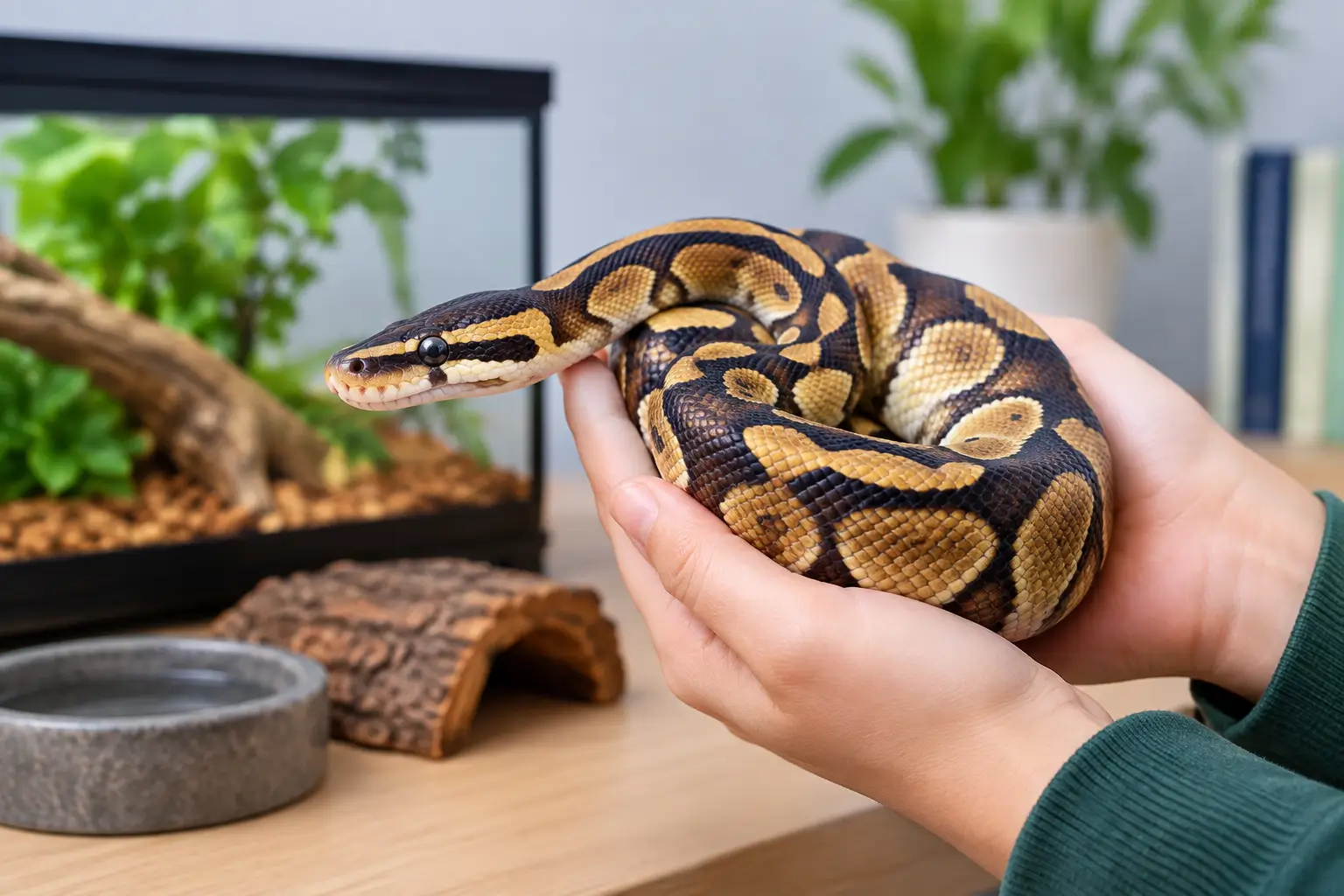
Ball Python — Rarely bites, stays under 5 feet, and adapts well to handling once settled. The huge variety of color and pattern “morphs” available through captive breeding is part of why it’s the most searched pet snake overall.
Corn Snake — Slightly more active than a ball python, very reliable eater, and generally forgiving of small mistakes. Young corn snakes may nip occasionally but typically settle with age and consistent handling.
King Snake — Curious, hardy, and a strong eater, but must be housed alone. King snakes are naturally solitary and can view other snakes as prey.
These same three species happen to check every box people search for separately: good for kids (docile, sturdy), good for small apartments (compact enclosure), good for people who don’t want to be bitten often (low bite rates once settled), and good for first-time owners generally. It’s one recommendation, not five.
Also worth considering: Rosy boas move slowly and rarely bite, making them a solid pick for nervous handlers. Milk snakes offer striking color patterns in a manageable size. Garter snakes are a good option for owners who’d rather not handle rodents — many individuals accept fish or worms instead.
For experienced keepers only: Boa constrictors and certain colubrids offer more of a challenge, needing larger enclosures and more precise humidity control. These aren’t a good starting point, but can be a rewarding step up after a season or two with a beginner species.
Setting Up the Enclosure
A beginner-friendly setup is one that’s hard to get wrong. Beginners tend to struggle more with temperature and humidity control than with the snake itself.
What You’ll Need
- A properly sized enclosure (20–40 gallons for most beginner species) with a secure, locking lid
- Two hides — one on the warm side, one on the cool side
- A heat source (under-tank heater or overhead heat lamp) paired with a thermostat
- A digital thermometer and hygrometer
- Species-appropriate substrate
Substrate Options
| Substrate | Best For | Notes |
|---|---|---|
| Aspen shavings | Ball pythons, corn snakes, king snakes | Good burrowing, holds shape for tunnels |
| Coconut fiber (coir) | Species needing higher humidity | Retains moisture well, easy to spot-clean |
| Paper towel / newspaper | Quarantine, new arrivals, sick snakes | Not decorative, but easiest to monitor and fully sanitize |
| Cypress mulch | Higher-humidity species (some boas) | Holds humidity, but check for mold in damp climates |
Setup Steps
- Assemble the enclosure and place the heat source at one end only, so a warm-to-cool gradient forms across the space.
- Attach the thermostat probe near the heat source and set your target temperature before adding substrate.
- Add substrate, then place one hide on the warm side and one on the cool side.
- Add a water bowl large enough for soaking, placed on the cooler side.
- Run the setup for 24–48 hours and check that both ends hold stable, appropriate temperatures before introducing the snake.
Skipping the thermostat is one of the most common beginner mistakes — it can lead to overheating, burns, or an enclosure that’s too cold for proper digestion.
Feeding
Most pet snakes eat appropriately sized frozen-thawed rodents. Frequency depends on age: young snakes typically eat weekly, while adults may eat every 1–2 weeks. Garter snakes are the exception — many will accept fish or worms instead of rodents.
Feed prey sized to roughly the snake’s girth at its widest point. Prey that’s too large is one of the most common feeding mistakes new owners make, and can lead to regurgitation.
Shedding: What to Expect
Shedding (ecdysis) happens as a snake grows, roughly every 4–6 weeks for young snakes and less often for adults. A few days before a shed, the snake’s skin dulls and its eyes turn a milky blue-white as the spectacle — the clear scale covering each eye — separates from the skin underneath.
During this period:
- Avoid handling where possible. Snakes have reduced vision and may feel more defensive.
- Do not feed — most snakes refuse food during this phase, and it’s normal.
- Increase humidity slightly or provide a damp hide, which helps the old skin come off in one piece.
- A healthy shed comes off in a single, unbroken piece, including the eye caps. Retained shed (especially stuck eye caps or tail-tip skin) is a sign to consult a vet if it doesn’t resolve with a humidity boost and gentle soak.
Handling Basics
Once a new snake has had roughly a week to settle in, handling can begin gradually.
- Support the body along its length rather than gripping any one section — snakes feel more secure when they’re not left dangling.
- Move slowly and avoid sudden motions near the head, which can be mistaken for a threat.
- Keep initial sessions short (5–10 minutes) and build up gradually.
- Always wash hands before handling (to avoid transferring prey scent) and after (basic hygiene, since reptiles can carry salmonella).
- Skip handling around feeding time and during shedding, both of which raise the odds of a defensive bite.
Daily and Weekly Care Routine
Daily: Check the thermometer and hygrometer, make sure the water bowl is clean and full, and glance at the snake for signs of illness such as unusual lethargy or visible skin issues.
Weekly: Spot-clean waste as soon as you see it, and do a deeper clean of surfaces and substrate freshness.
Signs of Stress vs. Signs of Illness
These get lumped together often, but they call for different responses.
Stress signs (usually resolve on their own with time or a setup adjustment):
- Hiding more than usual after a move or handling session
- Temporary appetite loss after a change in environment
- Defensive posturing (hissing, coiling) that fades as the snake settles in
Illness signs (warrant a vet visit):
- Appetite loss lasting several weeks with no shed or environmental cause
- Visible mouth or skin issues (discoloration, sores, swelling)
- Labored or open-mouth breathing
- Repeated incomplete or stuck sheds
- Unusual lethargy that doesn’t improve
If in doubt, a quick check-in with a reptile-experienced vet is worth it — it’s better to locate one before an emergency than during one, since not every general practice vet is trained in reptile anatomy.
Cost Breakdown
| Item | Estimated Cost |
|---|---|
| Snake (captive-bred beginner species) | $30–$150 |
| Enclosure | $80–$250 |
| Heating and thermostat | $40–$100 |
| Substrate, hides, decor | $30–$80 |
| Ongoing food (monthly) | $10–$20 |
Rare designer morphs — particularly certain ball python color and pattern combinations — have sold for tens of thousands of dollars or more among collectors and breeders. That market is about rarity and breeding value, not typical pet ownership, and a healthy beginner snake costs a small fraction of that.
Legal and Safety Considerations
Before buying, check:
- State and local exotic pet laws
- HOA or landlord rules on exotic pets
- Whether the species’ adult size actually fits your space
- Whether the species is venomous — venomous snakes should never be kept as pets by non-professionals
Sticking to well-established captive-bred species like ball pythons, corn snakes, and king snakes avoids most legal and safety complications.
Common Mistakes to Avoid
- Skipping the thermostat, risking overheating or an unstable environment
- Overhandling a snake before it’s had time to settle in
- Choosing an enclosure that’s too large or too small for the species
- Feeding prey that’s too large
- Ignoring prolonged appetite loss instead of ruling out shedding, stress, or illness
- Buying on impulse without researching adult size and lifespan first
Pros and Cons
| Pros | Cons |
|---|---|
| Low daily time commitment | Long-term commitment (15–30 years) |
| Quiet, low-mess pets | Not cuddly in the traditional sense |
| Wide variety of sizes and looks | Some species face legal restrictions |
| Manageable feeding schedule | Requires specific heat/humidity setup |
Alternatives Worth Considering
| Option | Best For |
|---|---|
| Leopard gecko | Owners who want handling without a rodent-based diet |
| Bearded dragon | Owners wanting a more visibly interactive reptile |
| Ball python | Owners wanting the calmest common pet snake |
| Corn snake | Owners wanting an active, easy-feeding snake |
Frequently Asked Questions
What is the friendliest snake to have as a pet? Ball pythons consistently rank among the friendliest pet snakes — they tolerate regular handling well and rarely bite. Corn snakes are a close second, with a slightly more active personality but a similarly gentle temperament. Individual personality still varies, so meeting a snake in person before buying is worthwhile.
Which snake is best for a pet? There’s no single best snake for everyone — it depends on space, experience, and preference. For most first-time owners, a ball python or corn snake offers the easiest combination of manageable size, calm temperament, and simple care.
What snake is worth $100,000? No standard pet snake sells anywhere near that price. Extremely rare designer ball python morphs with unique genetic combinations have historically sold in the tens of thousands of dollars among breeders and collectors, and a small number of exceptional, one-of-a-kind animals have reportedly reached six figures at the very top of the collector market. This reflects genetic rarity and breeding value, not a typical pet price — a healthy beginner snake costs a small fraction of that.
What is the easiest pet snake to care for? Corn snakes and ball pythons both rank among the easiest, thanks to predictable feeding habits and tolerance for normal room-temperature swings when paired with a proper heat source.
How long do pet snakes typically live? Ball pythons and corn snakes typically live 15–30 years with good care. Smaller species, like garter snakes, tend to have shorter lifespans. This is a long-term commitment worth planning for before bringing a snake home.
Final Thoughts
Picking the right snake pet comes down to matching a species to your space, experience level, and comfort with handling. Ball pythons, corn snakes, and king snakes cover most beginner needs well — calm temperaments, manageable size, and predictable care.
Research adult size, local laws, and daily care requirements before buying, get the enclosure set up and stable first, and give a new snake about a week to settle in before regular handling. A little planning upfront makes the first year with a new snake far smoother — and for the right person, it’s a rewarding pet that can stick around for decades.

Olivia Bennett is a pet care writer and animal wellness researcher who has spent more than 8 years creating practical content for pet owners. Her work focuses on dog and cat care, pet nutrition, training, grooming, behavior, and preventive health.
At Pet Wise Worlds (https://petwiseworlds.com/), Olivia researches trusted sources and transforms expert knowledge into easy-to-follow guides that help pet owners give their companions healthier and happier lives.