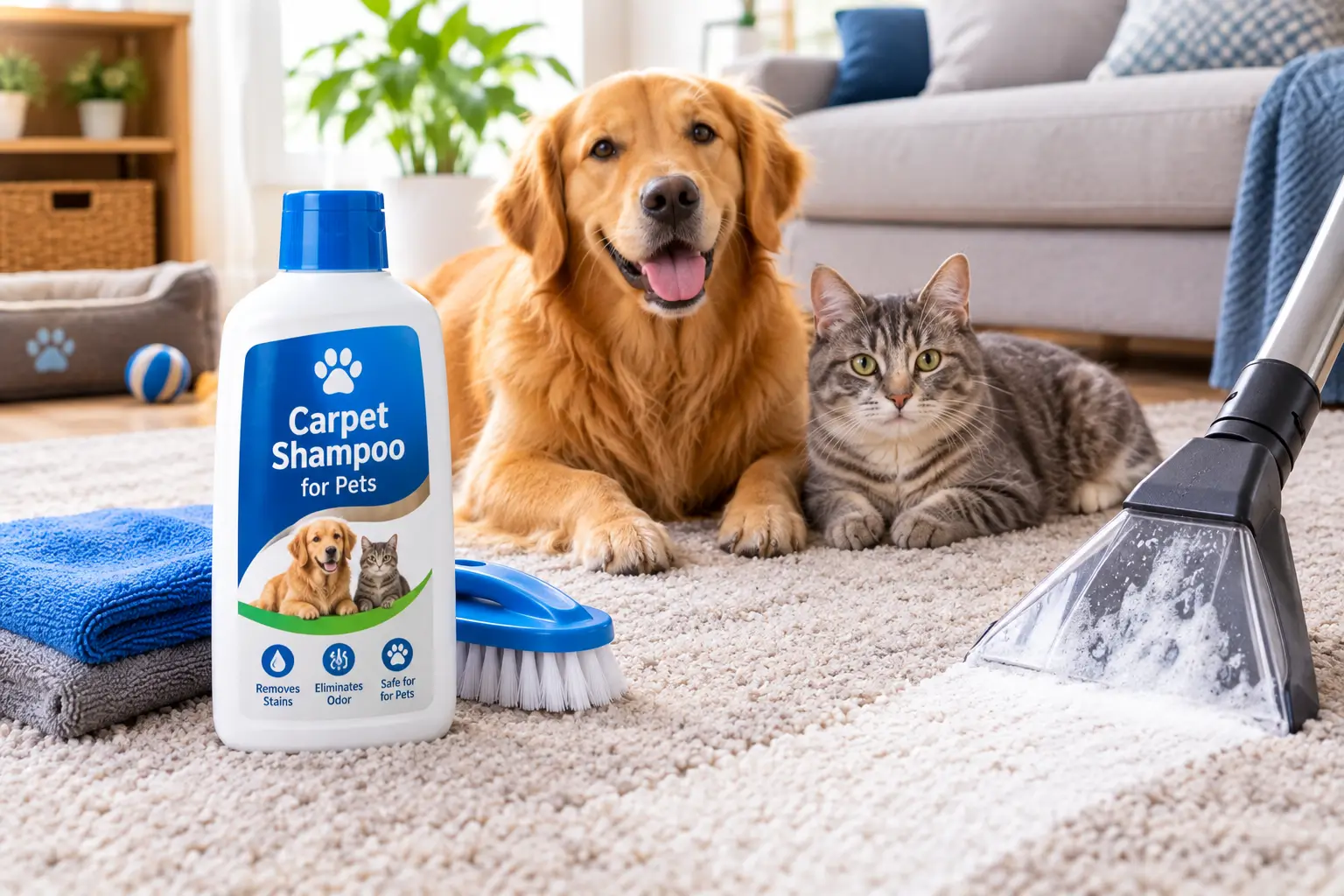
The best carpet shampoo for pets uses enzymatic cleaners to break down urine, odor, and stains at the source instead of just covering them up. These formulas are safe for homes with dogs and cats when used as directed, and they work in both carpet shampoo machines and as spot treatments.
Key Takeaways
- Enzymatic and bio-based shampoos work best for pet urine, odor, and stains
- Look for pet-safe, non-toxic formulas free of ammonia, bleach, and certain essential oils
- Carpet shampooer machines cost more upfront but save money over time on large messes
- Spot cleaners work well for small, fresh accidents
- Dwell time (letting the product sit before rinsing) is usually 10–15 minutes for enzymatic sprays — always check your label
- Always let carpets dry fully before letting pets back in the room
- Call a vet or animal poison control if a pet ingests any cleaning product, even a “pet-safe” one
Introduction
Anyone who shares a home with a dog or cat knows accidents happen. A puppy in training, a senior cat, or a nervous rescue dog can all leave marks on your carpet. That’s why so many pet owners search for the best carpet shampoo for pets.
The right shampoo does more than clean up a stain. It breaks down the proteins and uric acid crystals in pet urine that cause lingering odor. Without that step, pets often smell their own scent and return to the same spot again.
This guide walks through how pet carpet shampoos work, which ingredients actually matter, how to match a formula to your carpet type, and the exact steps to use one correctly.
What Is Carpet Shampoo for Pets?
Carpet shampoo for pets is a cleaning formula made to remove pet-related stains and odors from carpet fibers. Most contain enzymes or bacterial cultures that digest the organic matter in urine, vomit, or drool.
Regular carpet cleaners often just mask smells with fragrance. Pet-specific shampoos target the actual source of the odor, which matters because pets have a far more sensitive sense of smell than people do.
Common forms:
- Liquid concentrate for use in a carpet shampooer machine
- Ready-to-use spray for spot cleaning
- Foam formulas for fresh stains
- Powder shampoos worked in by hand or machine
Quick Facts
| Fact | Details |
|---|---|
| Main ingredient type | Enzymes (protease, amylase, lipase) or bio-enzymatic bacterial cultures |
| Best for | Urine, vomit, drool, and general pet stains |
| Common forms | Liquid concentrate, spray, foam, powder |
| Machine compatible | Yes, most work in carpet shampooer machines |
| Typical dwell time | 10–15 minutes for sprays; longer soak for set-in stains |
| Drying time | Usually 2–6 hours depending on carpet type and humidity |
| Pet safety | Check label for non-toxic wording; keep pets off until fully dry |
Which Ingredients Actually Matter
Not all “enzymatic” labels mean the same thing. Here’s what to look for:
- Protease — breaks down protein-based stains like urine, drool, and vomit
- Lipase — targets fats and oils, useful for paw prints and general grime
- Amylase — breaks down starches, helpful for food-related messes
- Bacterial cultures — continue digesting residue even after the visible stain is gone, which helps prevent odor from returning in humid weather
Avoid formulas with ammonia. Ammonia can smell similar to urine to a pet and may encourage repeat marking on the same spot.
Matching Shampoo to Your Carpet Type
- Synthetic carpet (nylon, polyester) — tolerates most enzymatic liquid and foam formulas well
- Wool carpet — needs a pH-balanced, wool-safe formula; strong enzymatic concentrates can damage wool fibers over repeated use
- Berber/looped carpet — avoid oversaturating, since trapped moisture in the tight loops can lead to mold; spot sprays are usually safer than a full machine pass
- Carpet with rubber or foam backing — check the label for backing compatibility, as some solvents can break down adhesive over time
When in doubt, test any new shampoo on a hidden patch of carpet first.
Best Carpet Shampooer Machines for Pet Messes
A carpet shampooer built for pet messes handles larger areas and deeper stains than a spray bottle can. It pulls dirty water out of the carpet while pushing cleaning solution in.
Look for:
- A dedicated pet-formula or “pet stain” setting
- A hose attachment for stairs, upholstery, and tight corners
- A larger water tank if you’re cleaning more than one room
- Heated water function, which can improve enzyme activation on some formulas
Tackling Pet Urine Specifically
Urine is the toughest carpet stain most pet owners deal with because it seeps into the padding underneath the carpet, not just the surface fibers.
Step-by-step urine treatment:
- Blot up as much fresh liquid as possible with a clean cloth — don’t rub
- Apply the enzymatic shampoo generously enough to reach the same depth the urine soaked to
- Let it sit for the label’s dwell time (typically 10–15 minutes; older stains may need 30+ minutes or a repeat application)
- Blot again, or run a shampooer machine over the same spot to pull out the loosened residue
- Let the area air dry fully, ideally with airflow (fan or open window) to speed things up
- Keep pets off the spot until it’s completely dry
For deep-set or repeat stains, pre-treating with an enzymatic spray before running a shampooer machine gets better results than either step alone.
General Stain and Odor Care
A good all-purpose pet carpet shampoo also handles drool, vomit, muddy paw prints, and everyday grime — not just urine. Choose a formula gentle enough for regular use but strong enough for occasional bigger messes.
Tips for any stain type:
- Blot, don’t rub, to avoid pushing the stain deeper into the padding
- Treat stains as soon as you notice them
- Test the shampoo on a hidden carpet patch first
- Follow the dwell time on the label before rinsing
Daily Care Routine
For everyday spills: Blot the area right away, spray a light amount of enzymatic cleaner, let it sit 10–15 minutes, then blot until dry.
For deeper cleaning: Vacuum first to remove loose dirt, then run a shampooer or apply your chosen formula section by section. Plan a full session every few months, or more often in multi-pet homes.
Cost Breakdown
| Option | Typical Price Range | Best For |
|---|---|---|
| Spot spray bottle (16–32 oz) | $8–$20 | Small, occasional accidents |
| Machine-ready concentrate (32–64 oz) | $15–$30 | Covers more area per dollar; whole-room use |
| Carpet shampooer machine | $100–$300 one-time | Multi-pet homes, large areas, recurring use |
| Professional carpet cleaning | $100–$400 per visit | Deep, whole-home stains or move-in/move-out |
Prices vary by brand and formula strength; check current listings before buying.
Common Mistakes Pet Owners Make
- Rubbing instead of blotting, which spreads the stain into more fibers
- Using ammonia-based cleaners, which can smell like urine to pets and encourage repeat marking
- Skipping the enzyme dwell time, so odor-causing residue never fully breaks down
- Oversaturating berber or looped carpet, which traps moisture and risks mold
- Letting pets back on wet carpet too soon, which tracks cleaner around the house
Pros and Cons
| Pros | Cons |
|---|---|
| Removes odor at the source, not just on top | Enzyme formulas need dwell/soak time to work |
| Safe for most homes once fully dry | Some formulas cost more than basic cleaners |
| Works on multiple stain types | Machine models require an upfront purchase |
| Reduces repeat marking in the same spot | Deep, old stains may need more than one treatment |
| Formulated options exist for wool, berber, and synthetic carpets | Wrong formula for your carpet type can cause damage |
Alternatives to Carpet Shampoo
| Option | Best For |
|---|---|
| Enzymatic spot spray | Small, fresh accidents without a machine |
| Steam cleaner | Homes without strong odor issues, general deep clean |
| Baking soda pre-treatment | Light odor absorption before shampooing |
| Professional carpet cleaning service | Whole-home deep clean or move-in/move-out cleaning |
When to Consult a Vet or Professional
- If a pet licks, chews, or ingests any cleaning product — contact your vet or an animal poison control line right away, even if the label says pet-safe
- If accidents keep happening in the same spot despite thorough cleaning — this can sometimes point to a health issue rather than a training problem, so check with your vet
- If deep-set stains don’t respond after a couple of at-home treatments — a professional service can reach padding and sub-floor areas home tools can’t
Frequently Asked Questions
What is the best carpet shampoo for pets? An enzymatic or bio-enzymatic formula, since it breaks down the organic matter in stains instead of masking the smell. Look for protease and bacterial-culture ingredients, and check that it’s labeled safe for dogs and cats once dry.
Which carpet shampoo removes pet urine? Enzymatic shampoos labeled specifically for pet urine, since they target the uric acid crystals responsible for both the stain and the smell. For urine that’s soaked into the padding, a longer dwell time or repeat treatment usually helps.
What carpet shampoo is best for dog urine? Dog urine often covers a larger area than cat urine, so a machine-compatible enzymatic concentrate usually works better than a small spray bottle. For puppies in training, keep a spot spray on hand for quick daily cleanups.
What carpet shampoo works best for cat urine? A high-strength enzymatic formula, since cat urine tends to be more concentrated and can crystallize more noticeably in dry conditions. If cat urine keeps showing up outside the litter box, mention it to your vet, since this can sometimes signal a health concern.
Which carpet cleaner is safe for pets? One labeled non-toxic and free of ammonia, bleach, and certain essential oils that are toxic to cats specifically. Even pet-safe products should fully dry before pets are allowed back on the carpet.
Final Thoughts
Picking the best carpet shampoo for pets comes down to matching the formula to your carpet type and the size of the mess. Enzymatic cleaners with protease and bacterial cultures handle urine and odor far better than basic soap-based products, and choosing the right form — spray, foam, or machine concentrate — depends on your specific situation.
A little routine care goes a long way: blot fresh spills right away, respect the dwell time, and let carpets dry fully. When stains or odors keep coming back despite good cleaning habits, bring in a professional cleaner or check with your vet, since repeat accidents can sometimes point to something more than just a training issue.
Olivia Bennett is a pet care writer and animal wellness researcher who has spent more than 8 years creating practical content for pet owners. Her work focuses on dog and cat care, pet nutrition, training, grooming, behavior, and preventive health.
At Pet Wise Worlds (https://petwiseworlds.com/), Olivia researches trusted sources and transforms expert knowledge into easy-to-follow guides that help pet owners give their companions healthier and happier lives.