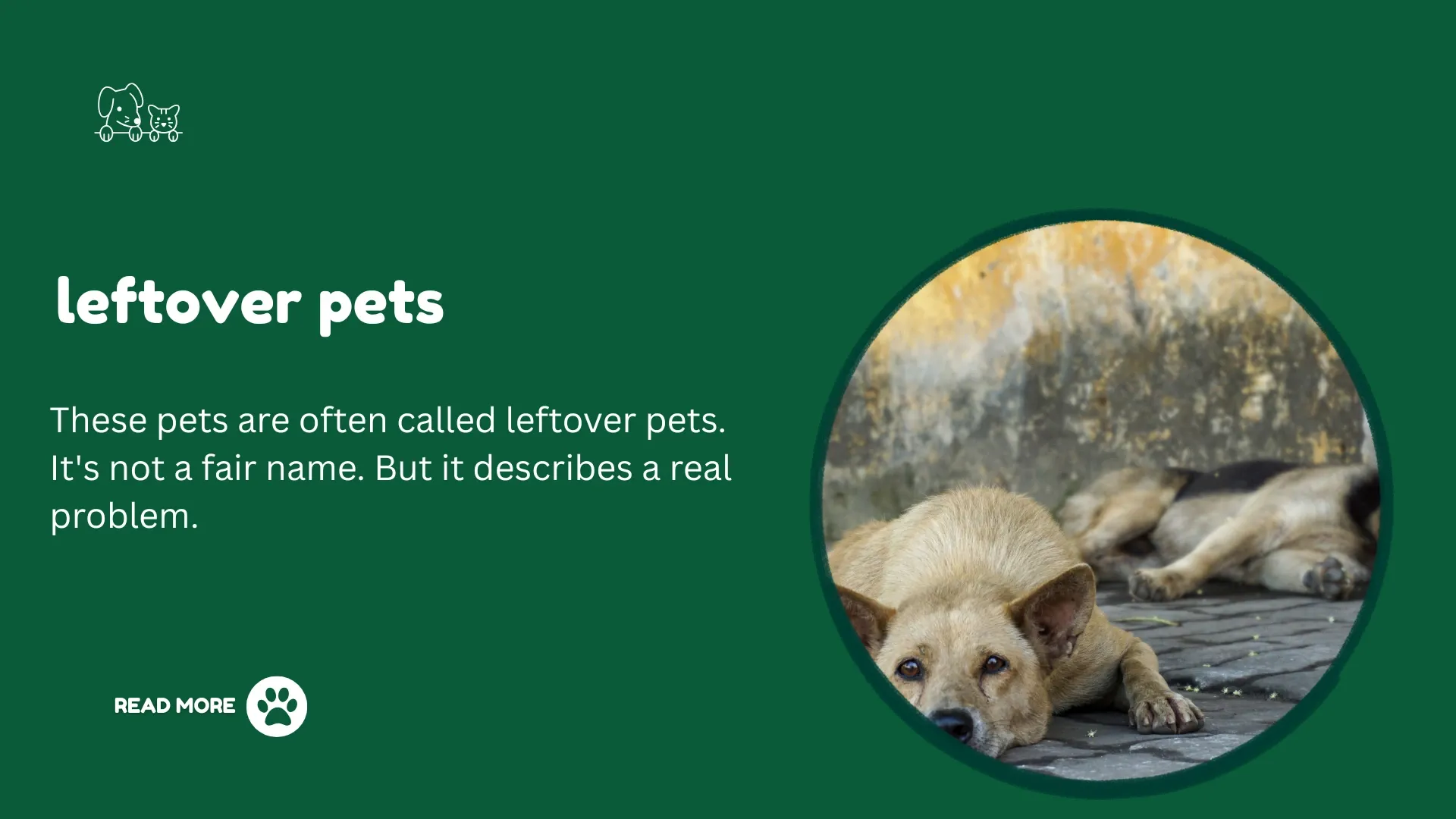
Leftover pets are animals who stay in shelters or rescues much longer than others. They often get passed over for younger or flashier pets. Leftover pets include seniors, black cats, big dogs and pets with special needs. Many are healthy, loving and ready for a home. They just need someone to give them a chance.
Key Takeaways
- Leftover pets are animals that wait the longest in shelters for adoption.
- Seniors, large dogs, black cats, and special-needs pets are often overlooked.
- Most leftover pets are healthy and full of love. They just need patience.
- Adopting a leftover pet often costs less than adopting a puppy or kitten.
- Fostering, donating, or sharing their story can help even if you can’t adopt.
- Always ask a shelter about a pet’s full health history before you bring them home.
Introduction
Some pets get adopted fast. Others wait for months. Or even years.
These pets are often called leftover pets. It’s not a fair name. But it describes a real problem.
Shelters see this every day. A cute puppy gets adopted in hours. A ten-year-old dog waits much longer. This happens for many reasons. Looks matter to people. So does age. So does breed reputation.
Pet owners search for this topic because they want to help. Some want to adopt a pet who really needs one. Others want to understand why this happens at all.
This is not a new problem. But it is getting more attention. Shelters and rescue groups now run special programs for these pets. Social media has helped too. More people see their photos and stories online.
This guide covers everything you need to know. You will learn what leftover pets are and why they get left behind. You will also learn how to adopt one, foster one, or simply help from home.
By the end, you’ll understand why these pets deserve a real chance.
What Is Leftover Pets?
Leftover pets are animals that stay in shelters far longer than average. They are not damaged or difficult. They are simply overlooked.
This term covers many types of pets. It includes older dogs and cats and large breed dogs. Also it includes black cats and black dogs. It also includes pets with a limb missing, a chronic illness, or a shy personality.
Shelters sometimes use softer terms for these pets. You might see “long-stay pets” or “special needs pets.” The idea is the same. These are animals who need extra help finding a home.
Most leftover pets are perfectly healthy. Many are calm, trained, and easy to live with. Some just look less “cute” in a photo. Others simply got unlucky with timing.
Quick Facts Box
| Fact | Details |
| Who they are | Pets that stay in shelters longer than average |
| Common groups | Senior pets, large dogs, black pets, special needs pets |
| Health status | Often healthy; some have manageable conditions |
| Adoption cost | Usually lower than puppies or kittens |
| Best home type | Calm, patient households with realistic expectations |
| Vet check | Most shelters vaccinate and health-check before adoption |
Where Does the Term Leftover Pets Come From?
The exact origin of this term is not fully documented. It likely grew from everyday shelter language over time. Staff needed a simple way to describe pets who stayed past their expected adoption window.
This can vary depending on the shelter, so it’s best to confirm exact terms with your local rescue. Some shelters avoid the word “leftover” entirely. They feel it sounds unkind. Instead, they use terms like “forever waiting” or “hidden gems.”
Key Characteristics and Care Needs
Leftover pets are not one single type of animal. Their care needs depend on their age, breed, and health. But some patterns are common across most long-stay pets.
Common Traits
Many leftover pets are calmer than young pets. Senior pets often need less exercise. Special-needs pets may need a specific routine.
Most leftover pets do best in quiet homes. They often thrive with fewer changes. A steady schedule helps them settle in faster.
General Care Basics
- Regular vet checkups, especially for seniors
- A comfortable, low-stress living space
- Age-appropriate food and exercise
- Patience during the adjustment period
Quick Comparison Snapshot
| Option | Best For | Key Difference |
| Senior Pets | Calm, low-energy homes | Lower activity needs, may have health costs |
| Large Breed Dogs | Homes with space and yards | Higher food and space needs |
| Black Cats and Dogs | Any loving home | Often overlooked due to appearance, not behavior |
| Special Needs Pets | Patient, hands-on owners | May need extra vet visits or home changes |
Reasons Pets Are Left Behind
The main reason is simple. People often choose pets based on looks and age first.
Puppies and kittens get adopted fast. They look cute in photos. Older pets get scrolled past.
Age and Appearance Bias
Many adopters want a young pet. They picture years ahead together. Senior pets get judged as “almost done,” which isn’t fair or accurate.
Color plays a role too. Black cats and dogs are adopted less often in many shelters. This pattern has been noted by shelters and rescue groups for years.
Breed Stereotypes
Some breeds face unfair reputations. Pit bull type dogs are a common example. Shelters often see them stay longer, even when they are gentle and well-behaved.
Behavior or Medical Needs
A pet with anxiety may get passed over. So might a pet with diabetes or missing teeth. These pets often just need one caring, informed owner.
Leftover Pets in Animal Shelters
Shelters see this pattern every single day. Some pets get adopted within hours. Others live at the shelter for months.
Long stays are hard on animals. Shelter life is loud and stressful. The longer a pet waits, the more that stress can build up.
How Shelters Try to Help
Many shelters run special promotions for long-stay pets. They may lower adoption fees. Some create “pet of the week” features to boost visibility.
Staff also spend extra time with these animals. This helps pets stay social and comfortable. It also helps staff share better, more personal adoption stories.
Leftover Pets Adoption Guide
Adopting a long-stay pet is simple, but it helps to prepare first. Start by researching shelters and rescue groups near you.
Steps to Get Started
- Visit local shelters or browse their adoption pages online.
- Ask staff which pets have waited the longest.
- Spend time with a pet before deciding.
- Ask about medical history and behavior notes.
- Prepare your home before bringing the pet in.
What to Ask the Shelter
Ask about vaccination records and any known health issues. Ask how the pet behaves around kids, other pets, or strangers.
A good shelter will answer these questions honestly. This helps you know if the pet is the right fit for your home.
Best Way to Help Leftover Pets
Adoption is not the only way to help. Many people cannot adopt right now. That’s okay. There are still ways to make a difference.
Ways to Help Without Adopting
- Foster a pet for a few weeks or months
- Donate food, blankets, or supplies to a shelter
- Share adoptable pets on social media
- Volunteer for dog walks or cat socializing
- Sponsor a pet’s medical care or adoption fee
Fostering is one of the most powerful options. It gives a pet a break from shelter life. It also helps shelters learn more about the pet’s personality.
Tips for Adopting Leftover Pets
A little preparation goes a long way. These tips can help the adoption go smoothly.
Before You Adopt
Set realistic expectations. Some pets need a slower adjustment period. Give them space during the first few days.
Pet-proof your home in advance. Remove hazards. Set up a quiet resting area.
After You Bring Them Home
Stick to a simple routine. Feed and walk your pet at the same times each day. This builds trust quickly.
Be patient with any anxious behavior. Most pets relax within a few weeks. Talk to your vet if concerns continue.
Daily Care Routine and How to Get Started
A steady daily routine helps any leftover pet feel safe. Most pets settle in faster with structure.
Sample Daily Routine
- Morning: feeding, short walk or playtime
- Midday: quiet rest time, fresh water check
- Evening: feeding, longer walk or play session
- Night: calm wind-down time before bed
Getting Started Checklist
Before adoption day, gather food, a bed, a leash, and food bowls. Set up a small, quiet space for the first few days. This helps your new pet settle without feeling overwhelmed.
Cost Breakdown
Adoption costs vary by shelter and pet type. Many shelters charge lower fees for senior or long-stay pets.
| Item | Estimated Cost |
| Adoption fee | $0–$150 for long-stay pets |
| Initial vet visit | $50–$150 |
| Food and supplies | $50–$100 per month |
| Ongoing vet care | Varies by pet’s health needs |
This can vary depending on your location and the shelter, so it’s best to confirm exact costs directly with them.
Common Mistakes Pet Owners Make
Some mistakes happen often with long-stay pet adoptions. Knowing them ahead of time can help you avoid them.
Rushing the bonding process is common. Pets need time to trust a new home. Forcing affection too soon can backfire.
Skipping vet history checks is another mistake. Always ask for full records before adopting. This helps you plan for any ongoing care.
Comparing a new pet to a past pet is also common. Every animal adjusts differently. Give your new pet room to be themselves.
Pros and Cons
| Pros | Cons |
| Often lower adoption cost | May need extra patience during adjustment |
| Usually calmer, well-mannered | Senior pets may have higher vet costs |
| Saves a life directly from a shelter | Limited time left for very senior pets |
| Personality already known by staff | Some pets need behavior support |
Similar Options and Alternatives
If adopting isn’t possible right now, these options can still help leftover pets.
| Option | Best For |
| Fostering | People who want to help short-term |
| Shelter volunteering | People with time but not space at home |
| Donations of supplies | People who can’t foster or adopt |
| Sponsoring a pet’s care | People who want to help from a distance |
| Sharing pets online | Anyone with social media access |
When to Consult a Vet or Professional
Always schedule a vet visit soon after adoption. This is true for every pet, but especially for leftover pets with unknown history.
A vet can check for hidden health issues. They can also confirm the pet’s vaccination status. This step keeps your new pet and your household safe.
If your pet shows ongoing anxiety, aggression, or health symptoms, talk to a vet or certified trainer. Don’t guess with behavior or medical concerns. A licensed professional can guide you safely.
Fun Facts
- Some shelters run “black pet” adoption events to boost visibility for overlooked animals.
- Senior pets often already know basic commands.
- Special-needs pets can live full, happy lives with the right care.
- Long-stay pets sometimes become shelter favorites among staff.
- Fostering can be short-term, even just a weekend.
- Many long-stay pets calm down quickly once out of a shelter setting.
Frequently Asked Questions
What are leftover pets?
Leftover pets are animals that stay in shelters much longer than most. This includes seniors, large dogs, black cats, and pets with special needs. They are usually healthy and friendly. They simply get overlooked due to age, looks, or breed reputation. Many make wonderful companions once adopted. Shelters often know these pets very well. Staff can share detailed info about their personality and habits before you adopt.
Why do some pets become leftover pets?
Several factors play a role. Age is a big one, since younger pets often get adopted faster. Appearance matters too, and black pets are often passed over. Breed stereotypes also affect adoption speed for certain dog breeds. Medical or behavior needs can add to wait time as well. None of these reasons reflect a pet’s true value as a companion. It usually comes down to timing and first impressions, not the animal itself.
Where do leftover pets usually end up?
Most stay in animal shelters or rescue organizations while they wait. Some move between foster homes to reduce shelter stress. A smaller number may end up in larger sanctuary-style rescues built for long-term care. Sadly, without enough adopters or fosters, shelters can become overcrowded. This is part of why adoption events and fee waivers exist. They aim to speed up adoption for pets who have waited the longest.
What should you know before adopting a leftover pet?
Learn the pet’s full history first. Ask about health records, behavior notes, and daily habits. Prepare your home with a calm space before bringing them in. Expect an adjustment period, especially in the first few weeks. Senior or special-needs pets may need ongoing vet care. Budget for this ahead of time. Most importantly, go in with patience. These pets often just need time to trust their new environment.
Are leftover pets vaccinated before adoption?
Most shelters vaccinate pets before they’re available for adoption. This usually includes core vaccines and often spay or neuter surgery. Records should be provided at adoption time. This can vary depending on the shelter, so it’s best to confirm directly with them. Always schedule a follow-up vet visit soon after adoption. A vet can review the pet’s full health history and confirm everything is current and complete.
Final Thoughts
Leftover pets are not broken or difficult. They are simply waiting for someone to notice them.
Many are calm, loving, and easy to care for. Some just need a little extra patience at first. Others need a home ready to handle special care.
You don’t have to adopt to make a difference. Fostering, donating, or sharing a pet’s story all help. Every small action adds up for pets still waiting.
If you’re ready for a loyal companion, consider visiting your local shelter. Ask which pets have waited the longest. You might find your perfect match sitting quietly in the back of a kennel, just waiting for someone to say yes.
Ethan Brooks is an animal behavior writer and pet education specialist with over 9 years of experience producing informative content for pet owners. He enjoys writing about pet behavior, nutrition, training techniques, and responsible pet ownership for dogs, cats, birds, rabbits, reptiles, and other companion animals.
Through Pet Wise Worlds (https://petwiseworlds.com/), Ethan shares well-researched articles designed to help families better understand and care for their pets using reliable, practical information.