An unusual pets list is a guide to animals outside the usual dog or cat choice. It includes creatures like hedgehogs, sugar gliders, axolotls and hermit crabs. These pets often need less space. Some need special care. This list helps new and experienced owners find a pet that truly fits their home.
Key Takeaways
- An unusual pets list covers small mammals, reptiles, amphibians, and invertebrates.
- Many unusual pets suit small apartments and tight budgets.
- Some unusual pets need very simple daily care. Others need special setups.
- Costs vary a lot. Habitat and food matter more than the pet itself.
- Always check with an exotic vet before you bring home an unusual pet.
- Social media has made unusual pets more popular in recent years.
Introduction
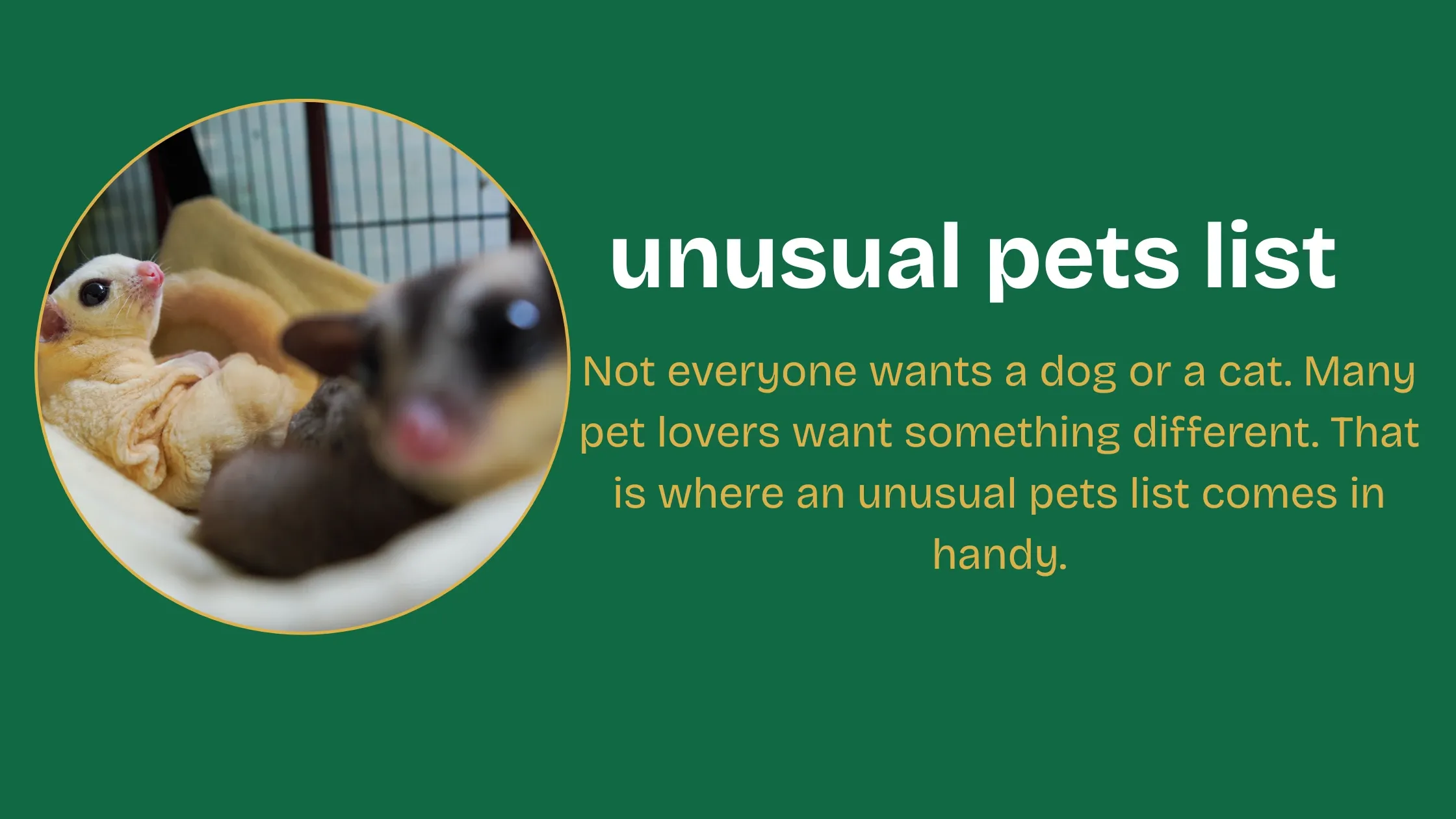
Not everyone wants a dog or a cat. Many pet lovers want something different. That is where an unusual pets list comes in handy.
These animals are not always seen in a typical home. But they can make wonderful companions. Some are quiet and tiny. Some barely need any space at all.
Interest in unusual pets has grown a lot. Videos of hedgehogs and sugar gliders spread fast online. Renters in small apartments also look for pets that don’t need a yard.
This guide walks through real, safe, and legal-to-own unusual pets. It covers care, cost, and what to expect. By the end, you will know which unusual pet might fit your life best.
What Is an Unusual Pets List?
An unusual pets list is simply a collection of animals that are not common household pets. Think hedgehogs, chinchillas, axolotls, and hermit crabs. These animals fall outside the usual dog-and-cat category.
Some pets on this list are mammals. Others are reptiles, amphibians, or invertebrates. Each one has its own needs.
Not every unusual pet suits every home. Some need warm, humid tanks. Others need dry, cool spaces. This is why research matters before you choose.
Laws also vary by state and city. Some unusual pets are banned in certain areas. Always check local rules first.
Quick Facts Box
| Fact | Details |
| Common types | Hedgehogs, sugar gliders, chinchillas, axolotls, hermit crabs, tarantulas, bearded dragons, rats |
| Best for | Small spaces, first-time exotic pet owners, animal enthusiasts |
| Typical lifespan | Ranges widely, from 1–2 years (hermit crabs) to 15+ years (tortoises) |
| Legal status | Varies by state and city; always check local exotic pet laws |
| Vet care needed | Yes, an exotic-animal vet is recommended for most species |
Where Does the Unusual Pets Trend Come From?
The unusual pets trend grew from a mix of curiosity and changing living spaces. More people live in apartments now. Many want a pet that fits a smaller home.
Social media also played a big role. Videos of hedgehogs yawning or sugar gliders gliding became popular fast. This gave many pet lovers their first look at these animals.
Exotic pet ownership is not brand new, though. Reptile and small-mammal keeping has been around for decades among hobbyists. What changed is how easy it is to learn about these pets today.
Key Characteristics and Care Needs
Unusual pets differ a lot from one another. There is no single care routine that fits them all. Each animal has its own habitat, diet, and handling needs.
Habitat Needs
Most unusual pets need a specific enclosure. Reptiles often need heat lamps. Amphibians need moisture and cool temperatures. Small mammals need secure cages with room to move.
Diet Needs
Diet also varies a lot. Some unusual pets eat insects. Others eat pellets, fruit or leafy greens. A few, like tarantulas, eat very rarely.
Handling and Temperament
Some unusual pets enjoy gentle handling. Others prefer to be watched, not touched. Hermit crabs and tarantulas fall into this second group. Always research a species before you plan to handle it often.
Quick Comparison Snapshot
| Option | Best For | Key Difference |
| Hedgehog | Owners who want a small, interactive pet | Needs a warm habitat and a solid exercise wheel |
| Sugar Glider | Owners who want a social, bonded pet | Needs a companion glider and a tall cage |
| Axolotl | Owners who want a low-noise, aquatic pet | Fully aquatic; needs cool, clean water |
| Hermit Crab | Owners who want a hands-off pet | Needs a group of crabs and high humidity |
Unusual Pets List for Beginners
Beginners often do best with pets that have simple, predictable care needs. A good beginner pet does not need constant handling. It also should not need complex equipment.
Rats make a great starter unusual pet. They are smart and social. They also learn routines fast.
Bearded dragons are another solid choice. They tolerate gentle handling well. Their diet and habitat needs are well understood by most exotic vets.
Hermit crabs suit beginners who want a low-effort pet. They do not need daily handling. They still need steady humidity and temperature, though.
Unusual Pets List That Are Easy to Care For
Easy-care pets need less daily effort. They often have simple diets. Their habitats also need less frequent cleaning.
Leopard geckos are a strong example. They eat insects a few times a week. Their tank stays clean with basic weekly upkeep.
Betta fish, while not a land animal, often appear on unusual pet lists too. They live in a small tank. They only need feeding once a day.
Guinea pigs also fit this group. They eat hay and pellets daily. Their cage needs a quick clean each week.
Unusual Pets List With Low Maintenance Animals
Low maintenance does not mean no care at all. It means the pet needs less daily time and effort compared to a dog or cat.
Snails are one of the lowest maintenance pets around. They need a small, moist tank. They eat vegetables a few times a week.
Stick insects also need very little. Their tank stays simple. They eat plant leaves and need light misting.
Tarantulas fit here too. Many species eat just once a week. Their tank setup stays mostly the same for months.
Unusual Pets List for Animal Enthusiasts
Animal enthusiasts often want a pet that offers something new to learn. This group tends to enjoy more involved care routines.
Chameleons appeal to many enthusiasts. Their color changes and slow movements make them fascinating to watch. Their care setup takes more skill, though.
Axolotls also draw in enthusiasts. These aquatic salamanders have a striking look. Their regrowth ability makes them a popular topic among reptile and amphibian fans.
Tokay geckos suit experienced enthusiasts. They are bold and vocal. New owners should research their care closely before choosing one.
Unusual Pets List for Small Spaces
Small living spaces still work for many unusual pets. The key is picking an animal that does not need a large enclosure or a yard.
Dwarf hamsters need only a modest cage. They fit well on a desk or shelf.
Fish in a small aquarium also work well in tight spaces. Betta fish need just a few gallons of water.
Hermit crabs need a tank, not a room. A single small tank can house a small crab group comfortably.
Daily Care Routine and How to Get Started
Starting with an unusual pet takes some planning. A good first step is research on the exact species you want.
- Pick a species that matches your space and time.
- Set up the habitat before bringing the pet home.
- Buy species-safe food and supplies.
- Find an exotic vet near you in advance.
- Learn the pet’s normal behavior so you can spot problems early.
Daily care often includes feeding, spot-cleaning the habitat, and checking temperature or humidity levels. Weekly care often includes a deeper habitat clean.
Cost Breakdown
Costs depend heavily on the species you choose. Some unusual pets cost very little to keep. Others need pricier setups.
Initial setup often includes a tank or cage, heating or lighting, and substrate. This can range from $50 to $300 depending on the animal.
Ongoing costs include food, bedding, and vet visits. Monthly costs often land between $10 and $50 for most small unusual pets.
Exotic vet visits can cost more than a standard cat or dog visit. This is because fewer vets specialize in exotic care.
Common Mistakes Pet Owners Make
Many new owners buy the habitat after the pet, not before. This can stress the animal right away.
Some owners skip research on legal status. A few unusual pets are restricted or banned in certain states.
Overhandling is another common mistake. Pets like hermit crabs and tarantulas need minimal handling to stay calm and healthy.
Poor temperature control also causes problems. Reptiles and amphibians are very sensitive to heat and humidity changes.
Pros and Cons
| Pros | Cons |
| Many unusual pets need less space than a dog | Some species need very specific habitat setups |
| Lower food costs for many small species | Exotic vet care can be harder to find |
| Great option for renters and small homes | Some pets are not allowed in every state |
| Unique, engaging pets to observe and learn from | Handling limits vary a lot by species |
Similar Pets and Alternatives to Consider
| Option | Best For |
| Ferret | Owners who want an active, playful small mammal |
| Chinchilla | Owners who want a soft-coated pet with a long lifespan |
| Corn snake | Owners who want a calm, easy-to-handle reptile |
| Fancy rat | Owners who want a social pet that bonds with people |
| African dwarf frog | Owners who want a small, fully aquatic pet |
When to Consult a Vet or Professional
Always talk to an exotic-animal vet before bringing home an unusual pet. Not every vet treats exotic species, so call ahead to confirm.
Contact a vet right away if your pet stops eating. Also call if you notice unusual swelling, discharge, or a change in energy.
Never guess about medication or dosage for an unusual pet. A licensed vet should always guide any treatment plan.
Regular checkups also help catch problems early. This can vary depending on the species, so ask your vet how often your pet needs a visit.
Fun Facts About Unusual Pets
- Hedgehogs can curl into a tight ball using strong back muscles.
- Sugar gliders can glide over 150 feet between trees in the wild.
- Axolotls can regrow lost limbs, a trait scientists study closely.
- Hermit crabs must switch to a larger shell as they grow.
- Some tortoise species can live well past 50 years old.
- Bearded dragons can wave one arm as a social signal to other lizards.
- Chinchillas take dust baths instead of water baths to stay clean.
Frequently Asked Questions
What are the most unusual pets you can own?
Some of the most unusual pets include axolotls, sugar gliders, hedgehogs, tarantulas, and hermit crabs. These animals stand out because they look and act very differently from dogs or cats. Each one comes from a different animal group, so their care needs differ a lot too. Before choosing one, check your local laws. Some unusual pets are restricted in certain states or cities. Research each species closely so you know what daily care will really look like.
What unusual pets are good for beginners?
Beginners often do well with rats, bearded dragons or hermit crabs. These pets have fairly predictable care needs. They also come with plenty of guides written by exotic vets and breed clubs. Start with a species that has simple food and habitat needs. Avoid pets that need advanced skills, like venomous species or animals with complex humidity needs. A local exotic vet can help confirm if your first choice is a good fit for a beginner.
What are the best unusual pets for apartments?
Great apartment options include betta fish, dwarf hamsters, and hermit crabs. These pets live in a tank or small cage. They do not need outdoor space or a yard. Noise is another factor. Most small unusual pets stay quiet, which works well in shared buildings. Always check your lease before bringing home any pet. Some rental agreements restrict certain species, even small ones.
What unusual pets require the least maintenance?
Snails, stick insects, and tarantulas often need the least daily care. Many of these pets eat just once or twice a week. Their tanks also need less frequent cleaning than a mammal’s cage. Low maintenance still means some care, though. Temperature and humidity must stay steady for most of these species. Skipping this step can harm the pet, even if handling and feeding stay simple.
What are some small unusual pets that make great companions?
Fancy rats and dwarf hamsters often make great small companions. Rats are social and can learn simple tricks. Hedgehogs also bond with owners over time, though they need gentle, patient handling. Companionship looks different across species. Some pets, like hermit crabs, bond more with their own kind than with people. Choose a companion pet based on how much interaction you actually want day to day.
Final Thoughts
An unusual pets list opens up a world beyond the typical dog or cat. There is a pet here for almost every home and schedule. Small apartments, busy owners and true animal lovers can all find a good fit.
The key is matching the pet to your space, time, and experience level. Some animals need very little daily care. Others ask for more skill and attention.
Whatever you choose, talk to an exotic vet first. This helps make sure the pet you pick stays healthy and happy in your home. With the right research, an unusual pet can become a wonderful, long-term companion.

Olivia Bennett is a pet care writer and animal wellness researcher who has spent more than 8 years creating practical content for pet owners. Her work focuses on dog and cat care, pet nutrition, training, grooming, behavior, and preventive health.
At Pet Wise Worlds (https://petwiseworlds.com/), Olivia researches trusted sources and transforms expert knowledge into easy-to-follow guides that help pet owners give their companions healthier and happier lives.